
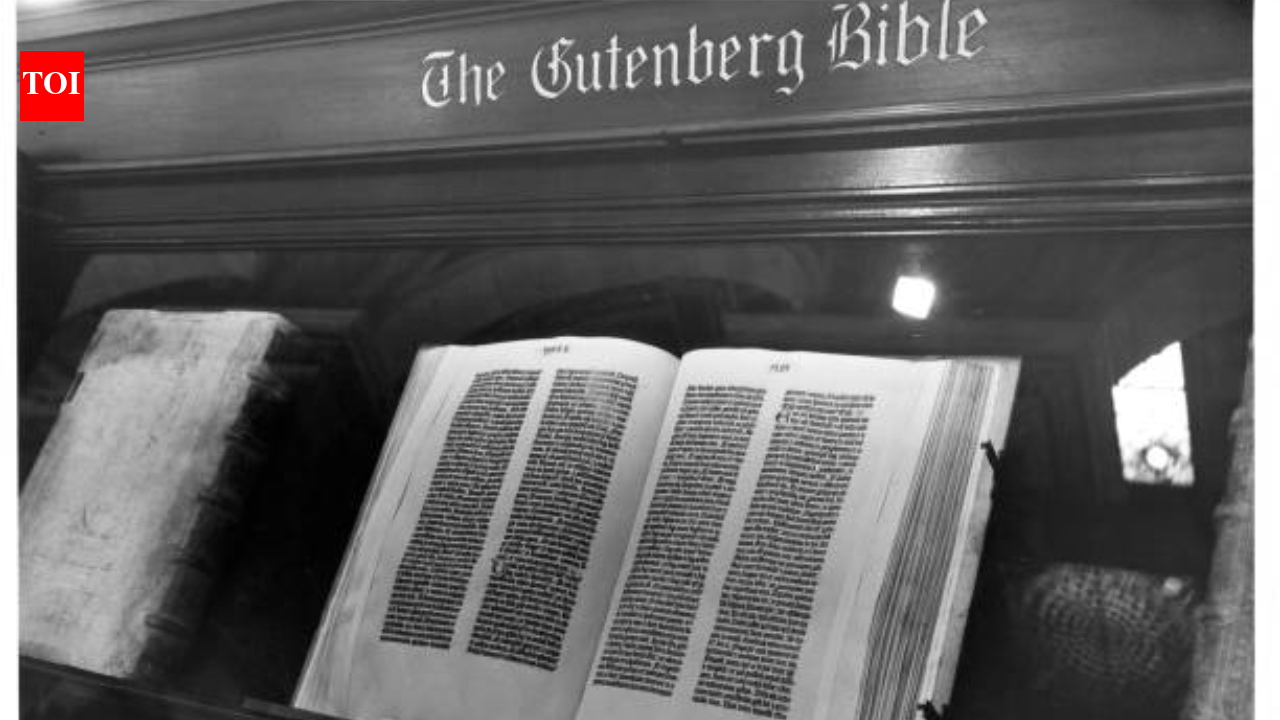
A single page from one of the most important books in printing history spent decades sitting unnoticed in an English attic. Bought for just £25 in the early 20th century, the roughly 570-year-old leaf from the Gutenberg Bible was rediscovered among a grandfather’s belongings and eventually sold at auction for £39,000 in 2025.The rare page was found by a resident of Bromsgrove, Worcestershire, among possessions belonging to his late grandfather. The items had been stored in a box in the family attic that had remained unopened for more than 50 years. The family reportedly believed the Bible leaf had originally belonged to the man’s great-grandfather, an early 20th-century traveller and collector who visited Europe and the Far East and was known to frequent auction rooms.The family had first seen the collection around 2000, after the man’s grandmother died, but it was only in 2024 that they decided to have the items examined and authenticated. When the box eventually reached Chorley’s Auctioneers, the significance of one particular sheet became clear.What appeared to be an old page was in fact a leaf from the Gutenberg Bible, printed in Mainz, Germany, around 1455 by Johannes Gutenberg and Johann Fust.
From £25 purchase to £39,000 auction sale
What is on the 570-year-old page?
The leaf measures approximately 39.2 by 28.6 centimetres and contains 42 lines of text arranged in two columns. It comes from the Book of Numbers, covering parts of verses 8:13 through 10:23. The passages include the setting apart of the Levites, the Passover and the account of the cloud above the Tabernacle.Despite being more than five centuries old, the page retains striking details. The text is printed in Gothic type, while the initials were added in red and blue. The chapter heading letters also alternate between the two colours.The auction house described the leaf as an incunabulum, a term used for books printed in Europe during the earliest period of printing with movable type, generally before 1501.The page was not flawless. Its condition report noted toning and foxing, a central fold with some wear, marginal browning and chipping, and slight loss to one upper corner. There was also some staining from the page-edge colouring and evidence of an inked number on the inner margin. Yet its historical importance far outweighed those imperfections.