
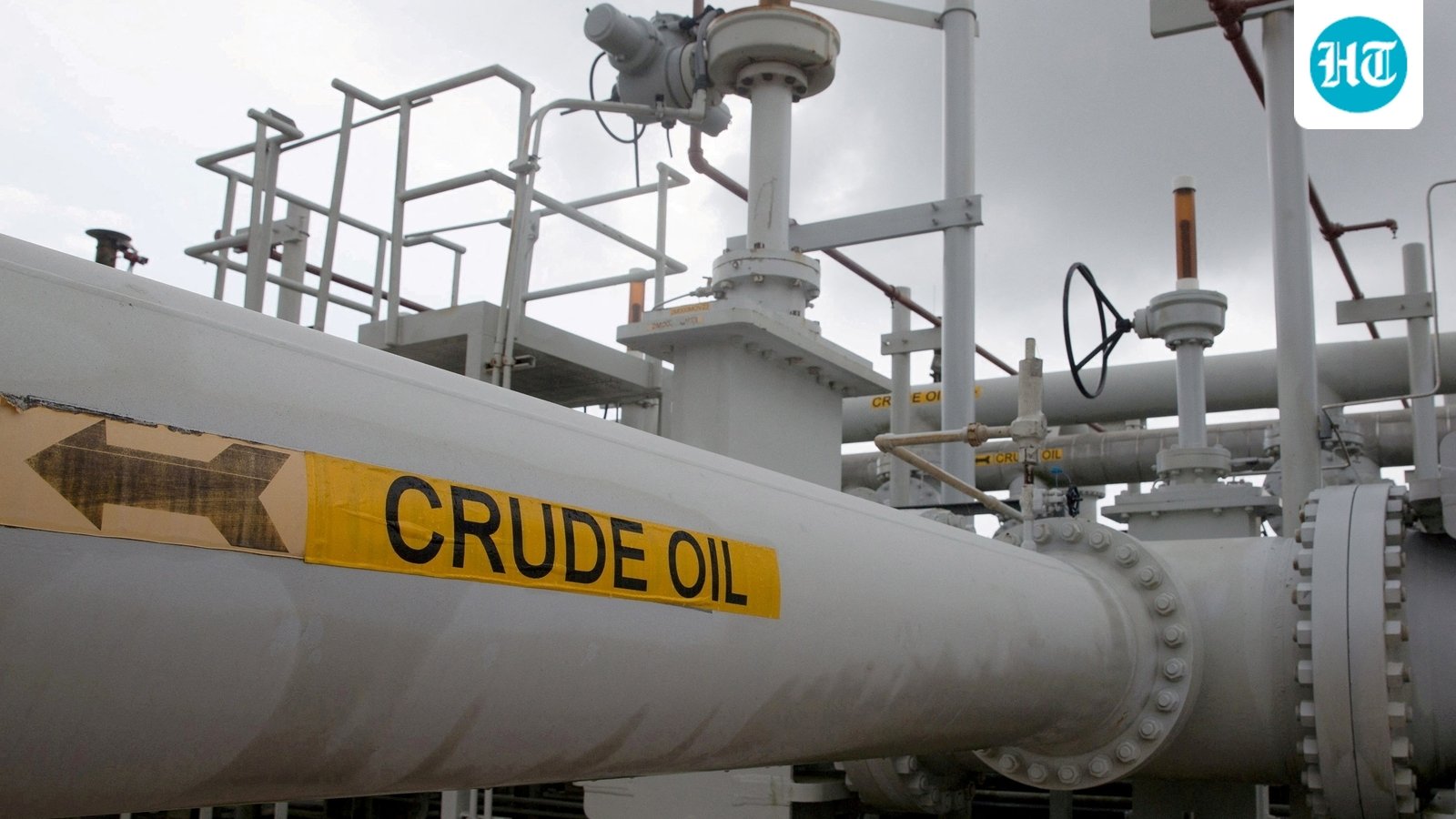
Oil prices rose on Wednesday as markets remained worried about the ongoing US-Iran war. Efforts to end the war have not made much progress, keeping geopolitical risks high. These concerns pushed oil prices higher even as crude exports from the Persian Gulf showed signs of recovery.
Brent crude’s December contract rose 1.6% to $97.10 a barrel. US West Texas Intermediate (WTI) crude gained 0.9% to $90.20 a barrel. Oil prices had fallen sharply on Tuesday as traders focused on improving oil supplies from the Middle East, according to TradingView.
Why are oil prices rising despite higher Gulf exports?
The oil market is now facing two opposite forces. Gulf oil shipments are recovering, which could reduce some of the supply pressure that pushed prices higher during the war. However, the war has already reduced global oil inventories.
Supplies of refined products such as diesel are also still tight. This means oil and fuel prices could remain high even if more crude oil starts reaching the global market. The continued tensions around the Strait of Hormuz are also keeping traders worried about whether oil flows can fully return to normal.
Trump rejects reports of a possible Iran deal
Diplomatic developments also affected oil prices on Wednesday. Qatar has been trying to help Washington and Tehran make progress toward ending the conflict. However, President Donald Trump denied reports that he was ready to ease sanctions on Iran or release frozen Iranian funds in return for steps by Tehran on its nuclear programme, according to TradingView.
Also read: Why are US Treasury yields rising as global bonds face their worst month in years?
The lack of a clear diplomatic breakthrough reduced hopes that oil supplies from the region would return to normal soon. This helped support oil prices as traders continued to price in the risk of disruptions.
Saudi Arabia resumes oil loadings from Yanbu
At the same time, there are clear signs that Middle East oil exports are recovering. Goldman Sachs estimated that Gulf oil exports reached 23.3 million barrels per day in the past week. That level is roughly in line with the Gulf’s average exports in 2025, according to TradingView.
Saudi Arabia has also restarted tanker loadings from its Yanbu port on the Red Sea. The move came after Saudi Arabia restarted operations on its East-West Pipeline. The recovery in exports was one reason oil prices dropped sharply on Tuesday. However, the increase in crude exports has not completely solved shortages across the wider energy market.
Global oil inventories have fallen sharply
The war has already taken a major amount of oil out of global inventories. The International Energy Agency (IEA) said earlier this month that global observed oil inventories had fallen by 507 million barrels since the start of the war.
This decline means the market has less of a supply cushion if another disruption hits oil production or exports. Refinery disruptions in the Middle East and Russia have also made the situation worse. These disruptions have especially tightened supplies of diesel and other refined petroleum products.
US plans to release 40 million barrels from emergency reserves
The US government is also taking steps to increase oil supplies. The Energy Department said Tuesday that it would offer up to 40 million barrels of crude oil from the Strategic Petroleum Reserve (SPR), according to TradingView.
The release is part of a wider international effort to increase emergency oil supplies. The coordinated plan aims to put 400 million barrels of emergency oil supplies into the market. The additional crude could help ease some supply pressure caused by the war and disruptions in global energy markets.
Also read: Trump $500 Obamacare refund checks: Who will get the ACA payments in 30 states?
September has been a strong month for crude prices
Despite Tuesday’s sharp fall, oil prices are still heading for a strong monthly gain. Brent crude is on track to rise about 14% in September. That would be its biggest monthly increase since July. WTI is expected to gain about 4% for the month. The monthly gains show that the wider oil market remains under pressure from the war, supply disruptions and tight fuel inventories.
Analysts raise their 2026 oil price forecasts
Oil price expectations for next year have also moved higher. A Reuters survey published Wednesday showed that analysts have raised their 2026 oil price forecasts. Analysts now expect Brent crude to average $89.05 a barrel in 2026.
Their forecast for WTI is $83.90 a barrel. The higher forecasts come as the market continues to deal with geopolitical risks, lower inventories and tight supplies of refined fuels, according to TradingView.
What is driving oil prices right now?
Oil prices are being pushed by a mix of war risks, uncertainty around the Strait of Hormuztight inventories and refined fuel shortages. At the same time, Saudi Arabia and other Gulf producers are restoring exports, which is adding more crude to the market.
For now, recovering exports are helping supply, but they have not fully removed the risks created by the war and disruptions to the wider energy market. This clash between improving crude supplies and continuing geopolitical and fuel-supply risks is keeping oil prices volatile.