
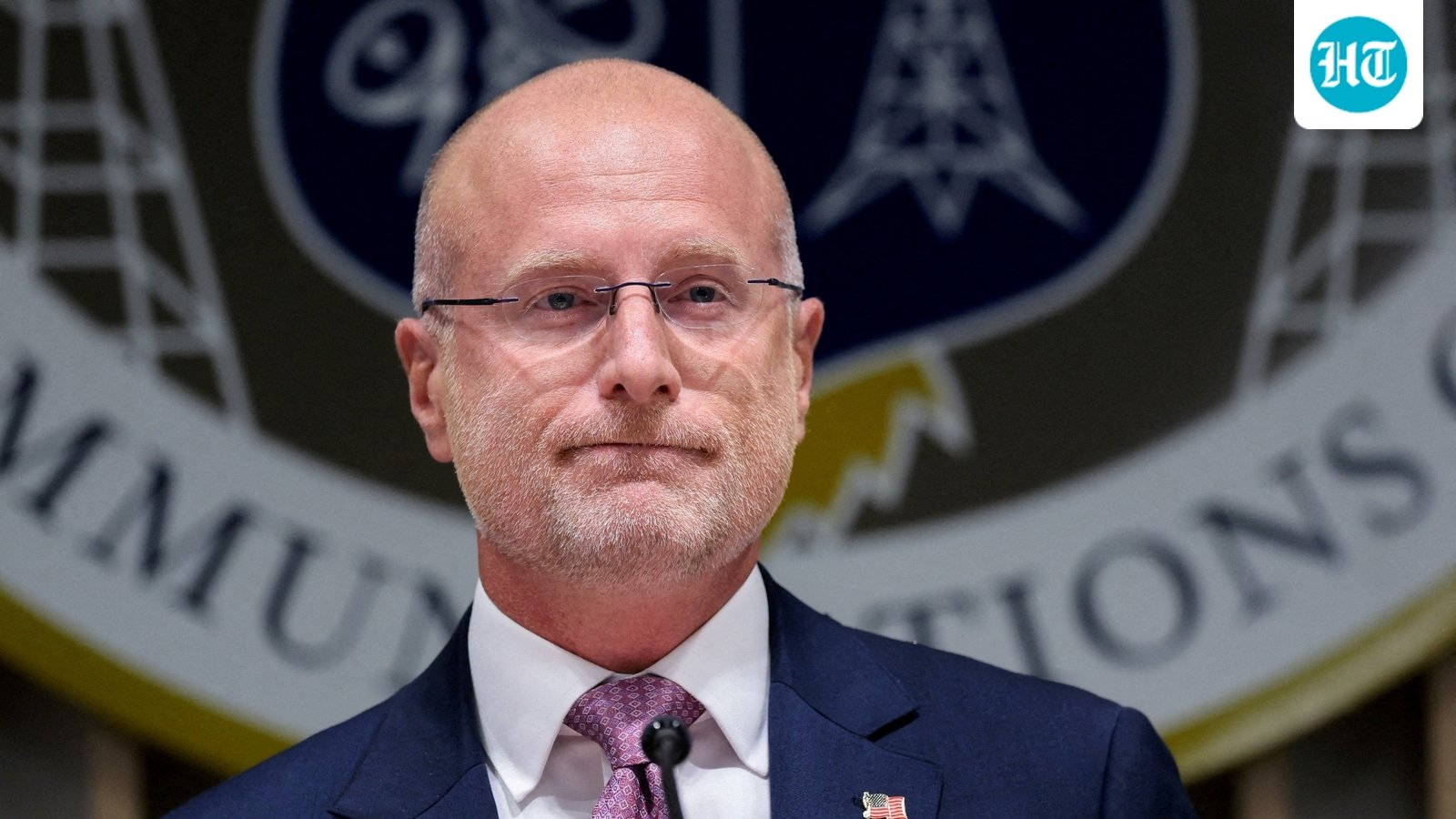
Brendan Carrchair of the US Federal Communications Commission (FCC) spent nearly a decade in the Washington-area Midtown Alcoholics Anonymous (AA) group, which former members have described as cult-like, according to the Guardian. The report alleged the group subjected members to coercive control and that some teenage girls and young women were sexually exploited.
However, Carr, through a spokesperson, denied engaging in or knowing about any alleged illegal or abusive conduct.
According to the Guardian, Carr joined Midtown in 1996 when he was about 17 years old and remained involved for roughly nine years while attending Georgetown University and later law school.
The report cited interviews with 14 former members, archival recordings and photographs. Carr’s spokesperson disputed the timeline and denied that he remained a member through 2006.
Carr has become one of the administration’s most prominent media regulators after President Donald Trump appointed him as the FCC chair.
What are the allegations against the Midtown group?
Former Midtown members told the Guardian that the group operated far beyond the traditional AA model. They alleged founder Michael Quinones exercised control over members’ personal lives. Quinones kept track of where they lived, worked, studied and whom they dated.
Several former members claimed teenage girls were pressured into relationships with significantly older men. One former member said her experience amounted to sex trafficking.
The Guardian noted that these allegations echo concerns raised nearly two decades ago. A 2007 Newsweek report described Midtown as “cultlike,” while a Washington Post investigation reported allegations that older men had sexual relationships with teenage girls. Police at the time said they had found insufficient evidence to pursue criminal charges, although they acknowledged concerns surrounding the group’s practices. Midtown also denied condoning underage sex in a statement issued in 2007.
Clinical psychologist Dr. Ellen Dye, who treated former Midtown members, told the Guardian that one patient appeared to exhibit signs of coercive control similar to those seen in abusive relationships. Dye said the patient later described the group as sexually exploitative.
What did Brendan Carr say?
Carr’s spokesperson strongly rejected suggestions that the FCC chair participated in or knew about any alleged abuse.
“He did not engage in any of the allegedly illegal conduct or abusive behavior you reference,” the spokesperson told the Guardian. The spokesperson also said any suggestion Carr knew about alleged criminal or abusive conduct “would be false.”
Several former Midtown members interviewed by the Guardian also defended Carr personally. One former member described him as “a victim” of Midtown rather than a perpetrator. Another former member who dated Carr recalled him as “a safe person” who showed kindness in an environment she described as controlling. She alleged he once secretly gave her French fries because she was being kept on a restrictive diet.
Others, however, argued that inappropriate conduct was visible within the group. One former member said Carr “knew the deal and hung around there,” while acknowledging he did not believe Carr personally engaged in predatory behavior.
The Guardian reported that Carr has denied living in a Midtown group home and disputed aspects of its timeline regarding his involvement. His spokesperson also characterized renewed attention to his sobriety journey as an attempt by critics to pressure him because of his role as FCC chair.