
Skip to content
-
Subscribe to our newsletter & never miss our best posts. Subscribe Now!
  • https://www.facebook.com/
  • https://twitter.com/
  • https://t.me/
  • https://www.instagram.com/
  • https://youtube.com/
THE_LOCAL_REPORT_ARTICLES_LOGO THE LOCAL REPORT ARTICLES

Trusted Indian news delivering fast, factual, and in-depth coverage of politics, business, society, and stories that truly matter

THE_LOCAL_REPORT_ARTICLES_LOGO THE LOCAL REPORT ARTICLES

Trusted Indian news delivering fast, factual, and in-depth coverage of politics, business, society, and stories that truly matter

  • TRENDING
  • INDIA
  • SPORTS
  • TECH
  • UK
  • WORLD
  • TRENDING
  • INDIA
  • SPORTS
  • TECH
  • UK
  • WORLD
Subscribe
Close

Search

S Korea's revised espionage law: How it affects countries beyond North Korea
TRENDING

S Korea’s revised espionage law: How it affects countries beyond North Korea

By WEB DESK TEAM
September 13, 2026 2 Min Read
Comments Off on S Korea’s revised espionage law: How it affects countries beyond North Korea
S Korea's revised espionage law: How it affects countries beyond North Korea
South Korea’s expanded espionage law now covers all foreign countries, not just North Korea. This revised Criminal Act carries a minimum three-year prison sentence for espionage offenses. The amendment addresses concerns about technology and industrial espionage involving non-North Korean actors. High-profile technology leak cases, including those involving Chinese firms, preceded this change. South Korea aims to strengthen its ability to prevent leaks of strategic technologies.

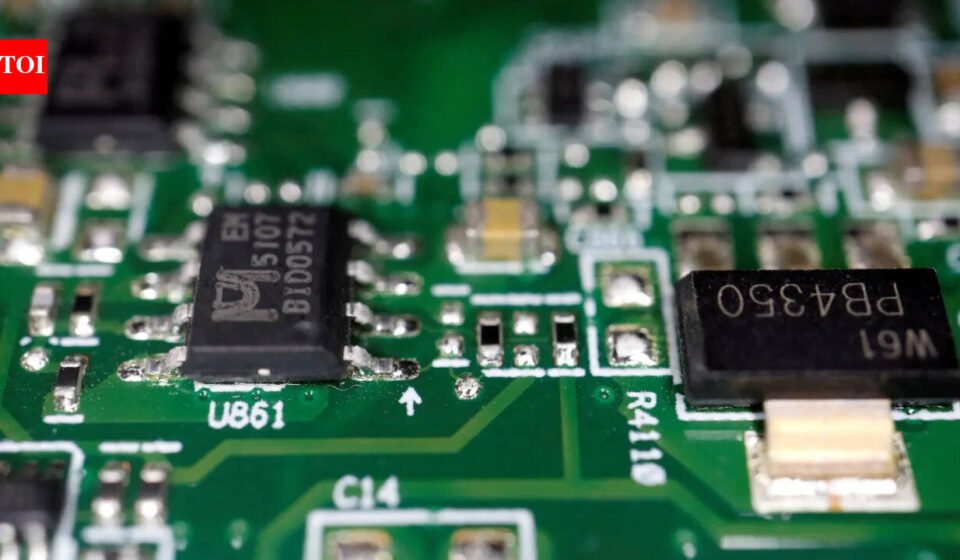
South Korea implemented its expanded espionage law on Sunday, broadening espionage offences beyond acts involving North Korea to include all foreign countries.South Korea’s National Assembly had passed the revised Criminal Act on February 26. The amendment was promulgated on March 12 and comes into effect on Sunday, after a six-month grace period.The move comes after years of criticism that Seoul’s existing laws were ill-suited to punish technology and industrial espionage involving non-North Korean actors, especially China.The revised act carries a minimum sentence of three years in prison for the offence of conducting espionage for a foreign country or equivalent organisation. Existing provisions for espionage benefiting an “enemy state” remain in place.Earlier, prosecutors had to rely on other industrial technology or trade-secret laws, in many cases involving foreign entities.According to Reuters, Seoul’s national intelligence service welcomed the amendment when it was passed, saying it would strengthen South Korea’s ability to prevent leaks of strategic technologies such as semiconductors, displays, batteries and AI.

Chinese espionage attempts

The change follows high-profile technology leak cases, including last year’s indictment of five former Samsung Electronics employees accused of transferring key dynamic random-access memory (DRAM) chip technology to Chinese memory maker CXMT.Asked whether the law, which does not specify any country, could be seen as targeting Beijing, Chinese foreign ministry spokesperson, Mao Ning, said China requires its enterprises to conduct international cooperation in accordance with international rules and laws.“At the same time, to this end, we believe that all countries should safeguard the normal investment and business activities of enterprises and provide a fair, just, and non-discriminatory business environment,” Mao told a regular news briefing on Friday.

How concerned are you about industrial espionage from foreign countries?

3k+ users shared opinion today

5k+ users already voted today

3k+ users shared opinion today

Share Opinion

Earlier, the United States accused Chinese artificial intelligence firms, including DeepSeek and Alibaba, of stealing trade secrets from their American counterparts to cut development costs and swiftly release coveted technologies to the market.According to a joint advisory by USA’s Federal Bureau of Investigation, National Security Agency and Cybersecurity and Infrastructure Security Agency, major Chinese technology firms were found to be extracting “restricted proprietary functionalities and capabilities of US frontier AI models”, using “distillation” techniques, where smaller models are trained on more advanced architectures.


Tags:

affectscountriesespionagekoreaKoreasLawNorthrevisedus newsus top news
Author

WEB DESK TEAM

Our team of more than 15 experienced writers brings diverse perspectives, deep research, and on-the-ground insights to deliver accurate, timely, and engaging stories. From breaking news to in-depth analysis, they are committed to credibility, clarity, and responsible journalism across every category we cover.

Follow Me
Other Articles
Built in  1876, the Perry House in Los Angeles was moved from its original neighbourhood in 1975 to save it; 150 years later, normally closed rooms open to visitors for one night
Previous

Built in 1876, the Perry House in Los Angeles was moved from its original neighbourhood in 1975 to save it; 150 years later, normally closed rooms open to visitors for one night

In 2001, Bear Grylls bought a remote Welsh island for £95,000; after four years rebuilding its only house, it now runs off-grid on wind, solar and harvested rainwater
Next

In 2001, Bear Grylls bought a remote Welsh island for £95,000; after four years rebuilding its only house, it now runs off-grid on wind, solar and harvested rainwater

  • ABOUT US
  • CONTACT US
  • CORRECTION POLICY
  • Home
  • Privacy Policy
  • TERMS AND CONDITIONS
  • Terms of Use
  • ABOUT US
  • CONTACT US
  • CORRECTION POLICY
  • Home
  • Privacy Policy
  • TERMS AND CONDITIONS
  • Terms of Use
Copyright 2026 — THE LOCAL REPORT ARTICLES. All rights reserved. Blogsy WordPress Theme