
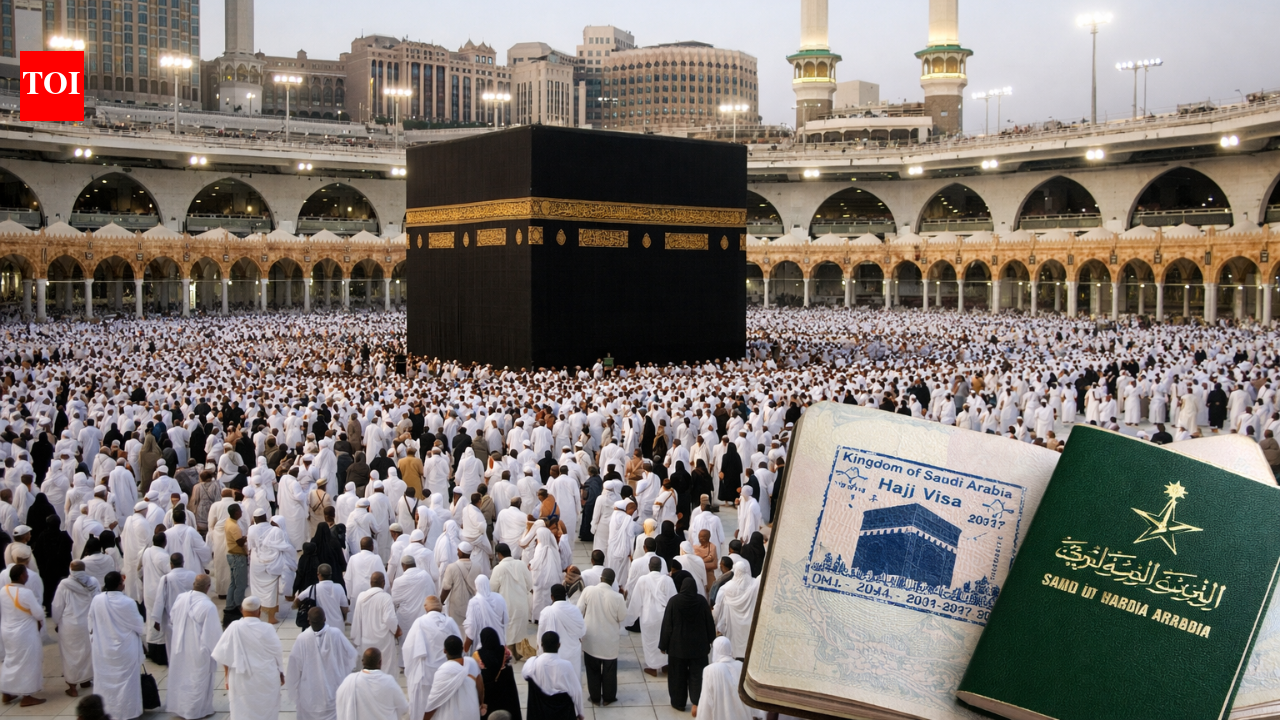
Saudi authorities have begun preparations for the next Hajj in advance, opening up visa procedures months before pilgrims begin their journeys, a move aimed at tightening planning and easing pressure during the peak season.The Saudi Ministry of Hajj and Umrah announced that the issuance of visas for the 2026 Hajj season (equivalent to 1447 Islamic calendar years) will begin on Sunday, February 8 (i.e., the 20th of Shaban). The early release brings the kingdom nearly four months ahead of the ceremony, setting the tone for a more structured and predictable hajj season.
Early onset of Hajj linked to long-term planning goals
Officials said the earlier timetable is part of a broader effort to increase service readiness and improve pilgrim comfort. The move is in line with Saudi Arabia’s Vision 2030 framework, which prioritizes efficiency, service quality and better crowd management across the Hajj and Umrah ecosystem.By starting the issuance of visas early, authorities aim to give pilgrims, service providers and Hajj Affairs Offices more time to prepare, coordinate and resolve logistical needs prior to arrival.
Hajj services and accommodation contract completed
The contract covering all services provided by the Holy Land for pilgrims arriving from outside the Kingdom has been finalized, the ministry said. Makkah’s accommodation agreement has also been fully completed via the Nusk platform, achieving a significant operational milestone early in the cycle.Judging from demand, 750,000 pilgrims have registered so far. Already 30,000 pilgrims have booked packages directly from their home countries, reflecting early participation in the system.
Allocation and coordination of Hajj camps are in progress
Preparations for the shrine are underway in parallel with the issuance of visas. About 485 camps have been allocated to international pilgrims, and 73 Hajj affairs offices have completed basic contractual arrangements.The ministry said it is continuing to coordinate with Hajj affairs offices and service providers inside and outside Saudi Arabia to finalize remaining operational details and ensure consistency among services.
Focus on smoother operations during the season
Officials described the early rollout of visas as part of proactive measures aimed at reducing last-minute challenges and providing a more structured hajj experience.This step is part of wider organizational and technical measures already underway. These include completing service contracts for the Holy Site, approving accommodation and transportation agreements, and preparing and allocating campsites. These measures are designed to support smooth operations and improve service delivery for the millions of pilgrims expected to perform the Hajj in 2026.