
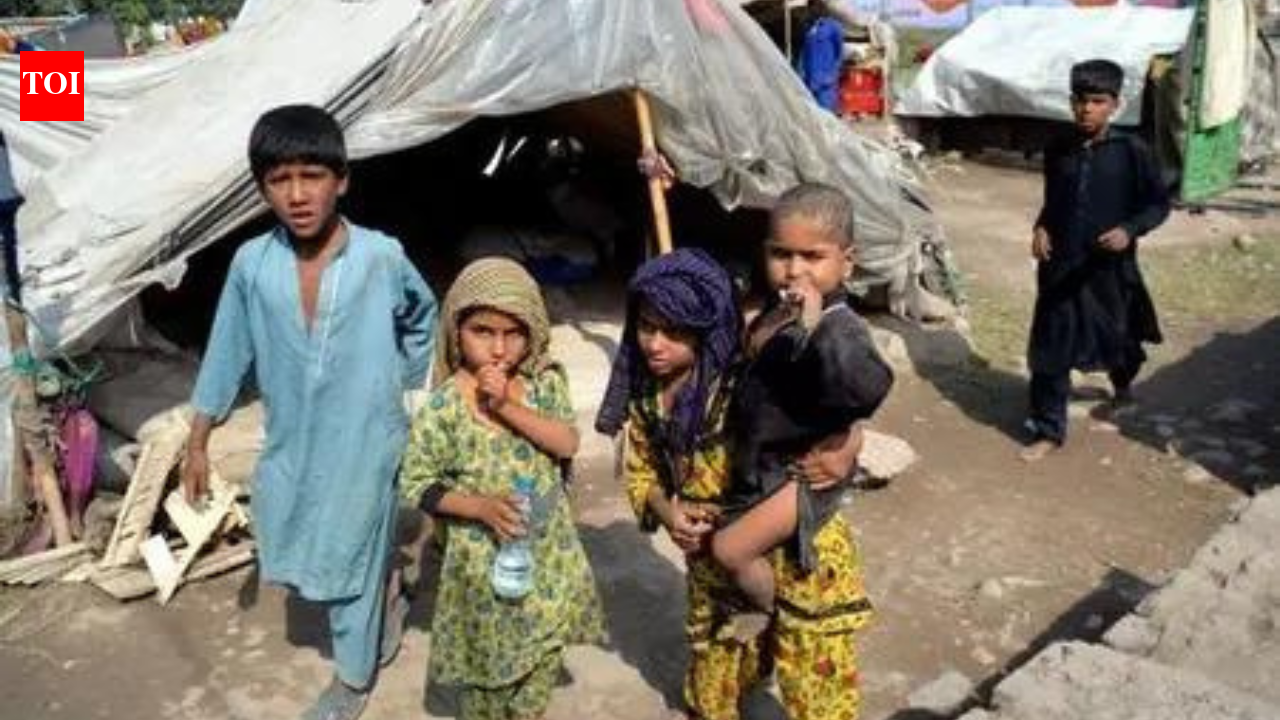
Pakistan’s poverty rate has climbed to an 11-year high of 29%, while income inequality has reached a 27-year high, according to an official survey released by Planning Minister Ahsan Iqbal on Friday. The report estimates that about 70 million people currently live in extreme poverty, defined as a threshold of Rs 8,484 needed to meet basic needs per month, The Express Tribune reported.Preliminary findings for the 2024-25 fiscal year show that the poverty rate rose sharply to 28.9% from 21.9% in 2019 in Prime Minister Sherbaz Sharif’s first year in power. This is the highest level since 2014, when it was 29.5%. Inequality also surged to 32.7, the highest level since 1998.
The country currently faces a 21-year high unemployment rate of 7.1%, record inequality and an 11-year peak in poverty. The minister acknowledged that stabilization policies linked to International Monetary Fund programs had caused difficulties, noting that the removal of subsidies and currency depreciation had fueled inflation. Natural disasters and weak growth were also factors, he said.The rural poverty rate increased from 28.2% to 36.2%, and the urban poverty rate increased from 11% to 17.4%. Provincial data also show a similar trend: the proportion climbed from 16.5% to 23.3% in Punjab, from 24.5% to 32.6% in Sindh, from 28.7% to 35.3% in Khyber Pakhtunkhwa, and from 42% to 47% in Balochistan. Security challenges in Khyber Pakhtunkhwa and Balochistan “disrupt livelihoods, limit access to markets and basic services, and increase households’ vulnerability,” the report said.Over seven years, real monthly household income fell 12% to 31,127 rupees, while real expenditure fell 5.4%, reflecting inflation exceeding nominal incomes. “The survey shows that nominal incomes are growing faster than inflation, causing real incomes to fall.”“The path to economic progress was disrupted first in 2018 and then again in 2022, when consumption-led economic growth led to economic collapse the following year,” The Tribune quoted Iqbal as saying. Cash transfers under the Benazir Income Support Scheme “are not the solution”, he added, stressing the need for growth and wealth creation.Responding to criticism of Pakistan Muslim League’s policies, he said it would take three years to undo the impact of the Pakistan Tehreek-e-Insaf party’s decision and ruled out an early exit from the International Monetary Fund program, while expressing hope that continued job growth and income recovery would reduce poverty.