
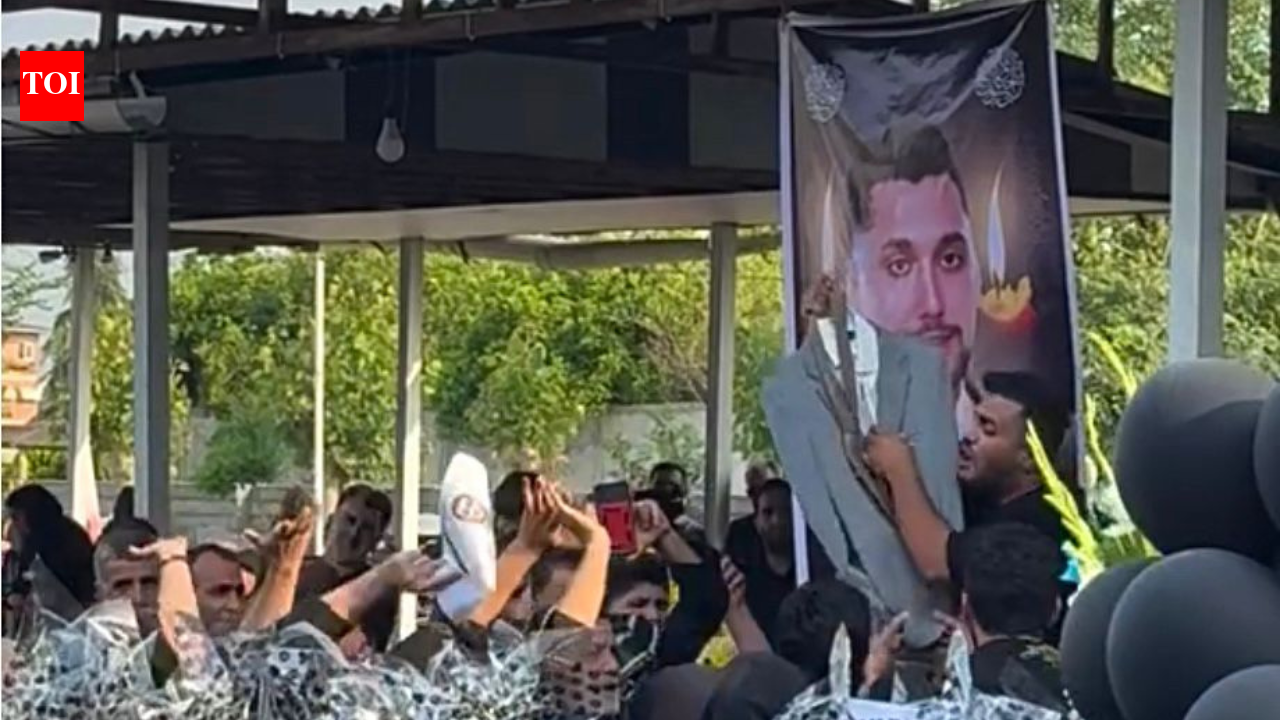
The ‘martyrdom’ of a young man in Iran as family and friends sing, dance and give gifts. (Source: from Iran)
As Muslims around the world begin celebrating Ramadan from Wednesday, Iranians living in India and Western countries say the usual enthusiasm associated with Ramadan is highly downplayed in Iran, reports Kayan Das. Members of the diaspora told TOI that many families back home are struggling with grief following recent anti-regime protests and the death of loved ones, leading to significant changes in how the holy month is celebrated. Mohammad (who asked that his first name be used), an Iranian who has lived in Delhi for nearly a decade, said conversations with his family reflected deep pain and anger. “How do we mark this month when so many people have died in recent anti-regime protests?” he said.As Muslims around the world begin celebrating Ramadan from Wednesday, the enthusiasm usually associated with the holiday in Iran is highly subdued, according to Iranians living in India and Western countries. Members of the diaspora told TOI that many families back home are struggling with grief following recent anti-regime protests and the death of loved ones, leading to significant changes in how the holy month is celebrated.
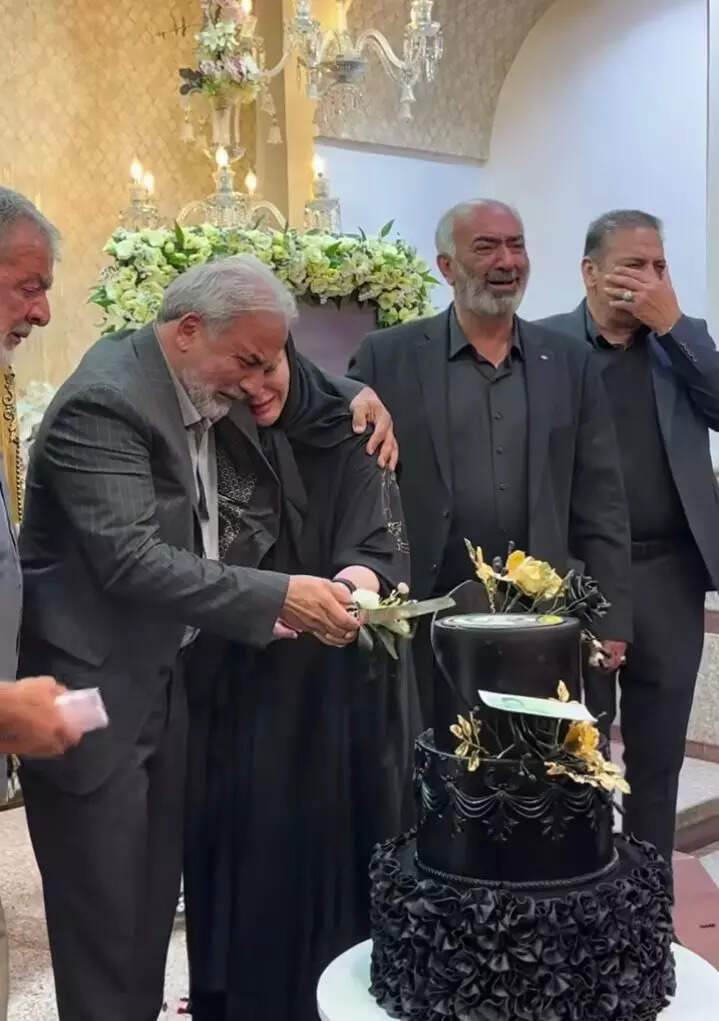
The parents of a young man killed in the protests cut a black cake and celebrated with lots of money during a grieving protest. (Source: from Iran)
Mohammad (who asked that his first name be used), an Iranian who has lived in Delhi for nearly a decade, said conversations with his family reflected deep pain and anger. “How do we mark this month when so many people have died in recent anti-regime protests?” he said. “People instead focus on the martyrdom of their loved ones – gathering at graves, singing and even dancing. It’s an act of defiance meant to show the regime that killing protesters doesn’t suppress dissent but inspires more people to stand up peacefully.“He added that videos shared by his relatives showed family members clapping and singing at the cemetery. “Previously, families would wear black to mourn. Now, many are suppressing their visible grief and opting for symbolic gestures of resistance. Through this act, they are challenging the regime,” he said.The Times of India independently verified the claims and found several videos in which families appeared to sing and clap near the graves of relatives allegedly killed in the riots.Bahaar Ghorbani, another Iranian living in India, claimed that nearly 40,000 people, including women and children, died during the protests. “In recent years, more and more people have been eating openly during fasting as a sign of dissent. The authorities are no longer cracking down on those who don’t observe the fast. This time, emotions are more tense because of mass killings. Ramadan feels different,” she said.Helma, an Iranian living in Hyderabad, pointed to economic difficulties as another reason for the sour atmosphere. “Many people cannot afford basic food. There are also concerns about a possible war with the United States, which people fear will worsen the situation. In this situation, it is difficult for people to focus on religious rituals,” she added.Demonstrations broke out in several Iranian cities in December amid widespread unrest against the government and growing economic woes. Observers say the unrest is the most significant challenge to the establishment since the 1979 Islamic Revolution.The ensuing security crackdown involved the use of live ammunition against protesters.Rights groups and activists claim the violence killed tens of thousands of people, calling it one of the deadliest episodes in the country’s modern history.