
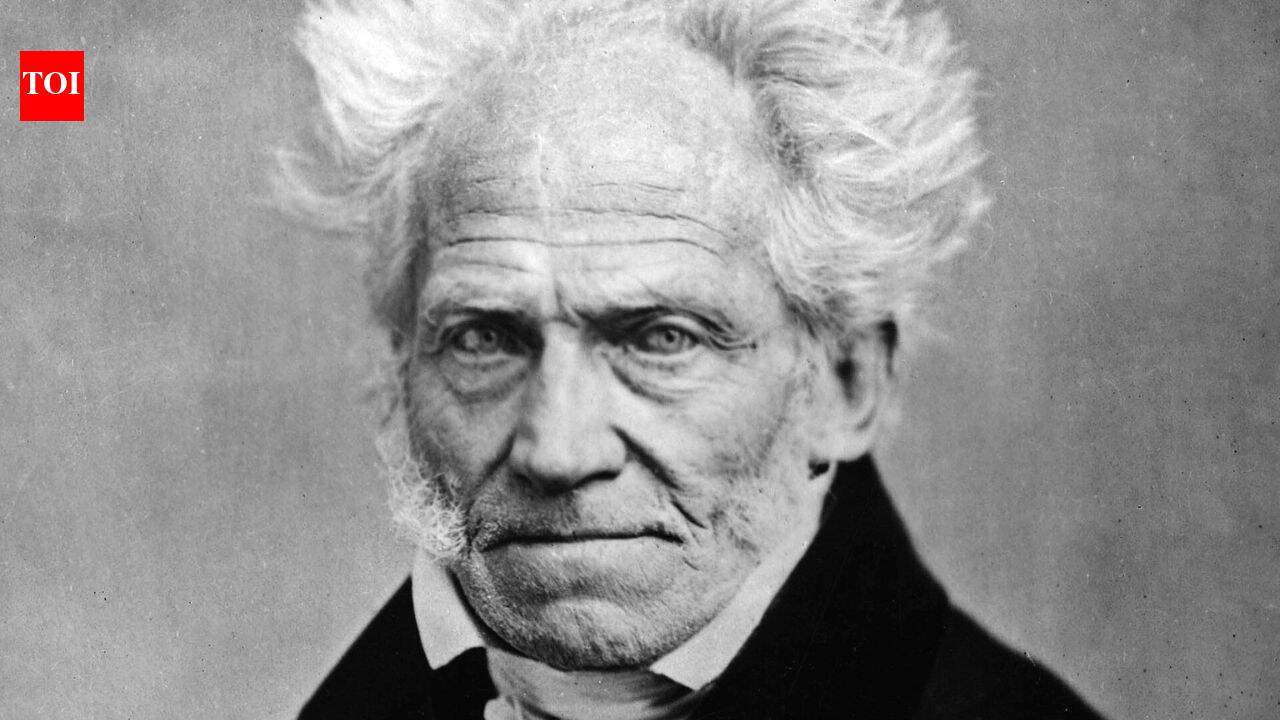
Modern life rewards constant connectivity, endless notifications, endless networking, endless visibility. The German philosopher Arthur Schopenhauer made an almost opposite point. “Great men are like eagles who build their nests in sublime solitude,” he wrote. Eagles do not nest in the middle of crowded valleys. It is built high up, away from the noise, and Schopenhauer believed that truly great ideas often require the same distance. This isn’t really an argument for permanently distancing yourself from others, but rather a reminder that clear, original ideas rarely survive constant distraction for very long.
Quotation of the day go through German philosopher Arthur Schopenhauer
“Great men are like eagles, they build their nests in high places.”
Learn the meaning behind Schopenhauer’s famous quotes
Eagles can see further than most other birds precisely because they perch on top of the landscape rather than within it, and they nest in isolated places away from constant disturbance. Schopenhauer believed that people who can be truly great often need the same distance, not to escape the world permanently, but to think truly clearly without the constant influence of other people’s opinions and expectations. Deep thinking, true creativity and true originality often require some distance from the noise and popular opinion in order to develop properly before being shared with others.
Where does this sentence come from?
This quote is recorded in The Collected Works of Schopenhauer, a 2012 edition of his works, page 247. It reflects a recurring theme in his wider philosophical writings, namely that true originality often requires true independence from the sustained influence of public opinion, and that solitude gives the mind the space it needs to truly develop its own thinking, rather than simply absorbing the thinking of others.
Why loneliness is different from loneliness
This statement is often misread as a simple endorsement of isolation, but misses the important difference between two very different mindsets. Loneliness is the painful, unnecessary feeling of losing true connection with others. Solitude is something that is intentionally chosen, time alone dedicated to reflection, creative work, or true personal growth. Many highly successful people actively value solitude because it allows them uninterrupted time to think, read, or create without distraction, and this healthy solitude can strengthen the mind rather than completely cutting someone off from their relationships.
Why independent thinking is actually important
Throughout history, the thinkers who really changed things were often those who were willing to question established beliefs that others had accepted. Scientists have challenged theories that were thought to be beyond doubt. Inventors imagined technologies that did not yet exist. Such breakthroughs often first require the courage to think differently from others, and Schopenhauer believed that constant reliance on popular opinion for approval would make true originality harder to achieve in the first place.
Why creative work often requires real silence
Real creative work rarely happens amid constant distractions. Writers need long, uninterrupted hours to really develop a story properly. Researchers need to really focus on carefully analyzing the evidence rather than skimming it. Artists need space to experiment without someone looking over their shoulder all the time. Modern digital life makes this kind of uninterrupted thinking much less common than before, which is why Schopenhauer’s point about protecting quiet time remains relevant.
Why real achievement often requires self-reliance
People who constantly need outside validation before doing anything tend to hesitate whenever an idea seems unconventional. Real winners usually develop real confidence in their own judgment over time, testing it through their own mistakes rather than borrowing the certainties of others. This does not mean rejecting advice or refusing to work with anyone. It means maintaining enough inner conviction to keep going even when others around you disagree, like an eagle simply building its nest above all else without asking permission first.
Why reflection can truly transform experience into wisdom
Experience itself rarely produces true wisdom automatically. Wisdom tends to grow especially when a person takes the time to truly reflect on what they have experienced, properly learn from their mistakes rather than just move past it, clarify what is truly important to them, and slowly become more emotionally mature in the process. Solitude really creates the space for this reflection to happen.
Other quotes by Arthur Schopenhauer
- “Genius hits what others cannot; genius hits what others cannot see.”
- “Compassion is the basis of morality.”
- “Everyone sees the limits of the world to the limits of his own vision.”
- “Every truth passes through three stages before it is admitted. In the first it is ridiculed, in the second it is opposed, and in the third it is accepted as self-evident.”
- “A man can be himself only when he is alone; if he does not love loneliness, he does not love freedom; for only when he is alone is he truly free.”
Why these words still inspire millions
Technology is connecting people more than ever in history, but many people really struggle to find a time without notifications, meetings, and constant background noise. Schopenhauer’s observation still stands because meaningful work, no matter what field it occurs in, still depends on truly focused attention. Whether one is studying, writing, solving a really difficult problem, or just planning what’s next, regular uninterrupted thinking still tends to produce the clearest, most original results that rarely come out of being fully responsive to someone else’s requests throughout the day.