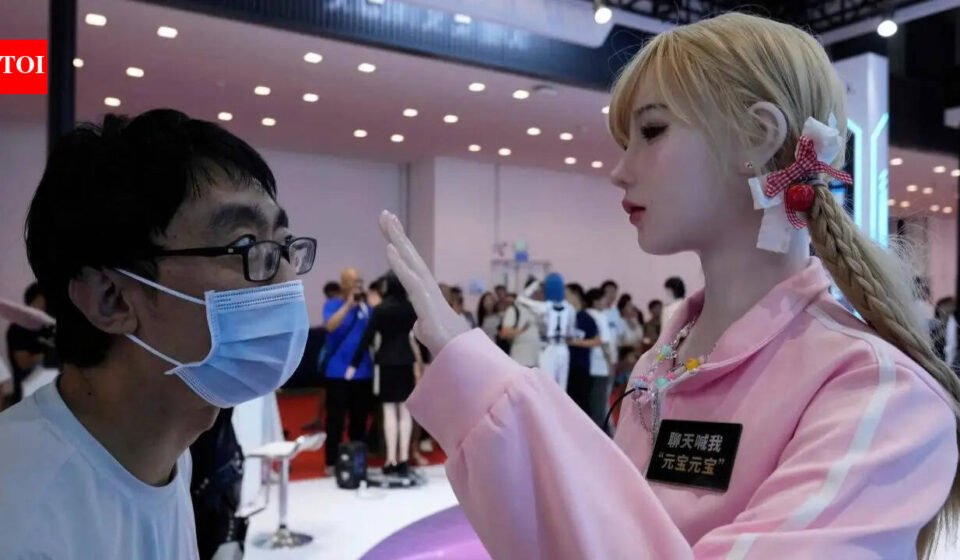


NEW DELHI: The Trump administration has imposed sweeping restrictions on imports of new Chinese-made robots and power inverters, saying the move is aimed at protecting the U.S. artificial intelligence supply chain and critical infrastructure from potential security risks.The measures announced by the FCC on Tuesday ban imports from China of new humanoid and quadruped robots, as well as connected power inverters used to connect renewable energy systems and battery storage to the grid and data center equipment.These restrictions are effective immediately, but only apply to models that haven’t been released yet. However, the FCC retains the authority to revoke approval of products that have been authorized for sale in the United States.In explaining the decision, the FCC said the targeted products could expose the country to supply chain risks and cyber threats.“These devices could disrupt the U.S. economy and national security by creating supply chain vulnerabilities and could pose cybersecurity risks that threaten U.S. critical infrastructure,” the agency said.“The FCC will continue to do its part to ensure the security of America’s critical supply chains,” FCC Chairman Brendan Carr added.The latest actions reflect the Trump administration’s broader efforts to reduce reliance on Chinese technology in areas critical to U.S. artificial intelligence ambitions. Officials believe moving manufacturing to the United States will bolster a domestic industry expected to grow rapidly while reducing the risk of sabotage, cyberattacks and theft of sensitive data.The Chinese embassy in Washington criticized the move and urged the United States to reconsider its approach.The statement said Beijing “urges the United States to listen to the objective and rational voices of the business communities in both countries” and “stop smearing Chinese companies and threatening sanctions.”The embassy also warned that China would “take all necessary measures against any behavior that causes substantial harm to its interests.”The restrictions come as demand for artificial intelligence-driven humanoid robots and data centers is expected to rise sharply in the coming years. Industry analysts believe these technologies will play an increasingly important role in manufacturing, logistics and consumer applications, while data centers will require reliable power infrastructure to support expanding AI capabilities.U.S. Treasury Secretary Scott Bessant has previously warned that Chinese artificial intelligence companies could face sanctions if they are found to have stolen U.S. intellectual property.Washington is also seeking to avoid heavy reliance on China for another key technology, after Beijing used its dominance in rare earth minerals as leverage in international negotiations. Rare earth minerals are vital to advanced manufacturing.The Federal Communications Commission is expected to exempt many non-Chinese suppliers from new restrictions, similar to exemptions granted under previous measures targeting foreign drones and network equipment, according to people familiar with the matter.One of the companies that may be affected is Unitree, one of China’s leading manufacturers of humanoid robots. Counterpoint Research estimates the company holds nearly a fifth of the global humanoid robot market. Unitree was recently added to the Pentagon’s list of companies suspected of having ties to the Chinese military, a designation that often precedes the imposition of tighter restrictions in Washington.The company recently partnered with Nvidia to use the US company’s Blackwell AI chips in its robots. Nvidia said the data collected by the robots remains in the United States, and Unitree’s largest customers are American universities and research institutions.U.S. officials and lawmakers worry that advanced robots could collect sensitive information, disrupt critical operations or be exploited by foreign intelligence agencies.“Data collected by bots could be used by malicious actors to spy on Americans, enhance the capabilities of foreign intelligence services, or remotely control bots,” the FCC said.Rep. John Moolenaar, chairman of the House Select Committee on China, welcomed the decision and said it would strengthen the U.S. robotics industry while protecting national security.The restrictions also affect inverters made in China, a market dominated by companies such as Sungrow and Huawei. Although Huawei already faces widespread U.S. sanctions, both companies have expanded their international presence by offering low-cost products.U.S. authorities have been scrutinizing security risks associated with Chinese inverters after similar concerns were raised in Europe and concerns that such equipment could be used to disrupt power systems or install malware.The move also reflects Washington’s efforts to prevent cyber activity similar to Volt Typhoon, a China-linked hacking operation discovered in 2023 in which attackers allegedly compromised private routers to conceal attempts to penetrate U.S. critical infrastructure.The U.S. Department of Defense has banned the purchase of solar photovoltaic cells, modules and inverters produced by entities deemed foreign security concerns, including Chinese companies.