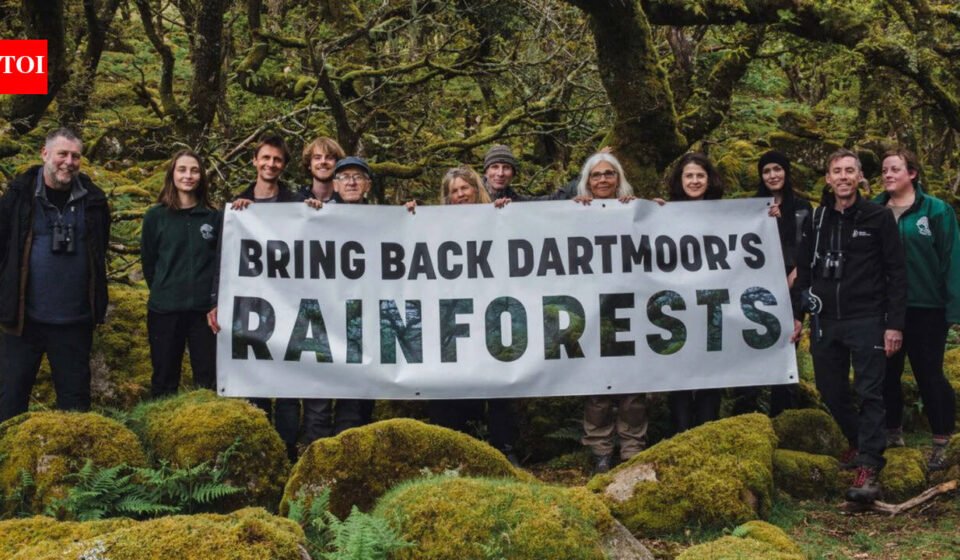
Duchy: Prince William’s Duchy of Cornwall is helping to double one of England’s last remaining temperate rainforests, where 1,250 saplings have been planted

Prince William’s Duchy of Cornwall is helping to double the size of one of England’s last remaining temperate rainforests, with 1,200 saplings already planted at one site alone as part of wider expansion work.The duchy, which owns a third of Dartmoor National Park, has pledged to double the size of two ancient rainforest areas under its management by the early 2040s, The Guardian reports. The scheme covers Black-a-Tor Copse and Wistman’s Wood, two rare groups of ancient oak trees hidden in Devon National Park.This commitment is accompanied by a new £30 million funding package from the Government through the Agricultural Conservation Landscapes Fund. These dedicated grants aim to restore wildlife spaces and ancient woods across England, stretching from Dartmoor to the Lake District.Temperate rainforests are some of the rarest natural habitats on Earth. While surviving fragments are scattered across parts of western Scotland, Cornwall, Devon, Wales and Cumbria, most are in poor health because farm animals have been eating them for decades.
Activists push for wider land restoration
The new commitment follows a campaign launched by the Dartmoor Nature Alliance (DNA), which gathered at Black-a-Tor Copse to call for the area of rainforest to be doubled across the national park.The 29-hectare Black-a-Tor woodland is located along the West Oakmont River Valley and is home to short, tightly packed oak trees covered with thick moss and lichen. The site dates back to the Bronze Age and is one of only three remaining rainforest fragments on Dartmoor. Experts estimate that similar oak forests once covered 20% of the British Isles. Today, the trees can only survive where thick granite or spiky gorse bushes prevent farm animals from eating them.Emma Magee, head of community and nature at Dartmoor in the Duchy of Cornwall, welcomed the new targets, outlining the estate’s expanded environmental ambitions.“The level and pace of commitment from the Principality and our partners is increasing,” Magee said. “We aim to double the area of Atlantic rainforest managed by the Duchy of Dartmoor by the early 2040s and we welcome this campaign’s focus on these rare, beautiful and important habitats.”However, campaigners stress that long-term recovery depends on keeping farm animals away from the edge of the woods.Lisa Schneidau of Dartmoor Nature Alliance explains that heavy livestock grazing can prevent young trees from growing into large trees.“These woodlands are part of our heritage – they are some of the best in Europe – but they are not in good condition,” said Schnedau. “In order to expand and regenerate them we need to exclude grazing around these areas because all of these sites are dying at the roots. We’re not talking about large land areas – we’re talking about attitudes towards nature. We can see that there is more woodland in the valley areas that is not particularly suitable for grazing and is really marginal for agriculture.“
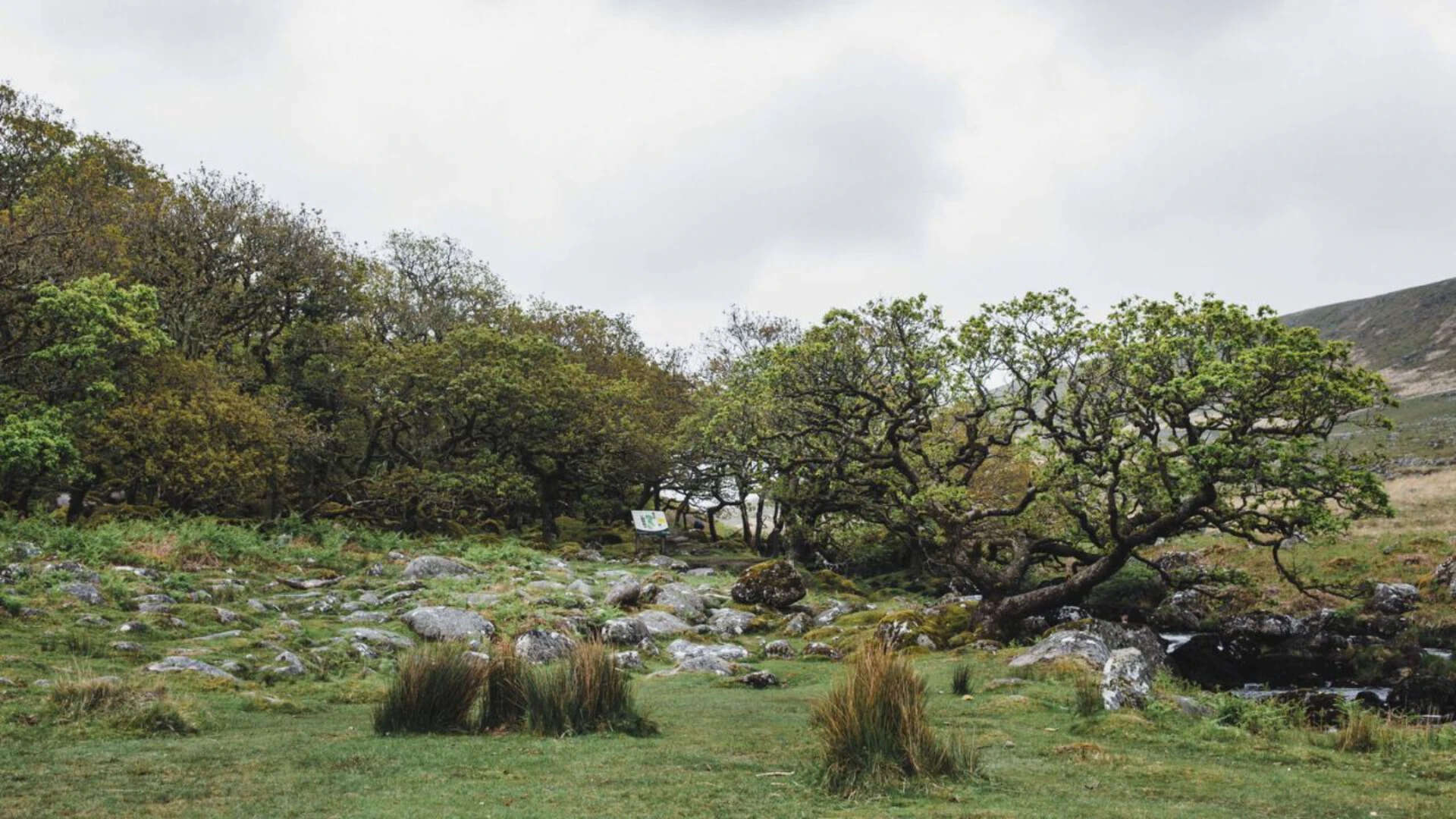
Ancient woodland survives only where there is natural protection from granite boulders or spiked gorse (Photo: Fern Leigh Albert)
Collect seeds and protect young trees
Work has begun in the valley to restore land. Government environment agency Natural England recently placed metal guards around small tree stumps near the top of the valley to protect the growing oak trees from being eaten by livestock.Local charity Moor Trees is planting new native trees using acorns harvested directly from ancient oak trees. Last fall, volunteers collected 800 acorns from the Black-a-Tor grove to grow in the nursery in preparation for later replanting the strong saplings back into the valley.Helen Aldis, CEO of Moor Trees, said: “We are acutely aware of the impact that land management practices on moorland have on the natural regeneration and resilience of these precious habitats.”At nearby Wistman’s Wood, hand planting has come a long way, with Moor Trees planting 1,200 saplings over the past two years to help the trees grow beyond their original boundaries.
Farm grazing rights and shared land
Plans to plant more trees face day-to-day challenges in how local land is used. An internal Natural England report seen by the Guardian says shoot-eating farm animals remain a major threat to Black-a-Tor Copse. The report states that “the most pressing issue with woodland conditions here is the suppression of recruitment for livestock hunting” and concludes that “the argument for increasing Black-a-Tor scrub woodland cover appears to be conclusive”.Solving the problem requires working with about 200 local farmers, or civilians, who have the legal right to graze animals on the moor. At Black-a-Tor, unfenced trees sit between two areas of shared land managed by Okehampton civilians. Dartmoor Civilian Council did not respond to a request for comment before publication.Author Guy Shrubsole, whose book Britain’s Lost Rainforests made the forests famous and sparked local action, welcomed news of the duchy but called for bigger targets. Shrubsole hopes to double the area of rainforest on all shared land on Dartmoor through natural seed growth and active tree planting where woods have disappeared entirely.At the edge of Black-a-Tor Woods, tiny oak buds have begun to peek out of the dirt.“Woodland is waiting,” says Tony Whitehead of Dartmoor Nature Alliance. “We’ve been waiting a long time to relax a bit, reduce grazing pressure and allow these amazing forests to come back to life.”