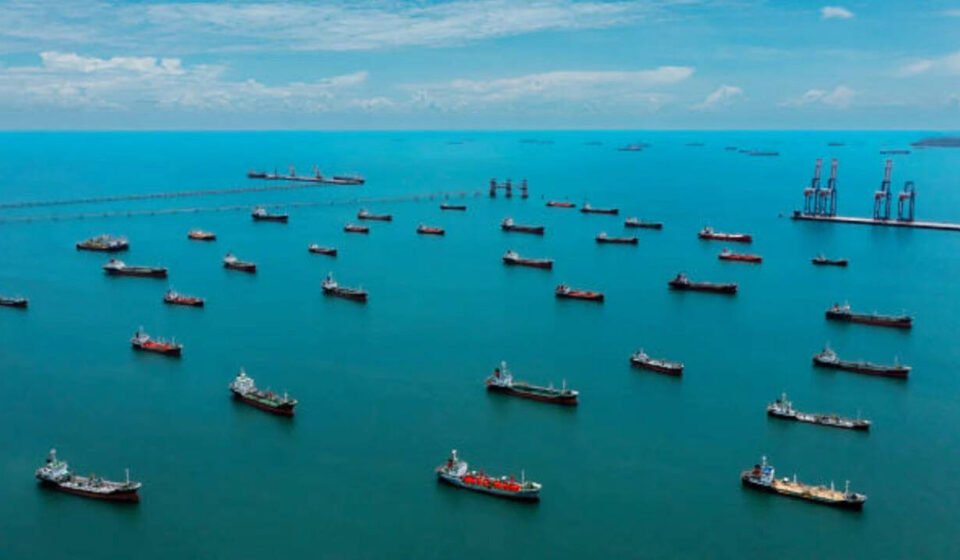
Thousands of idle ships near the Strait of Hormuz could become floating nurseries for invasive marine species, spreading them around the world when trade resumes

The current war between the United States and Iran has lasted nearly five months since it escalated into open hostilities on February 28, 2026. During this period, the Strait of Hormuz, the only high-seas outlet for major oil producers including Saudi Arabia, Iran, Iraq, Kuwait and the United Arab Emirates, has been blocked. The strait is the world’s most important maritime energy chokepoint, facilitating approximately $600 billion worth of energy trade each year. It is estimated that around 1,500 ships are stuck in the Persian Gulf, with hundreds more in the neighboring Gulf of Oman.Now, according to new research, what grows on these hulls may spread around the world when trade resumes. The study, published in Biological Invasions, was led by an international team of 24 marine scientists led by the University of Maryland Center for Environmental Sciences (UMCES) and including the Woods Hole Oceanographic Institution (WHOI).Thousands of commercial ships stranded in the Persian/Arabian Gulf for months following the closure of the Strait of Hormuz could inadvertently trigger large-scale marine invasive species incidents, a research team warns. The study, “Closing the Strait of Hormuz may trigger a biological invasion super-spreader event,” highlights how long periods of anchorage allow ships to accumulate dense communities of marine life, including algae, barnacles, mussels and other invertebrates, which can be transported around the globe when trade resumes.
“Super spreader” event
imminent threat