

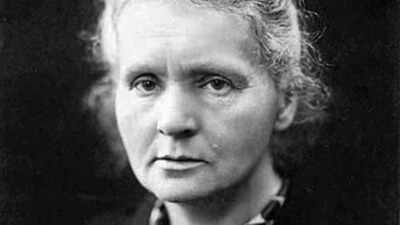
Marie Curie and her husband spent nearly four years boiling seven tons of pitchblende in a leaky, airless shed in Paris to isolate a tenth of a gram of radium chloride. Today, the notebooks they kept between 1899 and 1902 remain in lead boxes at the Bibliothèque Nationale de France. Anyone who wants to see them must sign a waiver beforehand and wear protective gear. So are her cookbooks, furniture, doorknobs from her old apartment and even her coffin.The radioactive material she and Pierre extracted from eight tons of Bohemian pitchblende in a leaky shack in Paris has a half-life of 1,600 years and would still be measurable even if the people reading this were just dust. Half-life is the time it takes for radioactive nuclei in a sample to decay into more stable elements. The couple spent nearly four years grinding, boiling, dissolving and recrystallizing, ending up with about a tenth of a gram of radium chloride, less than a grain of rice.
shacks in lomond street
Their workspace was not the modern laboratory scientists are accustomed to today. This is an abandoned anatomy room behind the city’s School of Industrial Physics and Chemistry, with a glass roof that leaks when it rains and no fume hood. In the summer it is baked. In winter, the Curies wrote, their fingers became numb around the iron stirring rod.Pitchblende is a dense, tar-black uranium ore. Based on careful electrometer measurements made by Pierre using his own piezoelectric instrument, the Curies concluded that pitchblende was more radioactive than the uranium it contained. There must be something else there. Something rarer and more powerful.The Austrian Imperial Government agreed to deliver to the Curies the waste ore left over from the extraction of uranium for glassmaking. Eight thousand kilograms of rubbish were loaded onto trucks and dumped in the yard, mixed with pine needles from the Bohemian forest. Mary processes it in batches of twenty kilograms. “I had to spend a whole day stirring the boiling mass with a heavy iron rod almost as big as myself,” she later wrote. “I would collapse at the end of the day from fatigue.“
The work of the Curies
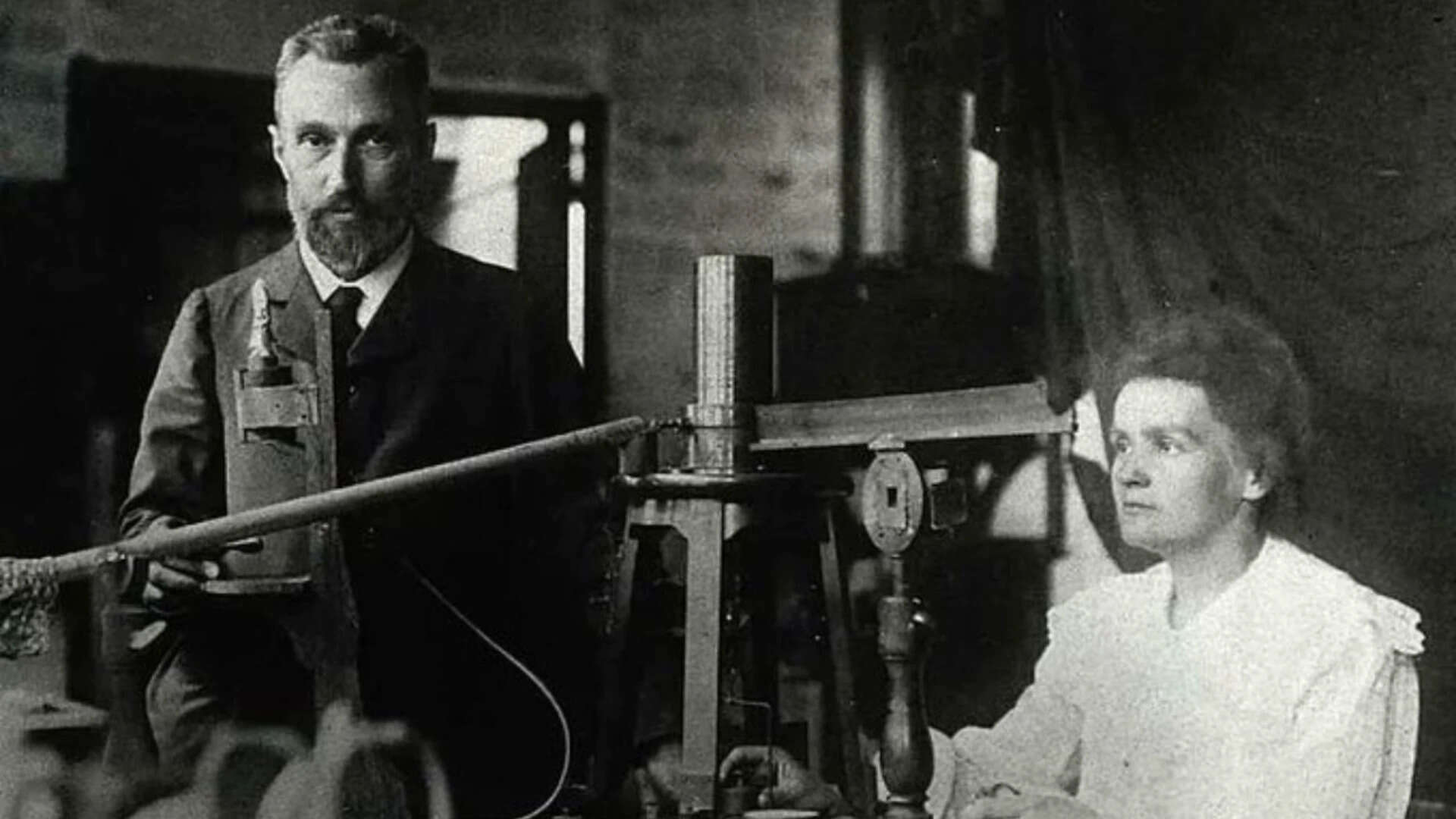
Mary had to perform thousands of fractional recrystallizations, taking advantage of the small difference in solubility of radium chloride and barium chloride in hydrochloric acid.
Chemistry is just brutal repetition. Dissolve pitchblende in hydrochloric acid. Precipitated sulfide. Separate content that is still active from content that is inactive. Then do it again with the active part. again and again. Radium’s chemical properties are almost identical to those of barium, which is why it is found in the ore and why isolating it is so painful. Mary had to perform thousands of fractional recrystallizations, taking advantage of the small difference in solubility of radium chloride and barium chloride in hydrochloric acid. Each cycle concentrates the radium a little more and takes several hours.In 1902 she had her own Ten Grams. She measured the atomic weight of radium to be 225, which is close to the modern value of 226. The substance glows in the dark, is warm to the touch, and emits heat without apparent fuel. Pierre kept a small bottle in his vest pocket to show visitors. By then, their fingertips were red, swollen and inflamed, as were hers.
some doses of radium
Back in 1990, ionizing radiation was not understood as well as it is today. The Curies knew that radium could cause burns, and Pierre specifically tied a sample to his arm to observe the lesions. They knew that it could destroy tumor cells, which is why radium therapy became one of the earliest cancer treatments.What they don’t get is the cumulative exposure, the alpha particles inhaled in the form of radon gas, the beta particles of decay products that settle in the bones, and the gamma rays that pass through everything. Mary stored the radium samples in a desk drawer at home. She and Pierre described their years at the shed as “the best, happiest time of our lives” and would come back in the evenings to watch the tube lights twinkling on the shelves like “faint fairy lights”.It became so deeply woven into their lives that she died of aplastic anemia in 1934 at the age of 66. Even her daughter Irene, who worked with her at the Radium Institute, died of leukemia at the age of 58. Both diseases are associated with long-term exposure to radiation.
radioactive objects
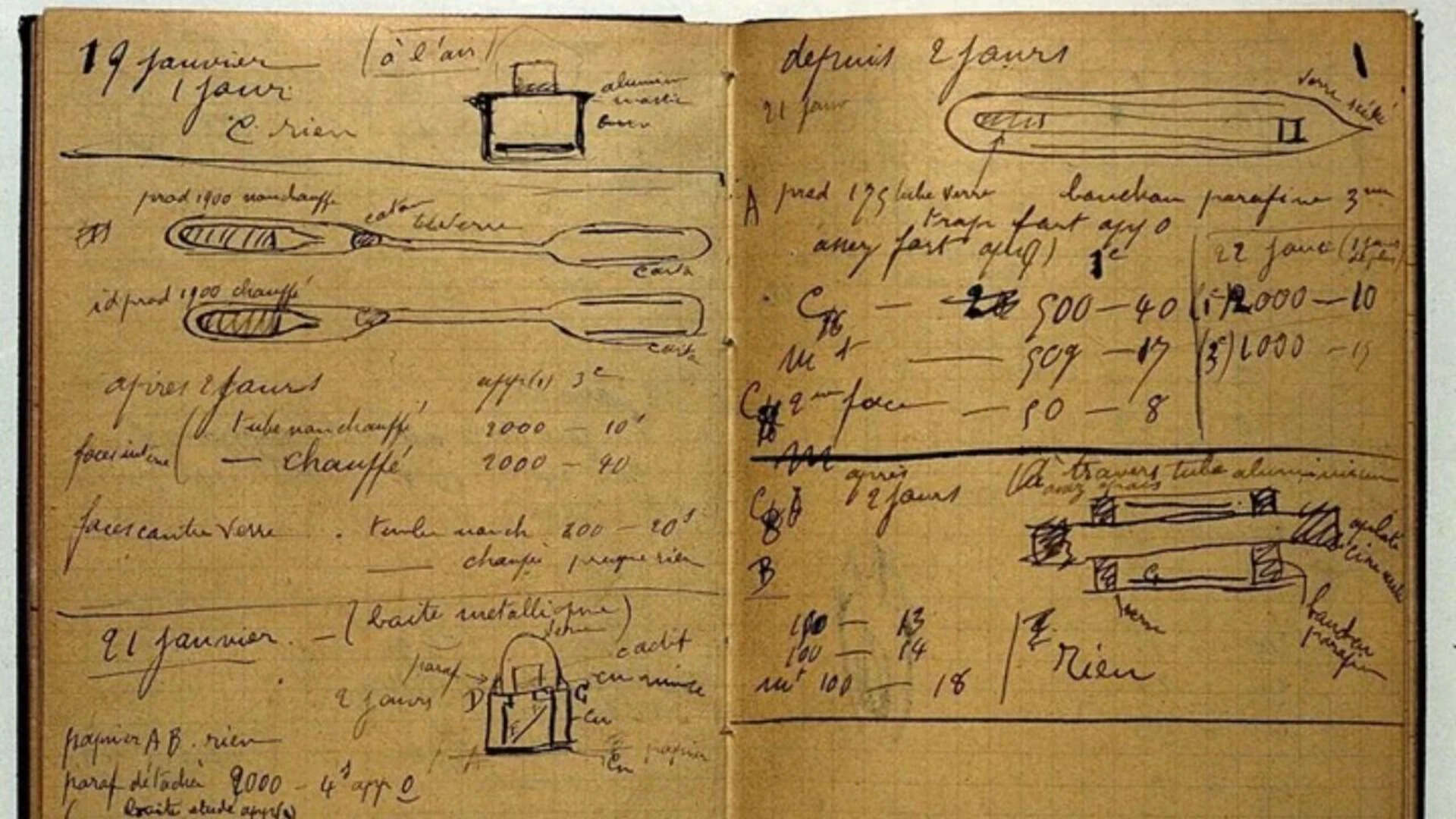
The radium contamination that Mary traced with her fingertips on her lab notebook in 1902 had attenuated by less than 5% in the following years.
The half-life of Radium-226 is approximately 1,600 years. This means that the radium contamination that Mary traced with her fingertips on her lab notebook in 1902 had attenuated by less than 5% in subsequent years. It is as inherently radioactive as the day she wrote about it.Today, the Bibliothèque Nationale de France keeps her papers in lead-lined boxes. Researchers who wish to access these materials must sign a statement of responsibility and use protective equipment to handle the pages. Not just books, Marie’s personal belongings such as furniture, chairs and cookbooks at the Curie Museum in Paris are also protected in this way.A 2025 BBC feature reported that radiation surveyors tracking the Curies’ movements around Paris still found contamination in the plaster and floors of buildings where the couple worked more than a century ago.Her body was buried in a lead-lined coffin. When her remains were transferred to the Pantheon in 1995, the first woman to be buried there for her merits, the coffin was shielded with a lead lining because her bones were still measurably radioactive.
Two nobles and a radioactive notebook
The Curies loved science so much that when it was suggested that they patent the extraction process, they refused. Mary said radium belongs to science. In 1903, the Nobel Committee awarded the Physics Prize jointly to Henri Becquerel and Pierre and Marie Curie for their work on radioactivity (a term coined by Marie). She was the first woman to win a Nobel Prize. Neither the Curies attended the ceremony; Pierre was ill and Marie was recovering from a miscarriage.Three years later, on April 19, 1906, Pierre was walking down the curb of the Rue Dauphin in the rain and was hit by a carriage. The wheels crushed his skull. The Sorbonne University gave Marie a teaching position, making her the first woman to hold a professorship in the history of this ancient university. In 1911 she won a second Nobel Prize, this time in Chemistry, for her isolation of radium and discovery of polonium, named after her occupied homeland. She remains the only person to win a Nobel Prize in two different fields of science.The shed on Lomond Street is gone. The Radium Institute she founded still exists today and is now part of the Institut Curie, one of the world’s leading cancer research centres. A gram of radium brought back from the United States by American journalist Marie Meloney in 1921 following a fund-raising event she arranged is still in the institute’s collection and kept under tight shielding.Radium itself has largely fallen out of use, but laptop computers remain. If you visit the National Library and ask to see pages of Marie Curie’s manuscripts, the librarian will bring you a Geiger counter reading along with a request form. In AD 3,626, when half of the radium she had painted on the pages had decayed, the pages still contained what they had discovered.