
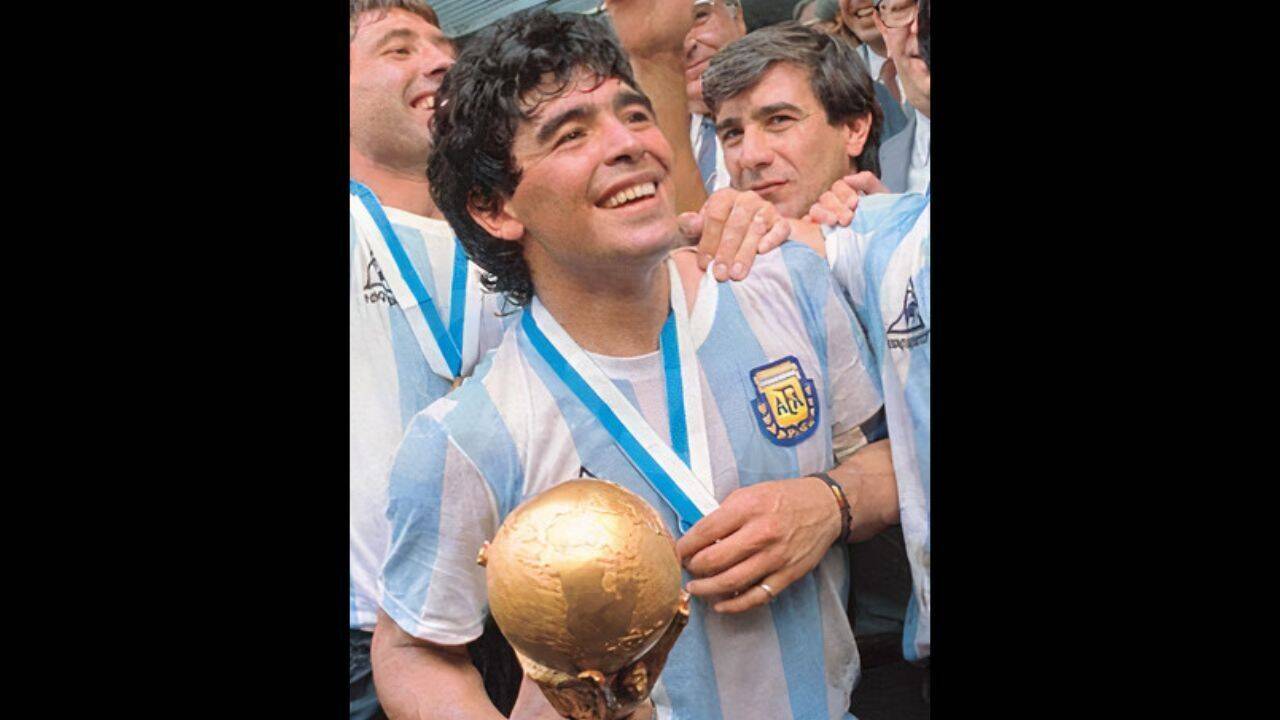
Diego MaradonaHis life cannot be summed up simply, the genius on the pitch, the controversy elsewhere. In his emotional farewell to football, he captured both aspects in one sentence. “I made mistakes and I paid for them,” he told the crowd. “But the ball is still pure.” He didn’t deny anything. He drew a line between man and game, insisting that one might be flawed but it wouldn’t be a drag on the other. Few players in the history of the sport have embodied both extremes as visibly as Maradona, which is why the words that separated them have stuck with people for more than two decades since he first uttered them, long after the specific circumstances that prompted them have faded from memory.
Diego Maradona’s Quote of the Day
“I made mistakes and I paid for them. But the ball remains pure”
What we can learn from Diego Maradona’s quotes
The first half was a straightforward admission of error without any attempt to soften or explain it away. Maradona wasn’t looking for sympathy. He simply said that mistakes were made and that he faced the consequences of their mistakes.The second half is where the real focus lies. The ball represents football itself without any influence. Its meaning is not diminished by the imperfection of the person who plays it. Maradona believed that a person’s failures and the things they love, create or devote themselves to don’t have to merge with each other. One can be damaged without destroying the other.
Where did he actually say this?
In November 2001, Maradona delivered a touching football farewell speech at his farewell match at La Bombonera, the Boca Juniors stadium in Buenos Aires. In the same speech, he made it clear that football itself should not be blamed for anyone’s mistakes but only the people who made them, before adding the line about making mistakes and paying for them.This context is important. This is not a carefully curated soundtrack. Those words were spoken to a sold-out crowd that had watched him for two decades, at the moment he walked away from the game that had defined him, mistakes and all.
Why football means everything to him
Maradona grew up in Villa Fiorito, a poor neighborhood outside Buenos Aires, and became one of the most gifted players the game has ever seen, with a tight control and a level of dribbling that made games look special when he had the ball in his hands. This connection goes far beyond professional skills. According to himself, football is a place where he can simply play, no matter what is going on around him.His off-field career has been marked by real and well-documented difficulties, including a public battle with drug addiction and a doping ban that kept him out of the 1994 World Cup. None of this takes away from what he can do with the ball at his feet, which is indeed a tension that the quote directly addresses rather than avoids.
Why admitting a mistake is more important than denying it
Public figures often face pressure to protect their image at all costs, denying mistakes or shifting blame rather than directly admitting them. Maradona’s route was neither. He made it clear that a mistake had been made and that he paid for it, without pretending that the consequences went away once he said it out loud. This admission has a power that denial can never produce.
Other quotes by Diego Maradona
- “Seeing the ball and running after it makes me the happiest man in the world.”
- “Whether I’m black or white, I’m never going to be gray in my life.”
- “You can say a lot about me, but you can never say I don’t take risks.”
- “If I could apologize and go back and change history, I would. But the goal is still the goal, Argentina became world champions and I was the best player in the world.”
How its legacy lives on today
Maradona’s quote endures because it refuses to offer a succinct version of a truly complex man. It does not claim that these mistakes are inconsequential, nor does it suggest that talent makes excuses for them. It simply encompasses two facts at once: a person can fail badly in some areas of their life, while the things they build or love elsewhere remain true and unaffected by that failure. In his words, the ball remains pure. It was never just about football.