

Health officials are investigating whether lettuce or salad greens may be linked to the growing cyclospora outbreak, but have not identified a specific food, supplier or grower as the source.
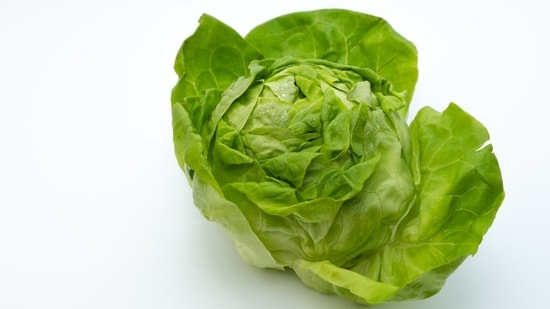
Health officials say an outbreak of cyclospora in Michigan and Ohio has sickened more than 3,000 people and is investigating whether it is linked to lettuce and other salad greens.
Michigan officials said preliminary results from their investigation show lettuce is a common product reported by infected people. However, authorities stressed that the investigation was still ongoing and other food products could not be ruled out.
“Early information suggests lettuce is a common product that comes up frequently during investigations,” Dr. Natasha Bagdasarian, Michigan’s chief medical executive, said in a statement.
Cyclospora cases increase in Michigan, Ohio
As of Monday morning, 2,640 cases of cyclospora have been reported in Michigan, including 44 hospitalizations, CNN reported. Ohio has reported 361 cases since June 1, bringing the total number of reported cases of the disease in the two states to more than 3,000.
At least 46 people have been hospitalized in the two states.
Also read: ‘Explosive diarrhea’ causes parasite to spread in U.S., source still unclear
The U.S. Centers for Disease Control and Prevention (CDC) said that as of July 10, 31 states had reported cases of cyclospora, but it was unclear whether all reported illnesses were related to the same outbreak.
The CDC says cases have increased in several states over the past two weeks compared to the same period in 2025. The agency’s national tally of confirmed cases since May 1 is 843, while cases reported by states are still being further analyzed.
Why are Cyclospora outbreaks so difficult to track?
looking for Source of Cyclospora Outbreaks can be more complex than tracking other foodborne illnesses like E. coli or salmonella.
The bacteria can often be linked through genetic testing, which allows scientists to compare a patient’s DNA patterns to samples collected from contaminated food or water. But the same approach was not as effective against Cyclospora.
Jennifer McEntire, a microbiologist and founder of Food Safety Strategies, explains that tracking Cyclospora is much more complicated.
“With bacterial pathogens, the technology is pretty mature and the organisms are really, really simple. It’s like reading a children’s book versus reading ‘War and Peace,’ and Cyclospora is ‘War and Peace,'” McEntire said.
She added that while both involve genetic information, Cyclospora is more difficult to analyze and track.
Number of cases may be higher than official figures
Health experts believe cyclospora infections may be underreported because many people with symptoms may not seek medical care or may try to recover at home.
Parasites are often spread when people consume contaminated food or water. Symptoms may include persistent watering diarrheastomach cramps and bloating, which in severe cases can lead to dehydration and hospitalization.
Diagnose infection It can also be challenging because Cyclospora may not always be detected in a single stool sample. Patients may require additional testing, and parasites are not included in every standard test for gastrointestinal disease.
Michigan officials said determining the source will take time because investigators must review the dietary histories of thousands of people and consider the complexity of food distribution networks.
“It essentially requires us to look at every item they order at the restaurant, what’s in those menu items, and it requires pulling their shopping card,” Baghdasarian said.