
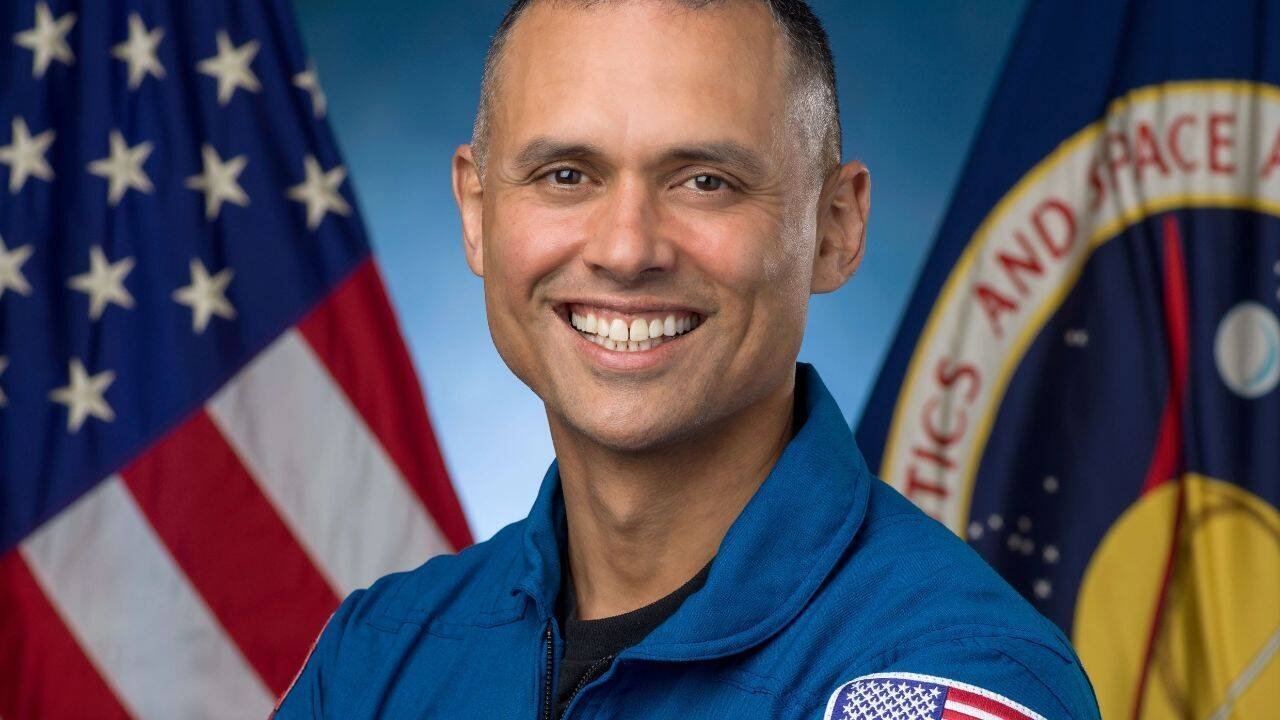
The International Space Station is about to welcome a new astronaut, as NASA astronaut Anil Menon prepares for his first journey into orbit. The mission is scheduled to launch today, July 14, 2026, aboard the Russian Soyuz MS-29 spacecraft from the Baikonur Cosmodrome in Kazakhstan, carrying Menon and Roscosmos cosmonauts Pyotr Dubrov and Anna Kitchener. Once in orbit, the spacecraft is expected to complete a rapid rendezvous and docking with the space station in just over three hours after launch, at which time the trio will become part of the long-term Expedition 74 and 75 crews.According to reports, their stay is expected to last about eight months, during which time they will support a wide range of scientific research and technology demonstrations aimed at improving future manned spaceflight, while also contributing to practical application research on Earth.
Who is Anil Menon: The doctor and military officer is now heading to space
For Anil Menon, the mission marked the beginning of a career as a space traveler after many years working in the medical, aerospace and military fields.The 49-year-old was born in Minneapolis to parents of Indian and Ukrainian descent. Before joining the NASA astronaut corps, he built a diverse career combining emergency medicine with operational experience in demanding environments. As a doctor, he treated patients in hospitals and remote mountains through the Himalayan Rescue Society, and cared for climbers in the Everest region.His military background includes serving as a colonel in the U.S. Space Force, and an early assignment in the U.S. Air Force saw him deployed in Operation Enduring Freedom in Afghanistan. These experiences spanning clinical medicine, aviation and extreme environments ultimately led him to astronaut training.The Soyuz MS-29 mission marked Menon’s first trip into space. During his eight-month stay on the ISS, he will help conduct experiments in semiconductor manufacturing, space medicine, microgravity blood circulation and bioprinting technology, while contributing to the station’s daily science operations.
Anil Menon’s ISS mission: launch date, crew, duration, research and key details
How the Soyuz MS-29 mission will arrive at the International Space Station
The Soyuz MS-29 spacecraft is scheduled to launch from Baikonur at 10:47 am. Eastern Time (EDT), corresponding to 8:17 p.m. India Standard Time.Menon will be joined by Roscosmos cosmonauts Pyotr Dubrov, who will be on his second spaceflight, and Anna Kikina, who will be on her second orbital journey. Menon is the only first-time space traveler among the three.The spacecraft will follow two orbits before automatically docking with the space station’s Prichar module approximately three hours after launch. Once pressure checks and safety procedures are completed, the hatch between the Soyuz and the space station will be opened, allowing the crew to enter their new home in orbit.
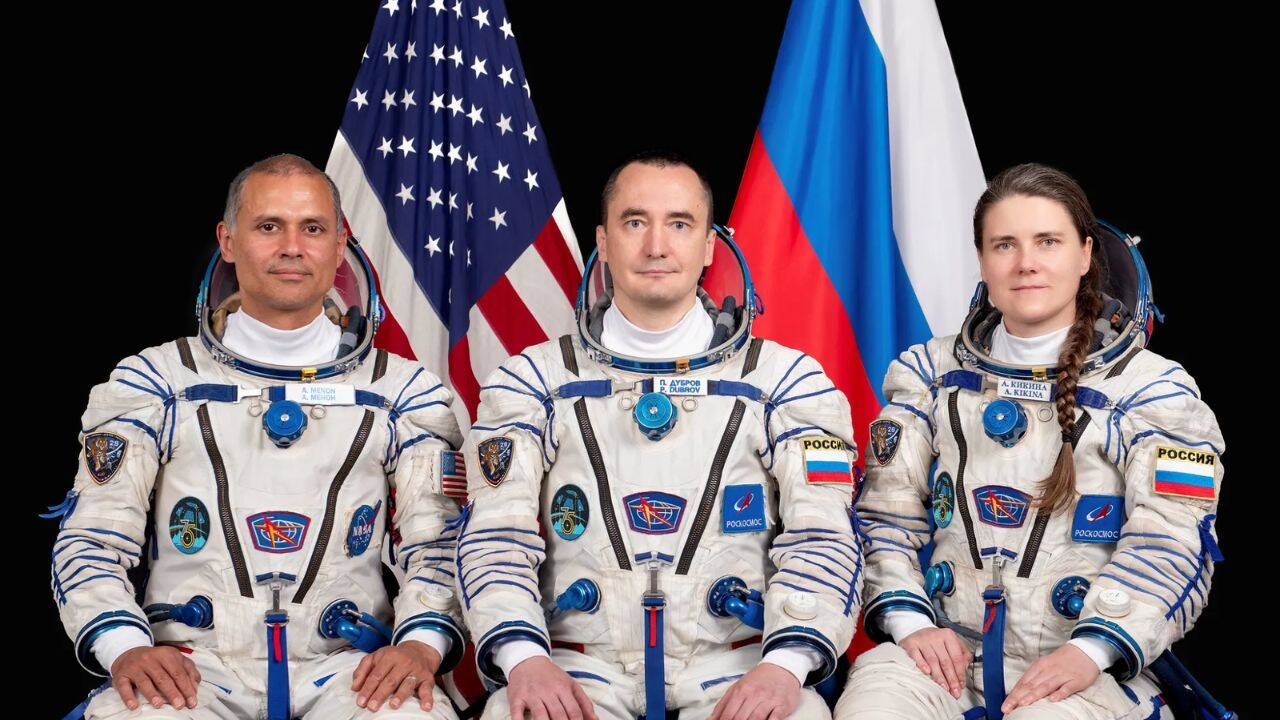
Computer: NASA
Astronauts already living on the International Space Station
Upon arrival, the incoming astronauts will become part of the International Space Station’s permanent expedition team.They will join NASA astronauts Jessica Meir, Jack Hathaway and Chris Williams, European Space Agency astronaut Sophie Adenotte and Roscosmos cosmonauts Sergey Kud-Sverchkov, Sergey Mikayev and Andrei Fedyaev, according to NASA.The number of crew members aboard the space station changes regularly as spacecraft arrive and depart to ensure scientific work continues uninterrupted year-round.
What research will Anil Menon do on the International Space Station?
Much of Menon’s time in orbit will be spent conducting scientific research that relies on the space station’s microgravity environment.One of the projects will investigate improved methods of producing semiconductor crystals in space. Scientists hope this work will support future manufacturing techniques for advanced electronic components used in areas such as high-performance computing, artificial intelligence systems and medical technology.He is also expected to be involved in augmented reality and artificial intelligence-powered ultrasound research. The aim is to make medical imaging more accessible to astronauts far from Earth, reducing reliance on ground experts during future deep space missions.Another study will examine how blood circulates in weightlessness. Understanding these changes is important to protect astronauts during long-duration missions beyond low Earth orbit.Menon will also be involved in experiments involving bioprinting of vascular tissue in microgravity. Researchers are investigating whether this environment could improve understanding of aging and ultimately contribute to future therapeutic research.