
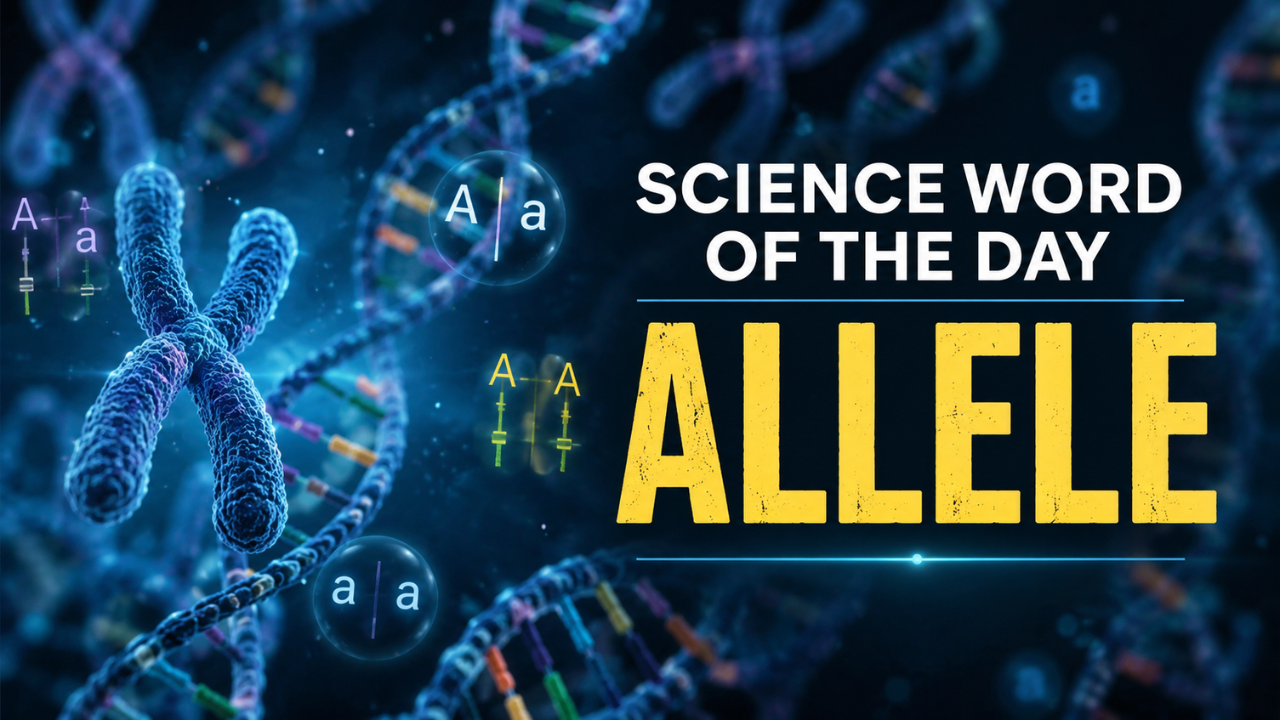
Each organism inherits a unique combination of characteristics, from eye color and blood type to resistance to certain diseases. These traits are genetically determined, but the genes themselves can exist in different forms. These alternative versions are called alleles. While one allele may produce a specific trait, another allele may result in a different version of the same trait. Interactions between alleles form the basis of genetics and help explain why siblings may look different despite having the same parents, and why some genetic diseases occur. Today, the study of alleles plays a central role in medicine, agriculture, evolutionary biology, and forensic science.
What is the definition of the word “allele”?
Allele (noun): One of two or more alternative forms of the same gene occupying the same position (locus) on a chromosome. Different alleles can produce variations in specific genetic traits.Example: A person may inherit one allele for brown eyes and another allele for blue eyes, with the allele for brown eyes usually being dominant.
How to pronounce this word
The allele is pronounced uh-LEEL.International Phonetic Alphabet: /əˈliːl/ (UK) • /əˈliːl/ (US)The emphasis falls on the second syllable (LEEL). A helpful way to remember it is: “uh-LEEL”. The word comes from the Greek allos, meaning “other” or “different,” reflecting the idea that alleles are different versions of the same gene.
Who came up with the term “allele”?
The term allele (originally known as allelomorph) was coined in 1902 by British zoologist William Bateson, one of the pioneers of modern genetics. Bateson coined the term while explaining Gregor Mendel’s laws of inheritance and the different forms genes could take. Shorter allele later replaced allele and became the standard terminology used in genetics throughout the world. Bateson’s work helped establish genetics as a scientific discipline and popularized Mendel’s discoveries decades after they were first published.
Where are alleles used?
Scientists study alleles in the fields of genetics, medicine, agriculture, biotechnology, anthropology, and forensic science.
Example:
- Doctors identify disease-causing alleles to diagnose genetic disease
hereditary disease . - Plant breeders select favorable alleles to create crops with higher yields and greater resistance to pests or drought.
- Forensic scientists compare alleles in DNA samples to help identify individuals during criminal investigations or disaster victim identification.
actual Allele Applications
Understanding alleles has transformed modern science and health care. Genetic testing uses allelic analysis to detect inherited diseases such as sickle cell anemia, cystic fibrosis, and Huntington’s disease. In precision medicine, doctors can study a patient’s alleles to choose treatments that are more effective and reduce the risk of side effects. Agriculture relies on favorable alleles to produce crops that are more nutritious, disease-resistant and resilient to climate change, while livestock breeding programs use them to improve animal health and productivity. Alleles are also critical in DNA fingerprinting, ancestry studies, conservation biology and evolutionary studies, helping scientists trace family relationships, understand biodiversity and reveal how species have evolved over millions of years.