
As England prepare to face Norway in a blockbuster FIFA World Cup quarter-final on Sunday (July 12), all eyes will be on Erling Haaland, the prolific England-born, Norway-raised forward who is now leading the Scandinavian side’s historic charge. Beyond the goals and Viking celebrations, however, there was an unexpected twist to the language.Haaland’s surname, although it sounds unmistakably Norwegian, may actually be more British than many fans realize.Language experts say the name “Harland” reflects the deep historical connection between Old Norse and Old English, making it part of the story of medieval England and the story of Norway, the BBC reported.
norwegian names of english origin
Harland is originally a Norwegian surname, derived from Old Norse and meaning “highland”. But, as Cambridge University professor Richard Dance told the BBC, both Old Norse and Old English have ancestry from the name, as both languages originated from the same Germanic language family.“They are both Germanic languages,” Dance was quoted as saying by the BBC. “Old Norse speakers and Old English speakers probably talked to each other.”This is why “Haaland” sounds strikingly similar to the English phrase “high land.” The professor said the similarity was no coincidence but evidence of a shared linguistic heritage dating back more than a thousand years.
England owes its language to the Vikings
Haaland’s surname is just one example of how deep the Viking influence has been on the English language.The Vikings were Scandinavian sailors, traders and warriors from present-day Norway, Denmark and Sweden who settled in parts of northern England more than 1,000 years ago. Scandinavian settlers left behind words and place names that are still in use today.Everyday Northern English words such as lass, nay, lug and tyke, as well as place names ending in “by” and terms such as beck, fall and tarn, all have Old Norse origins.
A fitting twist before England face Norway
The language story is made all the more compelling because of Haaland’s personal connection to England.The Manchester City striker was born in Leeds on July 21, 2000, while his father Alf-Inge Haaland was playing for Leeds United in the Premier League.Although he was eligible to represent England due to his place of birth, the family moved back to Bryan, Norway, when Erling was three, and he continued to represent Norway throughout his international career.Today, 26 years later, the striker returns to his home country to take part in one of the most important matches in Norwegian football history.Norway beat Brazil 2-1 in the last 16 to reach the quarter-finals of the Men’s World Cup for the first time in history, while England beat Mexico 3-2 to kick off Sunday’s mouth-watering clash.
Modern Vikings lead Norwegian charge
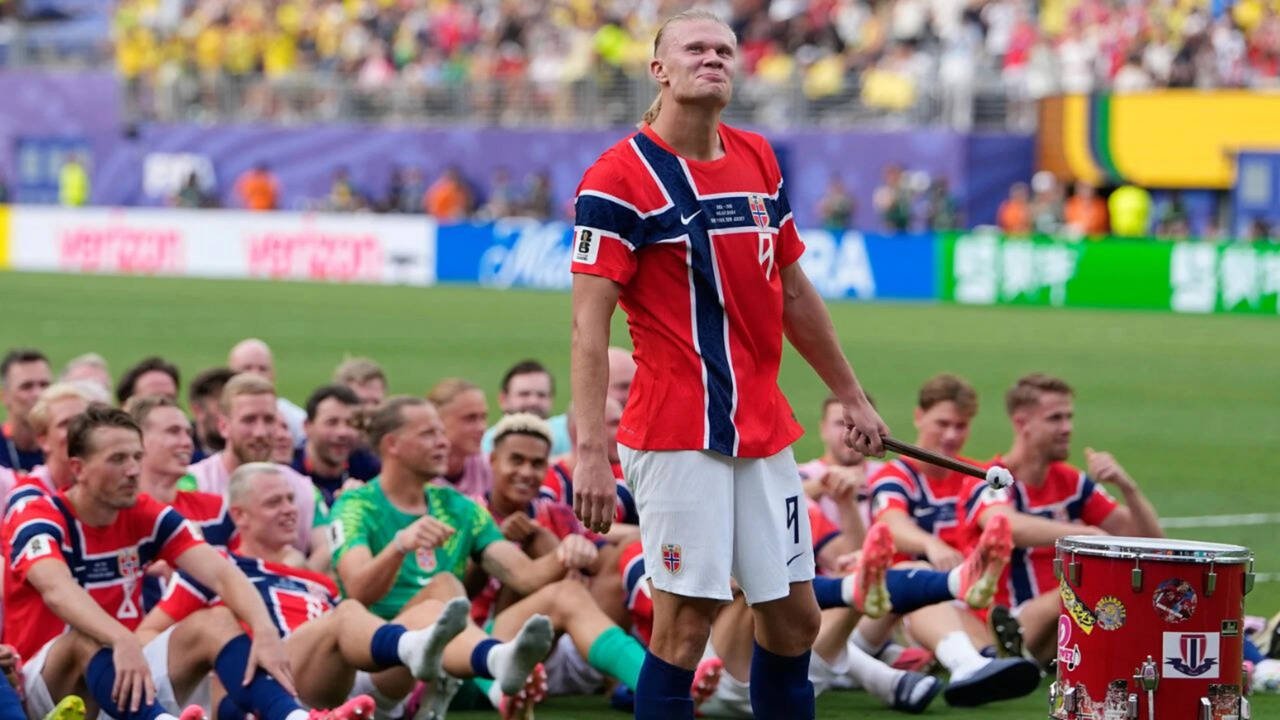
Haaland, who is 6 feet 4 inches tall, has become the face of a new generation of Norwegian football. His explosive pace, physicality and prolific goal-scoring ability put him on par with modern-day Viking warriors, an image that continued to grow during the World Cup.After Norway’s biggest win, Haaland led his teammates in the now-famous “Viking Row” celebration, where the players sat in a row and imitated the rowing motions of a Viking ship while beating imaginary drums.The celebration has become one of the iconic images of the tournament, so much so that a Google Easter egg was inspired by the Viking ship when users searched for his name.
Football’s biggest social media stars
Off the court, Haaland has become one of the biggest internet celebrities in the tournament. His World Cup highlights and clips have racked up hundreds of millions of views on social media, thanks to his spectacular goals, thunderous finishes and his famous unfiltered personality.Fans not only love his record-breaking exploits, but also his goofy humour, deadpan interviews and parody-worthy moments, making him one of football’s most beloved global superstars.As England prepare to stop Haaland from ending his World Cup dreams, his surname also speaks to the centuries-old link between England and Norway.Long before football was played, Viking settlers helped shape the language spoken in northern England. So while Haaland may lead Norway against England on Sunday, his surname reflects the two countries’ shared history, suggesting that one of football’s most recognizable figures also has surprising British roots.