
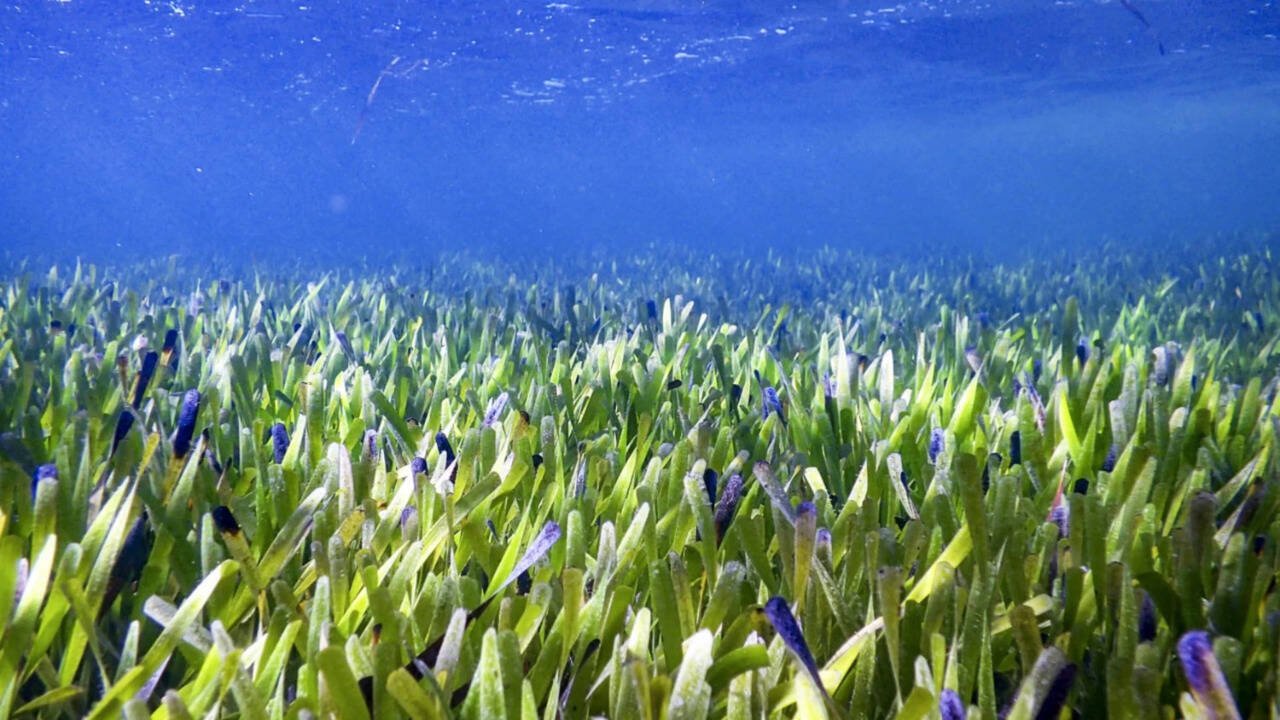
Underwater seagrass fields could play an important role in combating malnutrition in vulnerable coastal communities, according to new research published in Cell Sustainability Report. The research was conducted by scientists from Stockholm University and the Seagrass Project. Research has found that fish caught in seagrass meadows provide a stronger combination of essential nutrients than fish caught from nearby coral reefs.The team studied fish populations in 20 seagrass meadows and 20 coral reefs along 3,000 kilometers of East Africa’s coastline, covering the area between Kenya and Mozambique. Millions of people living in these tropical regions rely heavily on fishing for food and income, while many communities still face poverty and nutritional challenges.Rather than considering nutrients individually, the researchers examined the overall nutritional value of fish as a complete food source. They measured six important nutrients needed for human health: calcium, iron, zinc, selenium, vitamin A and omega-3 fatty acids.The results showed that after adjusting for fish weight, the nutrient density of fish communities living in seagrass meadows was on average 1.6 times higher than that of fish communities surrounding nearby coral reefs.“Fish don’t provide humans with just one nutrient at a time,” said Dr. Benjamin Jones, chief conservation officer at the Seagrass Project, who led the research while working on his PhD at Stockholm University. “They come as a package. A single fish contains iron, zinc, calcium, selenium, vitamin A and omega-3. We wanted to understand which habitats produced fish with the best combination of these nutrients. “
Seagrass meadows are like nature’s supermarkets
This difference became even more apparent when the researchers looked at the fish species most commonly caught and eaten by local communities.Seagrass meadows provide more than eight times the nutritional support of coral reefs for three of the region’s most important food fish species.Species such as rabbitfish and parrotfish are important food sources for coastal populations and are more common in seagrass areas. The study found there were five times more rabbitfish in seagrass meadows than in coral reefs, and 65 times more parrotfish.“We know that coral reefs have more fish overall, but seagrass meadows have more fish that are critical to local food,” Jones said. “This changes the way we think about these habitats. Seagrass is more than just a fish nursery, more than a carbon sink, it’s food infrastructure, nature’s own supermarket.”For coastal households, the health benefits can be huge. Research has found that eating a common fish caught from a seagrass meadow can meet about 5% of a young child’s daily iron needs, 21% of zinc needs and 70% of selenium needs.
Protecting more than just coral reefs
The findings challenge the traditional focus of ocean conservation, which often places coral reefs at the center of global conservation efforts. Coral reefs remain extremely important and are under severe pressure from overfishing and rising ocean temperatures.However, seagrass meadows are also disappearing rapidly due to damage from coastal construction, industrial waste, human activity, and river pollution from farms and cities.The researchers believe conservation efforts need to consider both ecosystems because they support human communities in different ways.“If we lose seagrass meadows, we’re not just losing habitat,” Jones warned. “We could be losing a source of nutrition for millions of people who need it most.”The study does not recommend replacing coral reef protection with seagrass protection. Instead, the researchers say, both environments need support because they play different roles.Coral reefs in general produce large amounts of fish, while seagrass meadows provide greater access to certain food fish that contain valuable nutritional combinations.“Coral reefs and seagrass meadows work together,” Jones said. “If we want coastal fisheries to feed people, we need to protect the entire seascape.”
Protecting seagrass from human activities
Saving these underwater meadows will require action beyond the ocean. Researchers say many of the biggest threats to seagrass begin on land.They recommend greater investment in sewage systems, cleaner rivers, reduced agricultural pollution and fairer fisheries management to protect ecosystems and the people who depend on them.The study also discusses a possible issue related to growing interest in the blue carbon market, where companies invest in ecosystems such as seagrass because they can store carbon. Researchers warn that conservation projects must not prevent local communities from accessing traditional fishing areas.The authors emphasize that protecting seagrasses must include the people who depend on them for food and livelihoods.“Seagrass conservation must be about people and nature,” Jones concluded. “These grasslands store carbon, support biodiversity and help feed millions of people. This makes them one of the most important ecosystems on Earth.”