
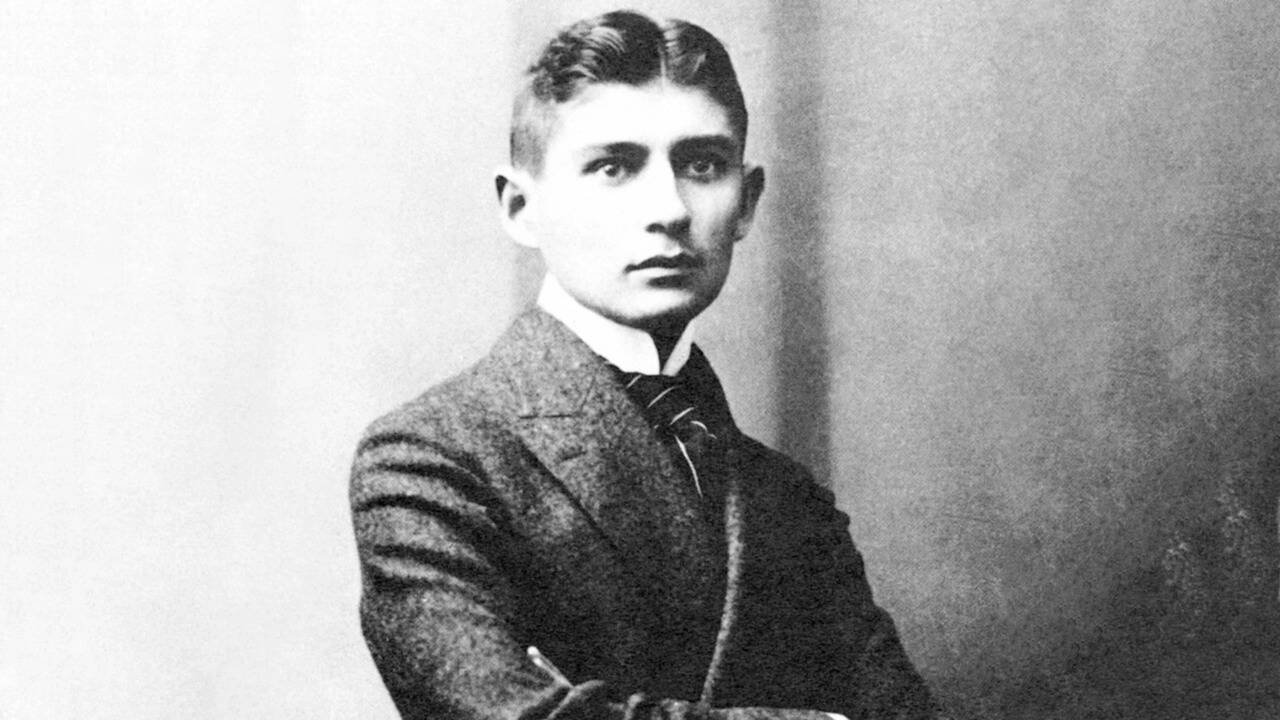
Chess players abandon seemingly winning attacks because the situation calls for retreat. A scientist has abandoned a familiar theory after years of defending it. A person leaves a stable career to pursue a path that to the outside world may seem regressive. There’s a strange pattern to these moments: Progress sometimes begins with actions that seem to go in the wrong direction.Franz Kafka’s famous quote “Some things are achieved only by a deliberate leap in the opposite direction” captures this paradox. This quote shows that some goals cannot be achieved through persistence alone. They need to reverse course and be willing to abandon seemingly logical routes and enter unfamiliar territory.The power of this statement lies in its challenge to common ideas about achievement. Modern culture often celebrates continuous progress, efficiency, and accumulation. Kafka points to another kind of movement: purposeful withdrawal, refusal, or surrender that creates the conditions for transformation.This quote remains attractive because it describes an experience that has been familiar to generations. People often find that solving a problem requires changing the question rather than simply trying harder to answer it. Going in the opposite direction is not failure. This is a different form of action.
Kafka, the modern condition and the meaning behind his words
Franz Kafka (1883-1924) was a German-speaking Bohemian writer whose novels explore alienation, bureaucracy, guilt, identity, and the uneasy relationship between individuals and the systems around them. Born in Prague, then part of the Austro-Hungarian Empire, Kafka worked as an insurance officer while writing the stories and novels that became the core of modern literature.It is difficult to determine from Kafka’s published works and extant writings the exact origin of the phrase “Some things one can achieve only by deliberately leaping in the opposite direction.” Unlike famous passages in works such as The Metamorphosis (1915) or The Trial, this quote was not widely recorded in Kafka’s notebooks, letters, or books. In collections of citations, this sentence is often attributed to him, but the available evidence does not determine when or where he wrote or uttered it.This uncertainty is important because Kafka’s reputation often encouraged the circulation of brief statements that sounded consistent with his worldview. However, the idea behind this quote is indeed very similar to themes found throughout his writing: the difficulty of breaking free from fixed patterns, the strange routes one must take to understand oneself, and the tension between ordinary expectations and deeper truths.Kafka’s characters often find themselves in trouble because they continue to use the same methods in a system they don’t understand. In “The Trial,” Joseph K. attempts to defend himself against the inexplicable legal process by following the structure of his imprisonment. Kafka’s novel repeatedly asks whether a person can find freedom by following an expected path.
The philosophy of reversal
The idea that progress may require opposite movements appears in several philosophical traditions. In psychology, it is similar to the process of confronting something that people avoid. Swiss psychiatrist Carl Jung believed that individuals must encounter rejected parts of themselves, which he called the “shadow,” in order to achieve greater psychological integration.Similar patterns appear in religious and philosophical traditions. Many spiritual practices value surrender over control. In Taoist philosophy, the idea of living in harmony with reality often involves avoiding forceful resistance. The Tao Te Ching, an ancient Chinese text traditionally associated with Lao Tzu, describes the effectiveness of surrender and flexibility through images such as water, which adapts while gradually reshaping stone.This sentence also reflects a principle in creative work. Artists often find that abandoning a familiar style opens up new possibilities. Pablo Picasso’s move from traditional expression to Cubism was not a simple improvement on existing techniques. It’s a rejection of conventional expectations of how reality should be portrayed.So “Leap in the Opposite Direction” is not a celebration of random decisions. It describes the deliberate interruption of habits. People who make the leap understand that current methods have reached their limits and choose uncertainty over repetition.
Why Kafka’s ideas are suitable for reshaping the times
This statement feels relevant in 2026, as many areas of life are undergoing rapid change. Technology, employment and education increasingly require people to rethink skills and assumptions they once thought were permanent.Entrepreneurs often describe successful innovation as a willingness to question existing models. Companies that create new markets often start by rejecting established practices. Streaming services have transformed entertainment by challenging the assumption that viewers will continue to watch television through traditional schedules. Digital payment systems are transforming transactions by reducing reliance on physical currency. These shifts involve moving away from familiar structures before new models emerge.The same principle applies to personal decision-making. Career researchers often study the benefits of planned transitions, in which individuals deliberately let go of a previous identity to develop another. People who leave stable careers to retrain in new fields may lose progress, but the change may represent a strategic investment in a different future.Education provides another example. Effective learning often requires students to recognize that previous understanding may be incomplete. Beginners learning a language, mathematics, or an instrument must accept mistakes and temporary confusion. Improvement comes from periods when performance seemed worse before improving.This sentence also provides a helpful warning. Not every reversal leads to meaningful results. Giving up on a path without reflection is not the same as taking a deliberate leap. This quote from Kafka emphasizes intention. Since the existing direction cannot reach the desired destination, the opposite direction is chosen.