
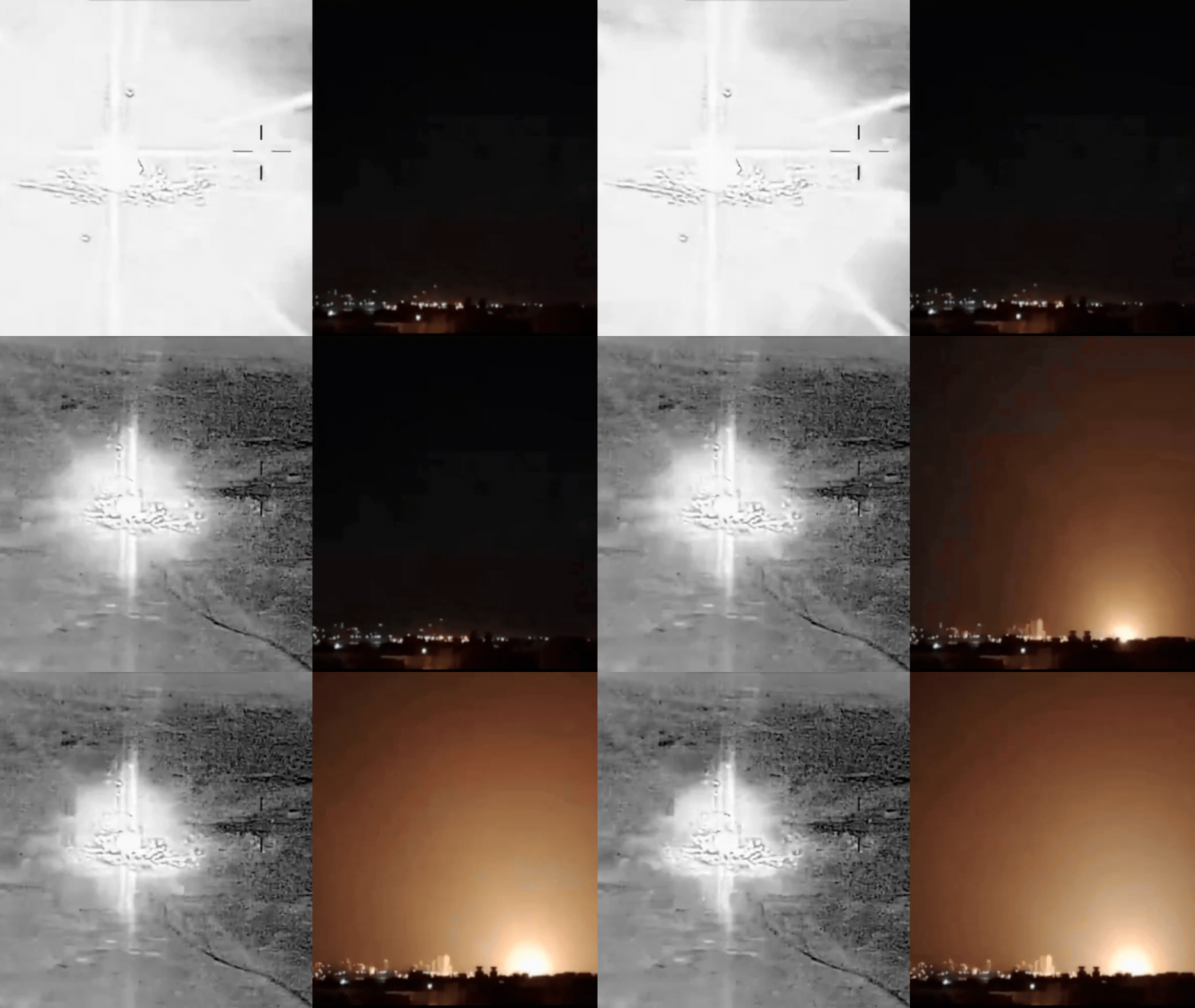
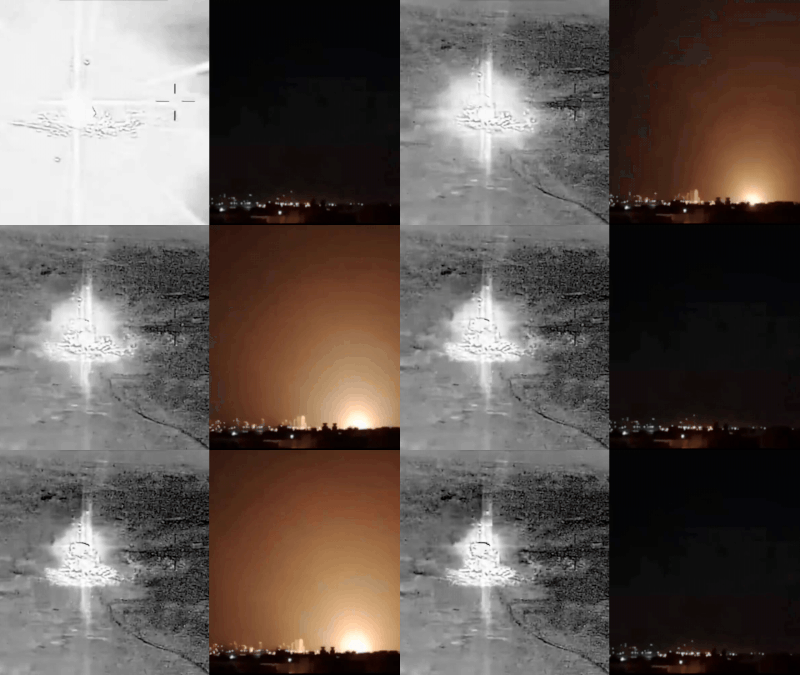
A fragile ceasefire effectively collapsed after the United States and Iran launched new military strikes on Thursday, widening the conflict across the Gulf and raising fears of a wider regional war.The latest escalation comes after the United States launched a new round of attacks on Iranian military infrastructure, saying the operation was retaliation for attacks on commercial shipping in the Strait of Hormuz and aimed at ensuring “freedom of navigation.” Iran responded with missile and drone attacks targeting U.S. military assets and allied facilities in the Middle East, while reiterating that any further U.S. intervention would invite a “devastating response.”The exchange came as Iran’s Supreme Leader Ayatollah Ali Khamenei died in a U.S. attack earlier this year and was buried in Mashhad. US President Donald Trump also announced that the temporary ceasefire with Tehran was effectively “over”, although diplomatic negotiations continued. The latest attack is the worst disruption since the truce came into effect in April.
What is America’s goal?
There are approximately 90 military bases across IranU.S. Central Command (CENTCOM) said it struck about 90 military targets, including air defense systems, coastal surveillance assets, missile launchers, drone storage sites and logistics infrastructure. The United States said the attack was aimed at “further weakening” Iran’s ability to threaten international shipping through the Strait of Hormuz following the attack on the tanker.Bushehr ProvinceIranian officials said the U.S. strikes hit military installations, a fishing port and areas surrounding the Bushehr nuclear power plant, the country’s only nuclear power plant operated with Russian aid. Officials said the reactor itself was not hit, but they accused Washington of targeting the surrounding area again after launching attacks during the conflict.Bandar Abbas CityAn explosion was reported in Bandar Abbas, Iran’s main southern port city overlooking the Strait of Hormuz. Iranian media also reported attacks on nearby military installations, but the extent of the damage was unclear.Rail and transportation infrastructureIranian media reported that the U.S. strike damaged a railway bridge used for trade with Russia and China, and that other bridges on the route to Mashhad were also targeted. The attack came as Ayatollah Ali Khamenei’s funeral procession was held in the city.Military installations in southern IranU.S. airstrikes also hit military installations elsewhere in Bushehr province and other southern coastal areas, according to Iranian officials. Iranian authorities said two days of attacks had killed at least 14 people and wounded 78 others, most of them members of the armed forces.
What are Iran’s goals?
Kuwait: Patriot Missile SystemIran said it fired drones and missiles at U.S. Patriot air defense systems based in Kuwait. Kuwait’s military said it intercepted three ballistic missiles, one cruise missile and 10 drones before they could reach their targets, the Associated Press reported. One man was injured by fragments from an intercepted shell.Qatar: US early warning facilityThe Iranian military said it targeted a U.S. early warning site in Qatar, including satellite dish infrastructure, which is home to Al Udeid Air Base, the largest U.S. military installation in the Middle East. While there was no immediate confirmation of the damage, Qatar condemned the attack on commercial shipping and reiterated its call for diplomacy to prevent a wider conflict.Bahrain: US Fuel Storage FacilityIran claimed it had attacked a U.S. military fuel storage facility in Bahrain, home to the U.S. Navy’s 5th Fleet headquarters. Air raid sirens sounded multiple times across the country before Bahraini authorities said their air defenses intercepted the incoming missile. Officials did not say whether any military installations were damaged.Jordan: Military installations with ties to the United StatesIran’s Revolutionary Guards said they fired 10 ballistic missiles at Jordan’s Azraq military base used by U.S. forces and at what they said were U.S. military command centers in the region. Jordan said its air defenses intercepted eight incoming missiles without causing casualties or damage.Meanwhile, the Strait of Hormuz remains a flashpoint, with Iran’s Revolutionary Guards warning they will continue to monitor shipping, claiming ship traffic has returned to around 50% of pre-war levels. The Guard warned that any further U.S. intervention would invite a “devastating response” and insisted that the waterway could only be reopened “under Iranian arrangements and not through U.S. threats,” Reuters reported.