
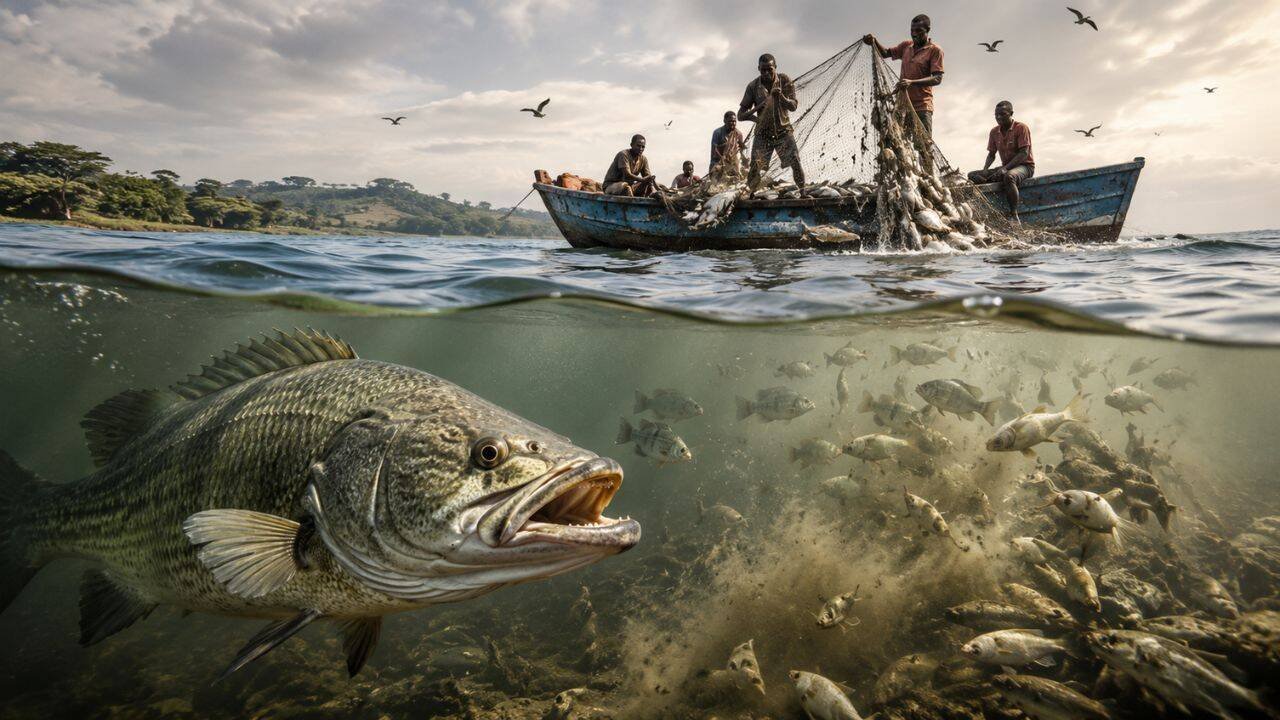
For generations, Lake Victoria has supported one of the richest freshwater ecosystems in the world. Beneath its surface live hundreds of species of cichlid fish, many of which are found nowhere else on Earth. These colorful little fish have evolved over thousands of years to occupy different parts of the lake, from rocky shorelines to deeper waters. But a decision made in the mid-20th century changed the balance of life in the lake. According to National Geographic, the introduction of Nile perch, a large predatory fish native to parts of Africa, is intended to enhance commercial fishing. The move created a profitable new industry and brought jobs to the lakeside community. It also triggered one of the most significant ecological changes ever seen in freshwater environments.
How the Nile perch is destroying a lake built over millions of years of evolution
Nile perch arrived in Lake Victoria in the 1950s with the aim of increasing the supply of fish to the commercial market. At the time, officials believed introducing the larger species could boost catches and create new economic opportunities for lakeside communities.However, the consequences extend far beyond fisheries. Nile perch are powerful predators, capable of growing to over 100 kilograms in some cases. In Lake Victoria, they entered an environment with few natural controls on their population. The lake’s native cichlids have become their main prey. These fish have developed into a remarkable array of species, with different body sizes, feeding habits and behaviors to adapt to the specific conditions within the lake. Some feed on algae, some on small organisms, and many play only very narrow ecological roles.As Nile perch populations increase, many of these specialized cichlid species are struggling to survive. Within decades, hundreds of native species experienced severe declines, with many disappearing from parts of the lake entirely.
How the loss of cichlids changed the lake’s natural balance
Lake Victoria is seen as a striking example of rapid evolution before the Nile perch, as all cichlid species descend from a single ancestral group.This disappearance not only signals a decline in fish populations, but also marks the extinction of many unique species that have evolved over the years. Some fish have specific diets or specific reproductive behaviors.The presence of such a diverse range of fish is a very important part of the lake’s natural food chain, so any changes in the abundance of these species will affect the relationships between species and the movement of energy through the system.The problem is not caused by just one cause; in addition to Nile perch predation, Lake Victoria also suffers from pollution, deteriorating water quality and increased fishing activity.
The fish that turned Lake Victoria into an export hub
While ecologists express concern about biodiversity loss, many communities living around Lake Victoria experience a very different reality. Nile perch quickly became a valuable commercial resource.By the 1990s, the fish reportedly created a booming export industry. Processing plants have sprung up along the lake’s shores, producing large quantities of bass for the international market. Fishing communities continued to expand as people moved closer to the lakes in search of work and income.For many fishermen, Nile perch represents an opportunity that smaller native species cannot offer. The fish is larger, easier to sell and connects local communities to global markets. The industry provides thousands of jobs, from fishing and processing to transport and trading. Towns around the lake grew around the demand created by the new fish trade.This economic success also changed local diets and fishing practices. Small fish such as the daga remain an important food source and are also used as animal feed and bait, but it is the Nile perch that becomes the species most closely associated with commercial value.
Growing pressure behind Lake Victoria’s lucrative fish trade
Although the emergence of Nile perch has brought economic benefits, the emergence of new problems is inevitable. As the scale of the industry expands, fish stocks face increasing pressure.As fishing wiped out most of the largest Nile perch, larger Nile perch began to become increasingly difficult to find. Eventually, the size of the catch got worse and some processing plants began to face difficulties due to erratic supply. The same industry that provides economic development is also facing new problems related to overfishing. Nile perch fishermen are beginning to face problems related to changes in fish stocks.Ecological changes are also having an impact on communities that use the lakes in ways other than fishing. Decreases in native fish stocks have led to a reduction in biodiversity in the area.