
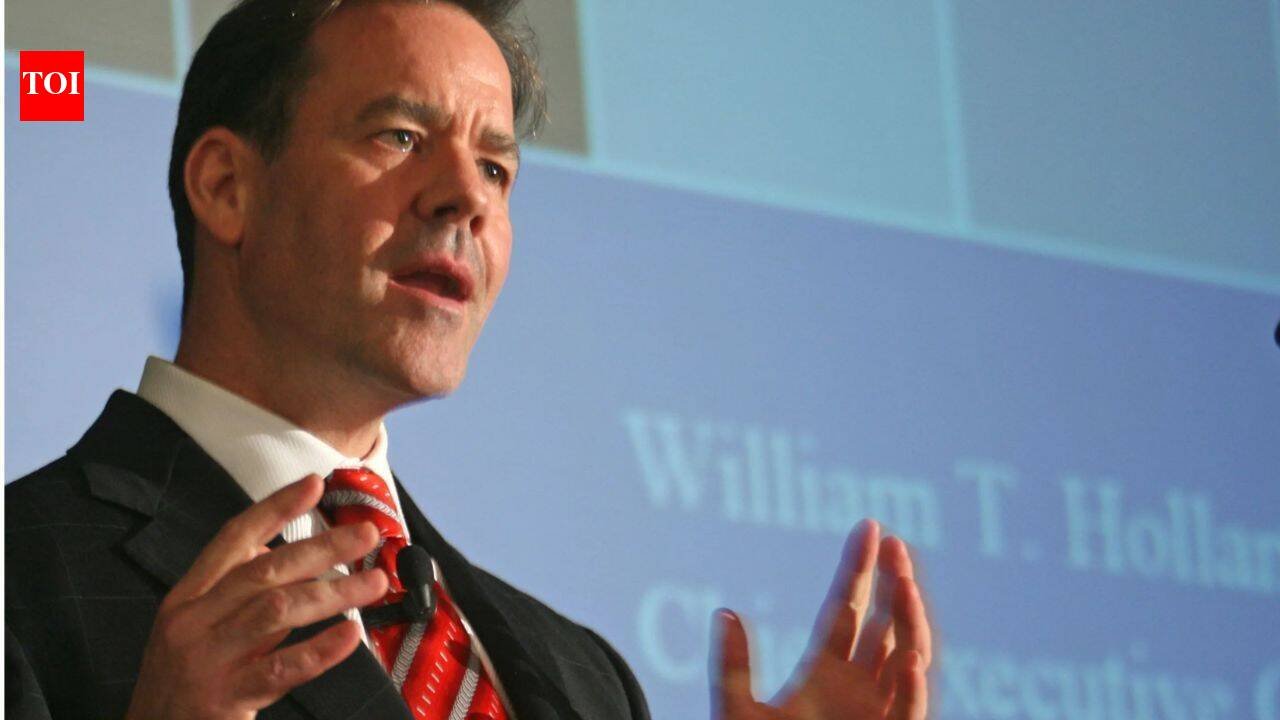

For many people, financial independence marks the end of their working lives. For Bill Holland, it marked the beginning of a very different career. He had made enough money to stop working before most people had established themselves professionally, but the appeal of retirement never lasted long. Decades later, his workday still includes taking public transportation to his office in Toronto rather than retreating into a life of luxury, Fortune reports. His story is less about sudden wealth than about the wealth that followed. While his wealth grew through Canada’s investment industry, many of the habits that shaped his early life remained largely unchanged, even as his financial situation changed beyond recognition.
how Netherlands His early struggles shaped the mindset behind his investing success.
The former CEO of CI Financial Holland didn’t enter finance with a carefully laid out career plan. After graduating from the University of Toronto, he worked a series of mundane jobs, including factory work, beverage delivery and janitor work. His career reportedly took a turn for the better when, at age 27, he joined Mackenzie Financial as a customer service representative. This position is very demanding and will result in constant customer calls throughout the working day. Holland has since said the workload never bothered him as much as it did some colleagues, and he credits the physical work with giving him a different perspective on what constitutes a difficult job.Within just a few years, Holland found himself in an unusually strong financial position. The mutual fund business in Canada was expanding rapidly at the time, creating opportunities that few could accurately predict in advance. Rather than viewing his success simply as the result of superior judgment, Holland always pointed to timing. He openly admits that luck played a large role in his financial rise, suggesting that many people who achieve extraordinary success benefit from circumstances that work in their favor at the right time.By the time he was 32, he reportedly had accumulated enough wealth that he no longer needed to work for financial reasons.
Why retirement was never part of the plan
Instead of retiring, Holland joined a much smaller investment firm managing only a small amount of client assets. Over time, the company grew into CI Financial, one of Canada’s largest investment management companies.“People will complain about how hard the job is, but unless you’re doing something that involves lifting something heavy, it’s not that hard,” Holland said. His career continues to gather momentum. He became CEO in 1999 and later served as executive chairman. Under his leadership, the company’s assets expanded dramatically over the next few years. In 2025, the company was taken private in a deal involving the United Arab Emirates’ sovereign wealth fund after growing into one of the country’s largest asset managers.While estimates of Holland’s personal wealth have varied over the years, his stake in the company was worth hundreds of millions of dollars before he eventually sold his remaining shares.
The simple lifestyle behind huge wealth
Although Holland could live almost any lifestyle he wanted, his daily habits remained surprisingly mundane. He still takes public transportation to his office in Toronto most days of the week, rather than relying on a private driver or expensive car. He now devotes his time to investment activities, real estate investments and managing his family’s philanthropic foundation. Giving money became as much a part of his later career as making money. Over the years, through his philanthropic work, more than $100 million has been donated to charitable projects.
A habit familiar to the very wealthy
Holland was far from the only wealthy businessman whose lifestyle was more restrained than one might imagine.According to Fortune magazine, Warren Buffett, the wealthiest person in the world, has lived in the same house in Omaha that he bought for $31,500 in 1958 for decades. Although he has the resources to purchase just about any property, he often says the house has personal value because it’s where his family grew up. His reputation as a cheap spender extends far beyond housing. Stories of carefully curated cheap breakfasts have become part of the veteran investor’s image, reinforcing his long-standing preference to avoid unnecessary luxury.Elon Musk has taken a different route, though it’s also straying away from the traditional billionaire life. He previously owned several luxury homes in California, but later sold most of them and said he didn’t want to own any more houses at all.His move to Texas brought him closer to SpaceX’s launch operations, and he later described living in a relatively small house near the company’s facilities. Earlier this year, his mother, Maye Musk, shared the property’s simple interior, describing sparse furniture and a nearly empty refrigerator.
The philosophy that shaped his extraordinary career
Holland’s experience shows that achieving financial independence does not automatically lead to a completely different lifestyle. While his career has brought him extraordinary financial rewards, many of the routines he established long before he became wealthy remain part of his daily life.He also refuses to describe his achievements as entirely self-made. By repeatedly acknowledging the role of lucky timing and perseverance, Holland offers a story of financial success that is less predictable than the familiar tales centered solely on determination or talent. His career ended up being much longer than it needed to be. Retirement before the age of thirty-five was an option for him, but continuing to work, invest, and support philanthropy became the path he chose.