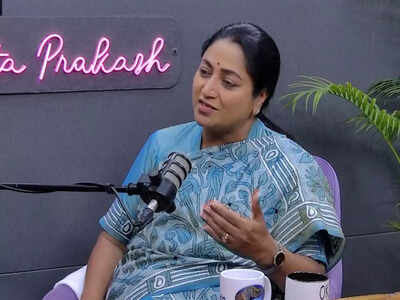
Delhi Chief Minister Rekha Gupta said air pollution and pollution in the Yamuna river were “legacy issues” caused by years of neglect and short-term decision-making by the previous AAP government, and claimed that her government was pursuing a comprehensive, long-term strategy to tackle the two issues.In an exclusive interview with ANI, Gupta dismissed criticism that measures such as GRAP, odd-even, artificial rainfall and anti-fog cannons have failed to bear fruit and said these measures were never a permanent solution.
“Pollution is a legacy of the negligence of successive governments. If you only look at the pollution problem from the perspective of air cleanliness, you will not get results.” You have to take a holistic view on dust, air and water issues together,” she said.Slamming the Aam Aadmi Party (AAP), Gupta said previous governments relied heavily on ad hoc relief measures and propaganda while neglecting structural reforms.“Water trucks, anti-smog guns and fog can only provide short-term relief. The real work should be done on dust control, public transport and long-term planning,” she said.The chief minister believes vehicular emissions, road dust and poor waste management are the main causes of Delhi’s air pollution, which often falls in the “severe” category even in winter. “Car emissions are said to be the main cause of pollution, but public transport has never been as good as it should be,” she said.Gupta said her government has developed a phased plan to move Delhi’s public transport system towards zero emissions. “When we came, we planned that public transport should be 100 per cent electric and clean fuel. Today, Delhi has around 3,600 buses. We added 1,700 buses after coming to power and by December 2026, the number will reach 7,700. Our requirement was 11,000 buses and we will complete it by 2028,” she said.Funds have been sanctioned for metro expansion, last-mile connectivity through electric vehicles, e-bikes and bicycles near metro stations, and stricter enforcement against substandard and polluting vehicles, she added. “The government must carry out a 360-degree campaign and work on all aspects,” she said.Gupta also pointed to reforms in road construction and maintenance to reduce dust pollution. “Earlier, one department would build a road and another would dig another. That was the work culture in Delhi. We are changing that by strengthening pipelines and accountability,” she said, adding that engineers from PWD and MCD have come together to standardize practices.Gupta, who directly linked mountains of rubbish to air pollution, said the apparent reduction in landfills was the result of policy-driven, time-bound action. “Around 11,000 tonnes of waste is generated in Delhi every day. Earlier, this waste was never processed and that is the reason for the garbage mountains,” she said, attacking the opposition for merely moving waste from one location to another.She said the government was confident of clearing legacy waste from Okhla and Balsiwa landfills by 2026, while work at Ghazipur may take longer. “These results were not achieved without policy and dedication,” she said.Gupta said that in the Yamuna River, untreated sewage, cow dung and industrial waste flow directly into the sewers, seriously polluting the river. “Friends, the sewers flow directly into Yamunaj. The sewage treatment plant has not been upgraded. The conditions have been damaged over the years,” she said.The chief minister said her government has upgraded 37 old sewage treatment plants and initiated a massive desilting drive of drains across the city. “Desilting work started as soon as we arrived. New machines from Finland are being used in places like Najafgarh, Barapura and Sukhripura,” she said.She also highlighted the steps to process cow dung through biogas plants. “Has anyone thought about setting up a biogas plant after all these years? Thousands of tons of excrement go into the sewers and then into Yamunaj. We have started the first plant that can handle 600 tons and more are under construction,” she said. Responding to opposition criticism over the pace of clearing the Yamuna, Gupta said results would not be immediate. “People ask, ‘When will Yamuna be clean?’ I tell them these are conditions that have been damaged over the years. The steps we take are time-bound and the results will be seen over time,” she said.Reiterating the government’s approach, Gupta said: “The government will do its part and the public must also do their part. As long as we work together, we can provide better air and cleaner water to Delhi.”