
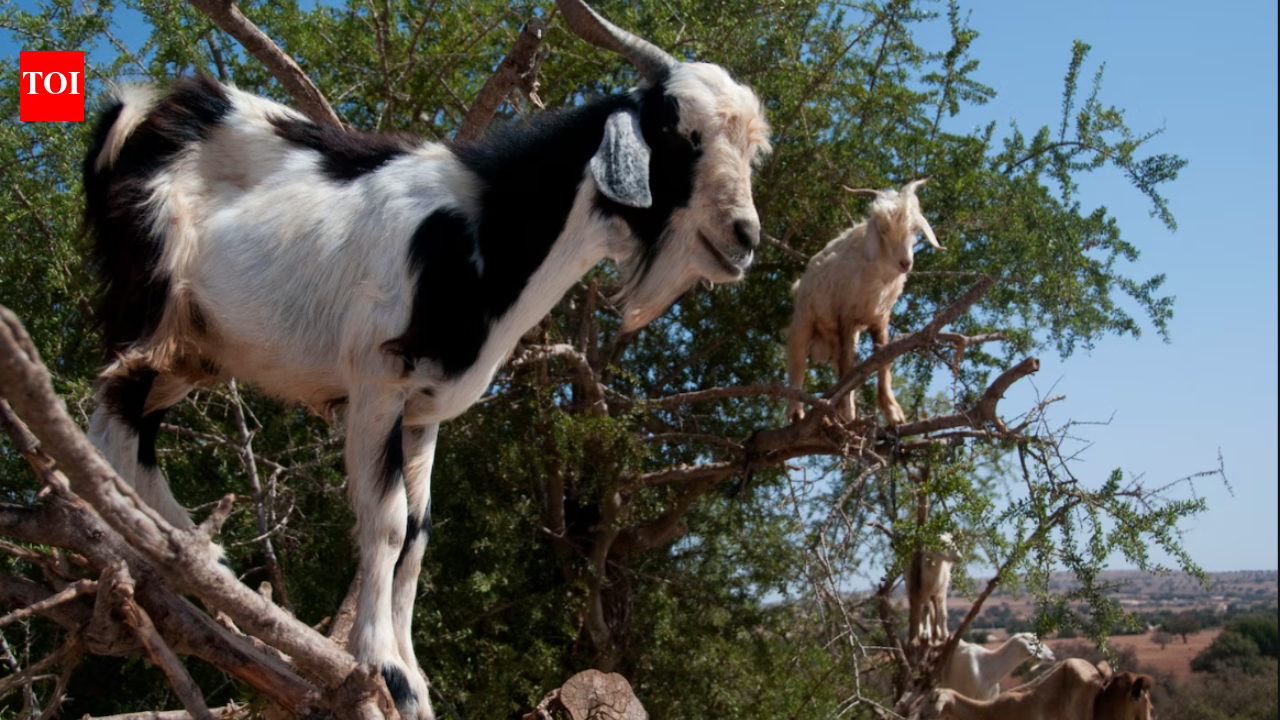
At first glance, this sight seems almost impossible. Dozens of goats balance effortlessly on the branches of thorn trees, standing meters above the ground as if they were ridges. This extraordinary spectacle has become one of Morocco’s most iconic natural attractions, leaving visitors wondering if the photos are real. However, these agile animals don’t perform tricks. They are simply looking for food in one of the driest areas of North Africa. Even more surprising, scientists found that this unusual feeding behavior may also help disperse seeds and contribute to the natural regeneration of Morocco’s rare argan forests. This is because goats, trees and communities are closely related to each other, making the interplay between animal behaviour, ecology and traditional occupations an interesting case study.
Morocco’s famous tree-climbing goats are helping forests in unexpected ways
According to National Geographic, the legendary tree-climbing goats are mostly found in southwestern Morocco, where argan trees (Argania spinosa) thrive in a semi-arid environment. Unlike other trees, the argan tree produces fleshy fruits that attract goats.Goats are very good at climbing. Their leg muscles are very strong and developed, their forked hooves and their excellent balance help them easily climb narrow and thorny branches in search of the best fruits.
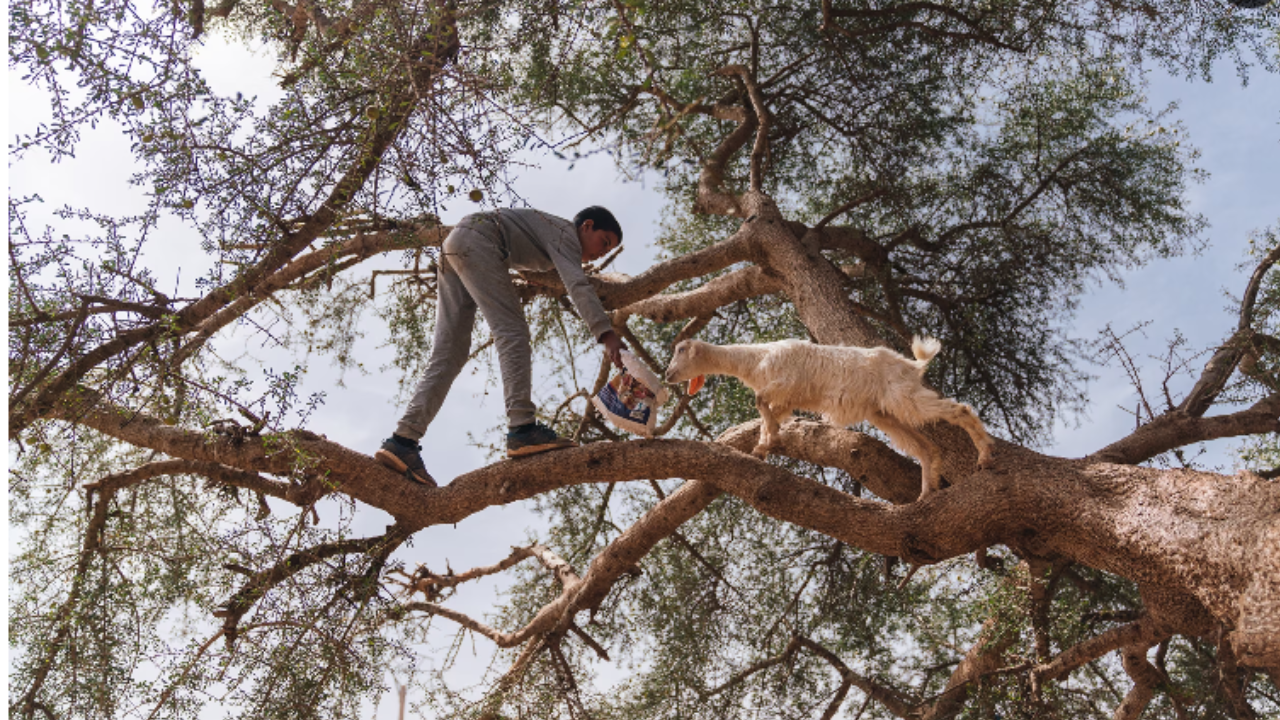
Photo credit: Erika Hobart/National Geographic
according to United NationsUniquely adapted to Morocco’s dry climate, the argan tree plays a vital ecological and socioeconomic role by providing food, preventing soil erosion and supporting rural livelihoods.Goats climb not for recreation but in response to limited grazing opportunities. In an environment where fresh vegetation is often scarce, picking fruits high in the canopy can provide a valuable source of energy.
How tree-climbing goats are helping regenerate Morocco’s endangered argan forests
For generations, local communities have believed goats played a role in spreading the argan tree, but scientists recently investigated exactly how this happened.The fruit contains a hard nut that protects the seeds inside. Goats consume the soft outer pulp but usually reject or excrete the hard nuts after digestion. This process removes the seeds from the parent tree, increasing the chances of successful germination in the new location.The study’Tree-climbing goats spread seeds while ruminating ” Published in the Ecological Society of America’s Frontiers in Ecology and Environment journal, found that goats can be effective long-distance seed dispersers of argan trees by transporting viable seeds throughout the landscape.The researchers concluded:“Goats disperse viable argan seeds. For successful dispersal, many plant species produce edible fruits that attract frugivorous vertebrates, which ingest the fruits and transport the seeds into their bodies until they are released elsewhere through regurgitation or defecation.”This finding contradicts conventional wisdom that grazing animals only has a negative impact on forests. If grazed correctly, goats can also be an asset in the reforestation process because of their ability to spread seeds beyond the canopy cover of mature trees.Still, researchers point to the need to maintain the right balance. Overgrazing, especially by large herds of animals, may stunt the development of argan woodland seedlings.
Does goat climbing really benefit the argan oil industry and local communities?
The argan tree is a very well-known tree globally for its production of argan oil, which is considered the most expensive vegetable oil. This oil is traditionally used in Moroccan cuisine and is currently becoming increasingly popular in the beauty and cosmetics industry. It is made from seeds that grow inside the hard core of the fruit.One of the many myths about argan oil production is that it is always produced using seeds collected from goat dung.this UNESCO Biosphere Reserve The designation of Arganeraie highlights the outstanding environmental, cultural and economic importance of the area, recognizing that it is a landscape where biodiversity conservation and sustainable development are closely linked.Millions of people have seen photos of goats perched in trees, but some roadside displays are created specifically for tourists. Conservation groups and wildlife experts encourage visitors to choose ethical operators and avoid sites where animals are placed in trees just for photos instead of grazing naturally.However, when observed in real grazing areas, tree-climbing goats remain one of nature’s most extraordinary examples of behavior adapted to challenging environments.
An unusual partnership shaped by nature
At first glance, the idea of a goat perched on a tree branch may seem absurd. However, this is an example of a special biological interaction that has developed over hundreds of years. Suffering from scarcity of food resources, this flexible creature climbs argan trees and eats its fruits, thereby spreading its seeds.When combined with sustainable land use, this natural trend helps protect one of the most unusual forest ecosystems on Earth. This proves that even the most unusual animal behaviors can play an important role in conservation efforts.