
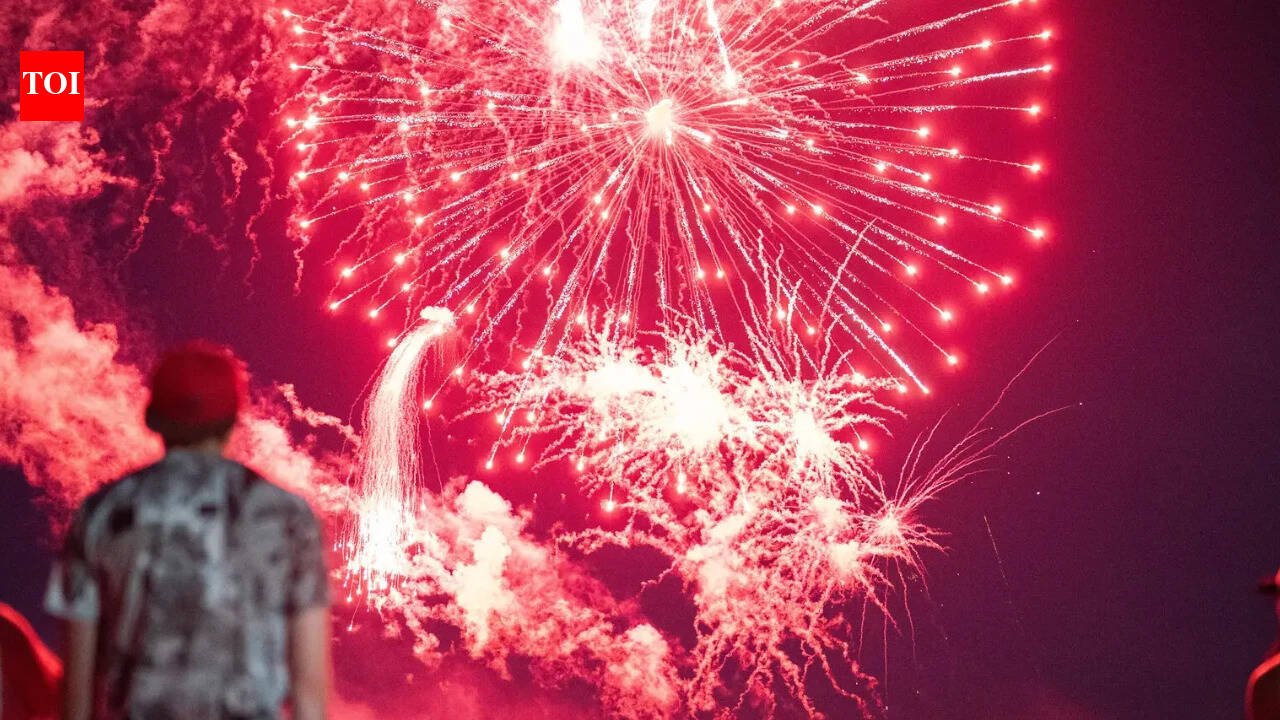
TOI reporter in Washington: Tipu Sultan’s Mysore artillery shells were converted by the British into Congreve missiles, leading Francis Scott Key to note the “red glare of the rockets” in The Star-Spangled Banner , and nearly two centuries later the American capital was about to discover that fireworks, no matter where they came from, were no fun on a hot summer night.With temperatures expected to hit record highs across much of the United States on July 4, the Trump administration is stepping up what it promises will be the biggest fireworks extravaganza in history to mark America’s 250th birthday, a spectacular that aims to win a Guinness World Record while testing the atmosphere’s ability to absorb smoke.Washingtonians are accustomed to the spectacular Independence Day displays on the National Mall. This year, however, the word “spectacular” has been elevated to “extra-large.” Organizers said more than 860,000 fireworks will light up the sky during the 40-minute finale, about 50 times more than a typical Fourth of July celebration, which typically sees 17,000 to 20,000 projectiles fired in less than 20 minutes.Pennsylvania-based fireworks company Pyrotecnico, one of the largest fireworks industry professionals in the United States, has brought in more than 50 truckloads of fireworks and coordinated launches at the Lincoln Memorial Reflecting Pool, West Potomac Park and on eight barges moored on the Potomac River. About 60 technicians will perform simultaneously in what organizers hope will be the world’s largest fireworks show.However, environmentalists are not convinced. Fireworks are essentially colorful chemical explosions that release fine particulate matter, sulfur compounds, heavy metals and greenhouse gases into the air. Studies consistently show that air pollution increases dramatically during large fireworks displays, sometimes reaching unhealthy levels, especially for children, the elderly and people with respiratory illnesses. Not to mention what it does to a frightened pet.Meteorologists predict a high of 104°F (40°C) in the afternoon, with air indexes so stagnant that local pulmonologists are already worried about hyperventilation. In Washington, a city built on a swamp, high temperatures trap particulate matter close to the ground, creating a toxic ozone and smog dome. Adding tens of thousands of chemical explosions to this mix is like having a gasoline party in a greenhouse.The Environmental Protection Agency (EPA), which currently operates under a leadership that views carbon emissions as a secondary stimulus, remains, as expected, optimistic. Activists warned that massive releases of fine particulate matter (PM2.5), barium, copper and strontium would send air toxicity levels soaring to “dangerous” levels within minutes of the finale, but no one in government is taking special action. In Trump’s universe, if the air gets a little smoky or the thermometer threatens to melt, it’s just evidence that the United States generates more energy than any other country.The irony is particularly striking because Trump has made no secret of his disdain for global warming. Since returning to office, his administration has continued to dismantle climate initiatives, encourage the expansion of fossil fuel production, roll back emissions rules and argue that regulations unnecessarily burden economic growth. For supporters who accuse critics of “pissing on the parade,” the July 4 spectacle represents America’s unapologetic confidence. To progressives, this is like celebrating environmental protection by setting fire to national parks.Adding to the controversy is the cost. The federal government spent about $1.6 million on this year’s fireworks show, more than five times the roughly $270,000 that Washington typically spends on Independence Day fireworks, according to internal documents first reported by The Washington Post. While it’s a drop in the bucket compared to the money spent to beautify Washington, D.C., the celebration has been designated a national special security event, bringing thousands of National Guard troops, federal agents, widespread road closures and complex security procedures into downtown Washington. For many residents, the biggest challenge may not be finding a good viewing spot, but simply experiencing traffic jams, heat warnings and airport-style security lines before the first rocket leaves the ground.Then comes another interesting global twist. If Washington succeeds in setting a world record for the largest fireworks display ever — under a president who for years imposed tariffs on Chinese imports while urging Americans to “buy American” — then the thunderous red, white and blue explosions celebrating American independence will likely begin in Chinese factories. Perhaps the loudest voice in Washington on this glorious night was a palpable surge of patriotism driven, at least in part, by imports from countries the United States now sees as its main strategic rivals.