
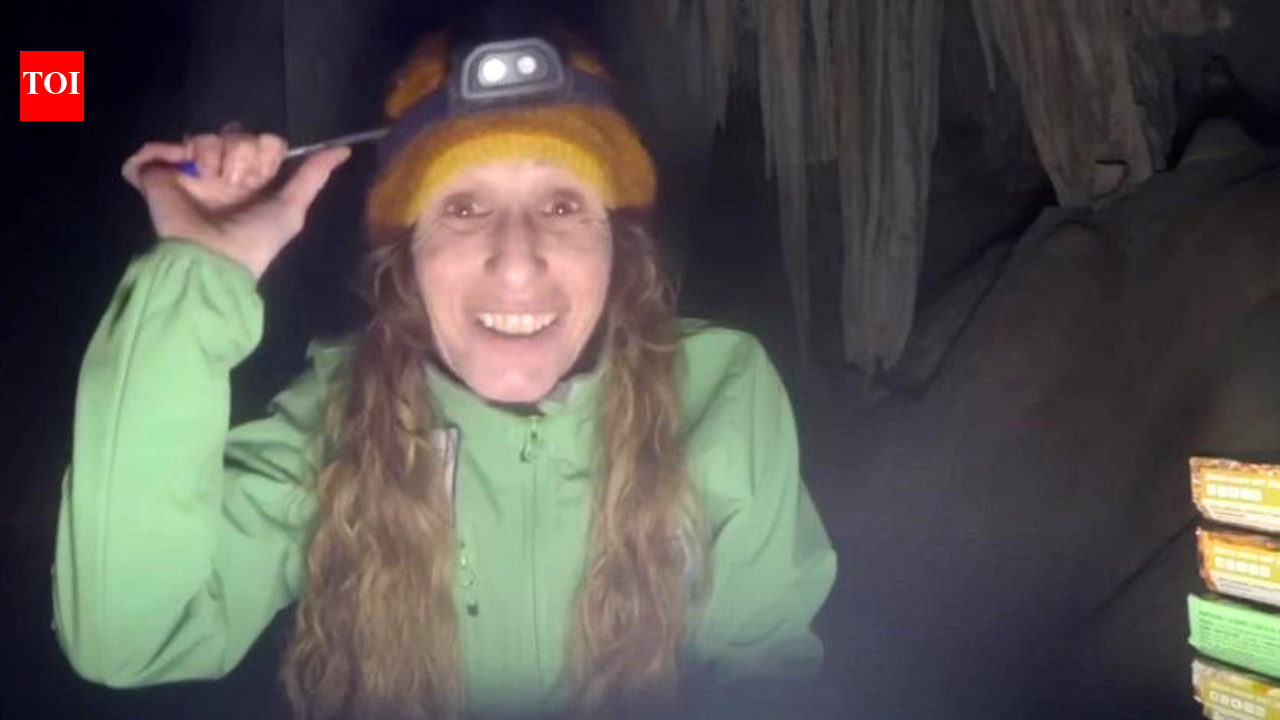
Spanish endurance athlete and mountaineer Beatriz Flamini spent 500 days alone in a cave 230 feet below the surface, without sunlight, clocks, or direct human contact, all in the name of science. This first-of-its-kind experiment aims to understand how long-term isolation affects the human brain, body and perception of time. Flamini has been isolated from the outside world since November 2021 and did not appear until April 2023. What surprised her and the researchers was not her ability to survive the ordeal but her distorted sense of time. Flamini believed she had only spent about 160 days underground, unaware that 500 days had actually passed.
In a 230-foot-deep cave, 500 days changed everything
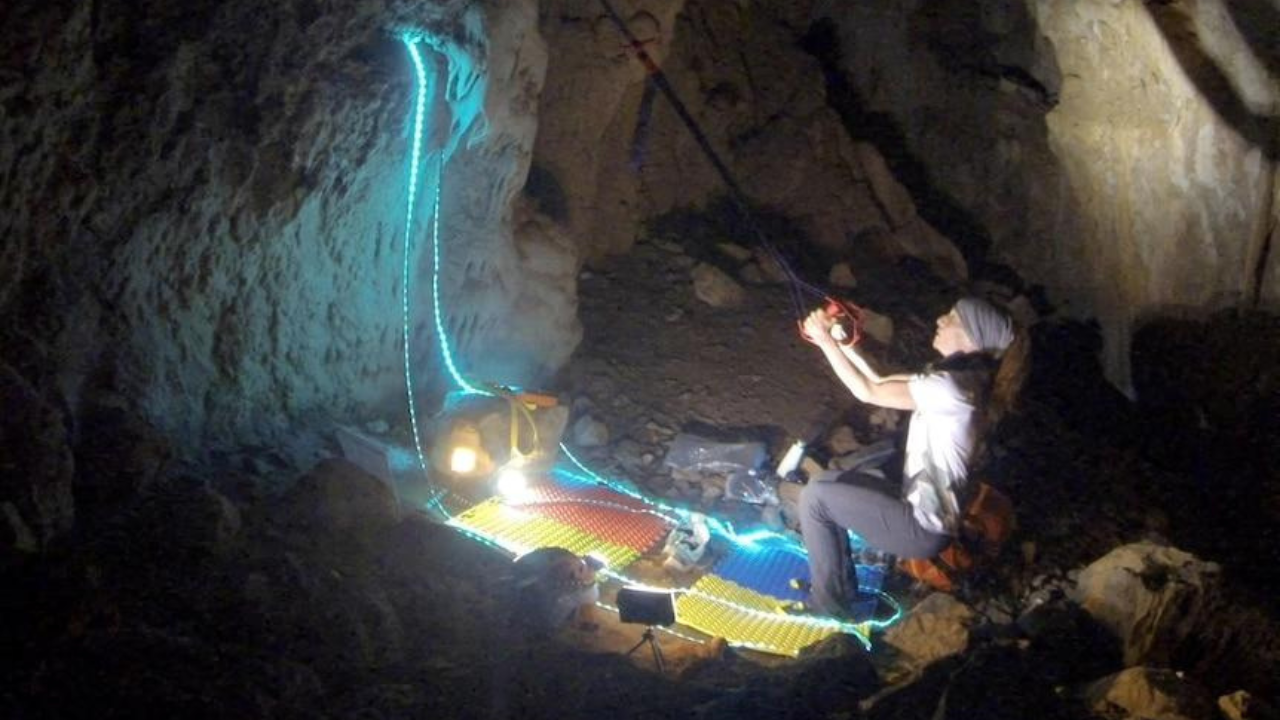
Hidden some 230 feet underground near Motril, in the Spanish province of Granada, this cave that became Beatriz Flamini’s home is unlike any ordinary living space. There was no sunlight, no windows, and no changing weather to mark the passing of the day. The temperature remained relatively constant, while silence and darkness surrounded her again and again for months. A modest living quarters had food, drinking water, books, cooking equipment and cameras to record her daily activities, but no clock, calendar, television, cellphone or internet access. Every meal, every hour of sleep, and every waking moment unfolds without any clue to the outside world.Flamini entered the cave on November 21, 2021, as part of the Time Cave Project, one of the world’s most ambitious studies of long-term human isolation. For nearly 17 months, the cave became both her home and her real-world laboratory, where researchers studied how her mind adapted when completely removed from daily life.
Why scientists want people to live underground
The project brings together psychologists, neuroscientists, chronobiologists and cave experts from multiple institutions in Spain to explore how extreme isolation affects memory, mood, sleep and decision-making.Researchers wanted to understand how the brain functions when daily reference points disappear. Without daylight, daily routines or regular social interactions, they hope to observe how people adapt to an environment where their normal sense of time fades away. The findings could help scientists better prepare people working in highly isolated environments, from deep-sea missions to future space travel.
A life without contact with the outside world
Life inside the cave follows no timeline except the one created by Flamini himself.She has no access to a mobile phone, television, internet, radio or newspapers, leaving her completely disconnected from current events. The support team regularly delivers food to designated locations without the need for face-to-face interaction, thus maintaining the integrity of the experiment. Except for emergency contact when necessary, she did not see anyone during the entire five-hundred-day challenge.Over time, daily routines such as reading, exercising, and cooking became her only structure.
How she kept herself busy for 500 days
Rather than simply wait for the experiment to be over, Flamini maintained a strict daily routine. She exercises regularly, reads dozens of books, knits, cooks, cleans her living space and keeps a detailed journal. She also recorded a video diary, which researchers later analyzed to better understand how being alone for long periods of time affected her behavior and emotional well-being.One of the most unusual habits she developed was that she rarely spoke loudly. She later explained that she came to appreciate the quietness, allowing herself to fully immerse herself in isolation.
The extraordinary reason why she believes that only 160 days have passed
The biggest surprise occurred when Flamini emerged from the cave on April 14, 2023.She thought the experiment could last longer, but was surprised to find that 500 days had passed. She sincerely believed she had only been underground for about 160 to 170 days.Researchers say the dramatic change in her sense of time illustrates how dependent the human mind is on external references. Without the usual signals that distinguish one day from the next, her perception of time drifted away from reality, making months feel much shorter than they actually were.
The psychological effects of living completely alone
Contrary to what many expected, Flamini later said the loneliness was not the hardest part of the experience.She occasionally becomes disoriented and experiences auditory hallucinations, where her brain seems to make sounds amid the overwhelming silence. Surprisingly, she found the entry of insects into certain parts of the cave more frustrating than the isolation itself.Despite these moments, she described the experience as peaceful and said she gradually became accustomed to her surroundings and stopped thinking about how long she had been underground.
The world still goes on without her
While Flamini lived beneath the surface, life outside continued at its usual pace.She missed major global events, including the death of Queen Elizabeth II, the rapid development of artificial intelligence such as ChatGPT, and the myriad political, sports and cultural developments that dominated headlines during her absence.Returning to the surface means catching up on nearly a year and a half of world events in just a few days.
She even wanted to stay a little longer
After Flamini completed his experiments, one of the most unexpected discoveries occurred.Instead of expressing relief, she admitted she was disappointed that things ended. She told reporters that she was used to living underground and even joked that she could stay there for another 500 days.Her reaction surprised researchers and highlights the human mind’s ability to adapt when faced with extraordinary situations.
experimental significance
Beatriz Flamini’s cave experiments have become one of the most compelling studies of long-term human isolation ever conducted. In addition to demonstrating extraordinary physical and mental endurance, it also provides scientists with valuable insights into how people adapt when removed from the rhythms of daily life.As researchers continue to explore the limits of human resilience, Flamini’s 500-day journey provides a rare real-world case study of how the brain copes with extreme loneliness. Not only was her experience a record-breaking challenge, it expanded scientific understanding of isolation and revealed how flexible human perception can be when every familiar reference point disappears.