
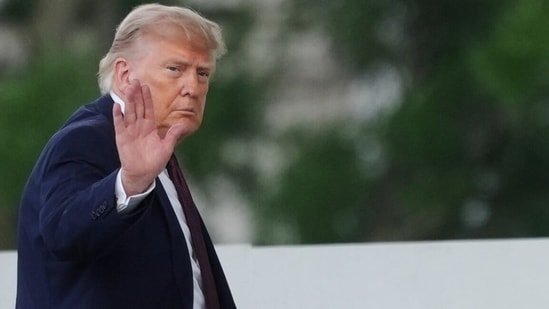
Supreme Court on Tuesday affirms sweeping interpretation of birthright citizenship, dismisses president donald trump The executive order provides that children born to individuals who are illegally or temporarily residing in the United States will not be considered U.S. citizens.

The justices based their decision on established interpretations of the Fourteenth Amendment, enacted after the Civil War, as well as more modern federal statutes, concluding that anyone born in the United States, with rare exceptions, is a citizen.
The restrictions imposed by the US president have been blocked by multiple lower courts and have not yet been implemented anywhere in the United States.
U.S. Citizenship by Birth: 5 Things to Know
- “Children born to parents illegally or temporarily in the United States are ‘subject to the jurisdiction of the United States’ and are citizens at birth under the terms of the Fourteenth Amendment. Country of Citizenship Clause,” said the ruling written by Chief Justice John Roberts.
- Chief Justice Roberts was accompanied by his conservative colleague Justice Amy Coney Barrett, as well as the court’s three liberal justices – Elena Kagan, Sonia Sotomayor and Ketanji Brown JACKSON – Majority decision based on the Fourteenth Amendment.
- Justice Brett Kavanaugh, another conservative, said that while he did not believe Trump’s executive order violated the 14th Amendment, it “did violate the 1940 federal statute governing the citizenship of individuals born in the United States.” The court’s three remaining conservative justices — Clarence Thomas, Samuel Alito and Neil Gorsuch — each issued dissenting opinions.
- “The court made a serious error,” Justice Alito said. During oral arguments in April, the justices indicated they were inclined to uphold the principle that individuals born in the United States who are not U.S. citizens are automatically granted citizenship.
- trump card Attend the oral argument, the first time a sitting president has attended. The case is known as Trump v. Barbara. The Citizenship Clause of the 14th Amendment to the United States Constitution, ratified in 1868, states: “All persons born or naturalized in the United States, and subject to the jurisdiction thereof, are citizens of the United States and of the Episcopal Church.
Trump’s executive order
On January 20, 2025, upon his return to the White House, Trump issued an executive order aimed at reversing this right.
The order states that after 30 days from the effective date, babies born in the United States will not be eligible for citizenship documents if their parents are in the country illegally or are undocumented workers.
Several U.S. District Court judges subsequently found Trump’s order unconstitutional.
Additionally, two federal appeals circuit courts affirmed injunctions blocking enforcement of the order.