
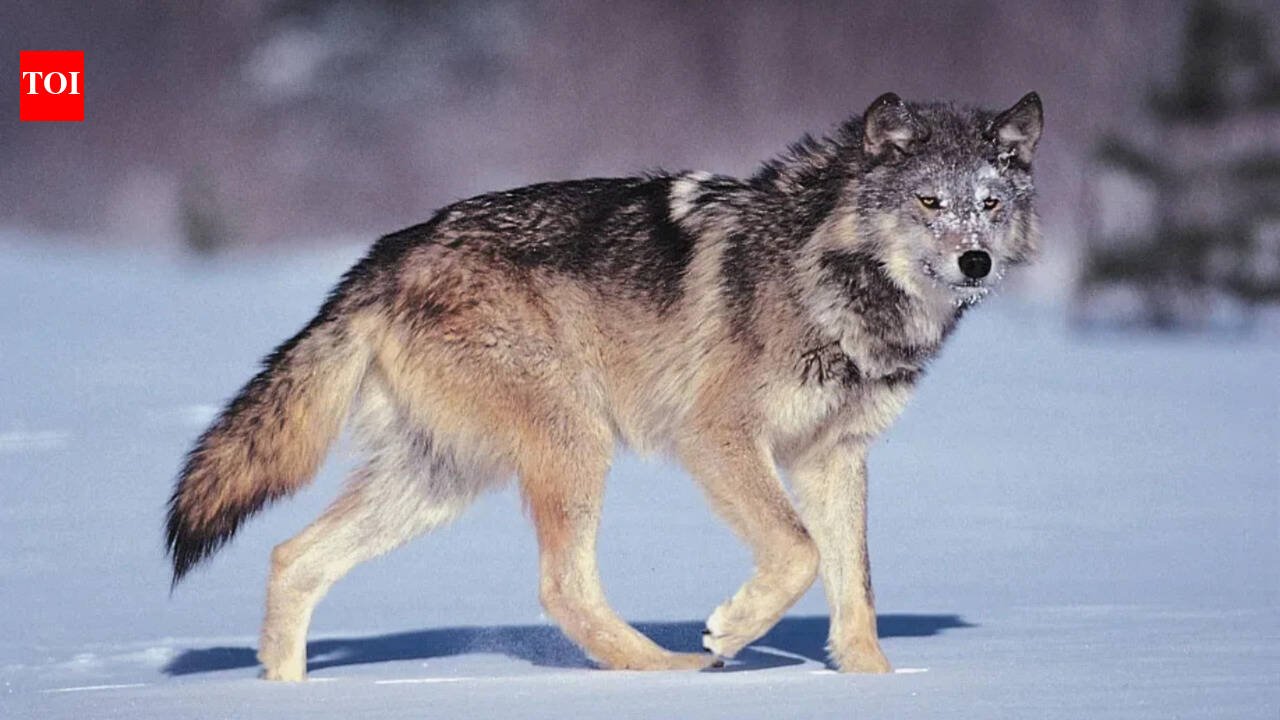
One politician promised change in the wake of the scandal. A friend swore they had kicked a harmful habit, only to fall back into it weeks later. One company rebranded after public controversy, but its culture remained the same.Moments like this explain why an old Italian proverb has survived for centuries.“The wolf lost its fur, but not its bad habits“.Literally translated, it means, “Wolves lose their fur, but not their vices.” This proverb conveys a simple but enduring message: People may temporarily change their appearance, circumstances, or behavior, but ingrained habits and personalities are difficult to change.It remains one of Italy’s best-known proverbs and continues to be used in everyday conversation, politics, journalism and literature.
What does this proverb really mean?
The expression is often used to describe someone who reverts to old habits after seemingly changing.In Italian, the word “Vizio” It does not simply refer to the “bad habit” of smoking or drinking in the narrow sense. It also refers to an ingrained habit, flaw, behavioral tendency, or recurring pattern of behavior. According to Trecani, Italy’s leading encyclopedia and language agency, this proverb is used to show that people with bad tendencies rarely give up on them completely.The image of the wolf is deliberate.Every year, wolves naturally shed their fur as the seasons change. Its appearance has changed, but its instincts remain the same. This proverb uses this biological fact as a metaphor for human behavior.
An old saying has roots that are older
Although the exact origins of this Italian proverb cannot be traced to a single author, its basic idea dates back to classical times.One of the earliest known similarities appears in the writings of Roman historians Suetoniuswho attributed the Latin phrase “The fox changes its fur, not its behavior” A herdsman talks about the Emperor Vespasian. It translates as “The fox changes its fur, but not its behavior.”Renaissance, Dutch scholar Desiderius Erasmus Contains similar expressions in his famous collection Adagiawriting “The wolf changes its fur, not its mind”meaning “The wolf changes its fur, not its mind.”These early versions suggest that the idea predates modern Italian diction. Over time, the wolf replaced the fox as the central image, giving the proverb greater symbolic power.
Why wolf?
For centuries, wolves have occupied a unique place in folklore across Europe.They are often portrayed as intelligent, dangerous, persistent, and difficult to tame. There are dozens of expressions referring to wolves in Italian, ranging from “Good luck” (“Entering the Wolf’s Mouth”) “Wolf don’t eat wolf” (“A wolf does not eat another wolf”).this Kruska AcademyItaly’s most important authority on the Italian language states that the wolf often symbolizes persistence in one’s nature, which explains why it appears in so many proverbs about human behavior.This proverb does not criticize the wolf itself. Instead, animals become a mirror through which people have long understood recurring human traits.
Does modern psychology agree?
Interestingly, this proverb echoes ideas explored in psychology.Research shows that habits formed through repeated behaviors become ingrained over time. While people are capable of meaningful personal change, breaking long-established patterns often requires sustained effort, a supportive environment, and repeated practice, not just good intentions.This is why someone may sincerely want to change but still find themselves falling back into familiar behaviors under stress or stress.This proverb captures this reality in one memorable sentence.
where it still appears today
Despite being hundreds of years old, this quote still holds great significance.It often appears in political commentary when public figures repeat previous mistakes despite promising reform.Sports journalists use it when an athlete resumes undisciplined behavior after a suspension.In business, it describes an organization that announces radical changes while continuing the same internal practices.This phrase is equally common in everyday conversation.Family members who repeatedly break their promises.A colleague who is always late.A friend who keeps going back to unhealthy relationships.In each case, the proverb provides a succinct explanation for behavior that people think they have seen before.
Is it always like this?
not necessarily.This proverb reflects popular wisdom rather than scientific certainty.There are many people throughout history who have overcome addiction, changed their personalities, rebuilt broken relationships, or dedicated themselves to careers that were very different from the ones they once pursued.Therefore, this statement is best understood as a warning not to assume that external changes will automatically reflect internal transformations.It reminds us that lasting change is judged by consistent actions rather than first impressions.
why it persists
Many proverbs disappear because they are tied to the world in which they were born. The story survives because it tells an experience that almost everyone can identify with.People often change their appearance, job, city, or public image. However, real changes in values and behaviors often take longer.The tension between appearance and character gives this proverb its enduring power.Not just colorful proverbs about wolves, “Wolves will lose their fur, but not their bad habits.” A reminder to look beyond superficial changes. It encourages skepticism but not cynicism, asking us to focus not on promises but on patterns.Perhaps that’s why, centuries after it first entered the Italian language, it remains as relevant as ever.