
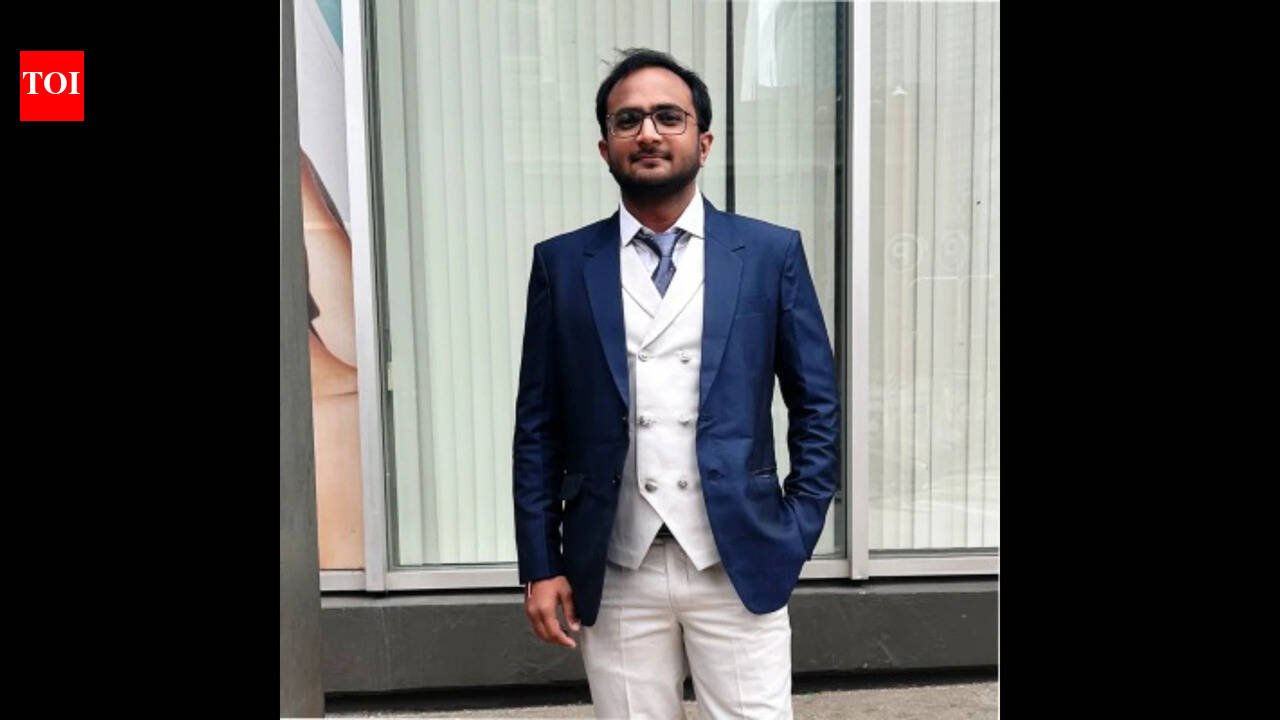
Mayank Vadaliya, an Indian student working at Tesla, said that being denied an F1 visa was no big deal. He had been denied a student visa twice, but he did not give up. Although there have been several F1 visa denials this year due to the Donald Trump administration’s strict scrutiny of who can enter the country, Vadaliya’s first U.S. visa denial was in 2015, when he was 18.The Tesla engineer said in an interview with “American Market” that he had just graduated from school and wanted to continue his studies in the United States. During his first visa interview, he was asked only three questions: name, age and sponsor. His visa was immediately rejected.“The first time I tried to get into an American university was in 2015. I was 18 and fresh out of school and I just wanted to study in the United States I applied for an F-1 visa to pursue my bachelor’s degree, and I was so convinced that I only applied to one college – Montana State University. “I only asked three questions — my name, my age and who would pay my fees — and my visa was rejected immediately,” he said. The next year, he reapplied to the same school, but his visa was rejected a second time.Just then, he shifted his attention. Instead of pursuing the college he hoped would be built for him, he began to build his own image. He was admitted to the Gujarat Technological University. After graduation, he went to the United States to apply for a master’s degree. This was the third time he faced the visa officer. He said he was more confident this time and that he was third time lucky.“After two rejections, I stopped trying to win over officials and started building a profile that spoke for itself. I completed my degree, made it clear what I wanted to study, and made my intentions clear in my application,” he said.“By the third interview, I had an offer from Australia, so I was walking in calm rather than despair. I wasn’t really afraid of another ‘no’ and it showed,” he said, explaining how his prospects could change in four to five years.“I arrived in the United States in 2020 to pursue a master’s degree in computer science at Cleveland State University. From there I started working as an application support engineer at a technology company. This gave me a cutting-edge understanding of how technology plays out in the real world.”Vadaliya still holds an F-1 visa and has work authorization through coursework and practical training until 2028. He is also pursuing a PhD in Information Technology. “If I qualify, then my company will sponsor me for a new visa like H-1B or O-1,” he said of future plans. Again, he focused on self-building.