
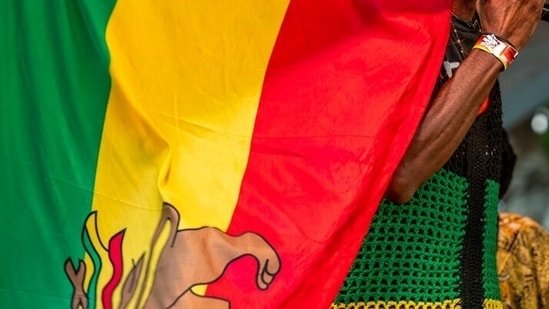
Damon Landor, former inmate of Rastafari, a spiritual and religious movement that originated from jamaica with singer bob marley One of its most famous followers, he tried in 2020 to sue prison officials for cutting off his braids – an integral part of Rastafari. On Tuesday, the Supreme Court threw out the case in a landmark 6-3 decision.

Damon Lando’s lawsuit against prison officials for cutting off his dreadlocks will not stand because local authorities were unaware of a federal law protecting inmates’ religious rights, a court said. CNN reports It is rare for a conservative majority on the Supreme Court to reject a religious claim.
However, the decision was sharply criticized by three liberal justices who sided with Lando. They argued the ruling made it difficult for prisoners to sue officials for alleged abuse.
“Prisoners like Lando whose religious freedoms are violated — no matter how blatantly — in state prisons are often irredeemable,” one of the justices, liberal Justice Ketanji Brown Jackson, wrote in a dissenting opinion in the decision.
“Violations of inmates’ statutory rights may occur frequently because state-authorized prison officials have little incentive to comply with federal law, even if it is written on a piece of paper.”
In this article, we’ll learn about Damon Lando, his sentencing, and the lawsuit he attempted to bring against prison officials.
Who is Damon Lando?
Damon Landor is a self-described devout Rastafarian who has been wearing braids as part of his religious beliefs for more than 20 years. one Louisiana In 2020, toward the end of his sentence, prison officials shaved off his braid at the Raymond Laborde Correctional Center.
Lando explained the details of his religious ritual to prison officials and showed him a copy of a ruling from Louisiana’s 5th Circuit Court that prohibits prison officials from cutting off Rastafarians’ braids under the Religious Land Use and Housing Personnel Act.
However, Lando said he was handcuffed to a chair and restrained by two correctional officers, and his hair was shaved. After his release from prison, he sued prison officials and the Louisiana Department of Corrections in the Middle District of Louisiana.
His case came to the Supreme Court in June 2025 and was argued during the Supreme Court’s October 2025 term. The case was finally decided on Tuesday, June 23.