
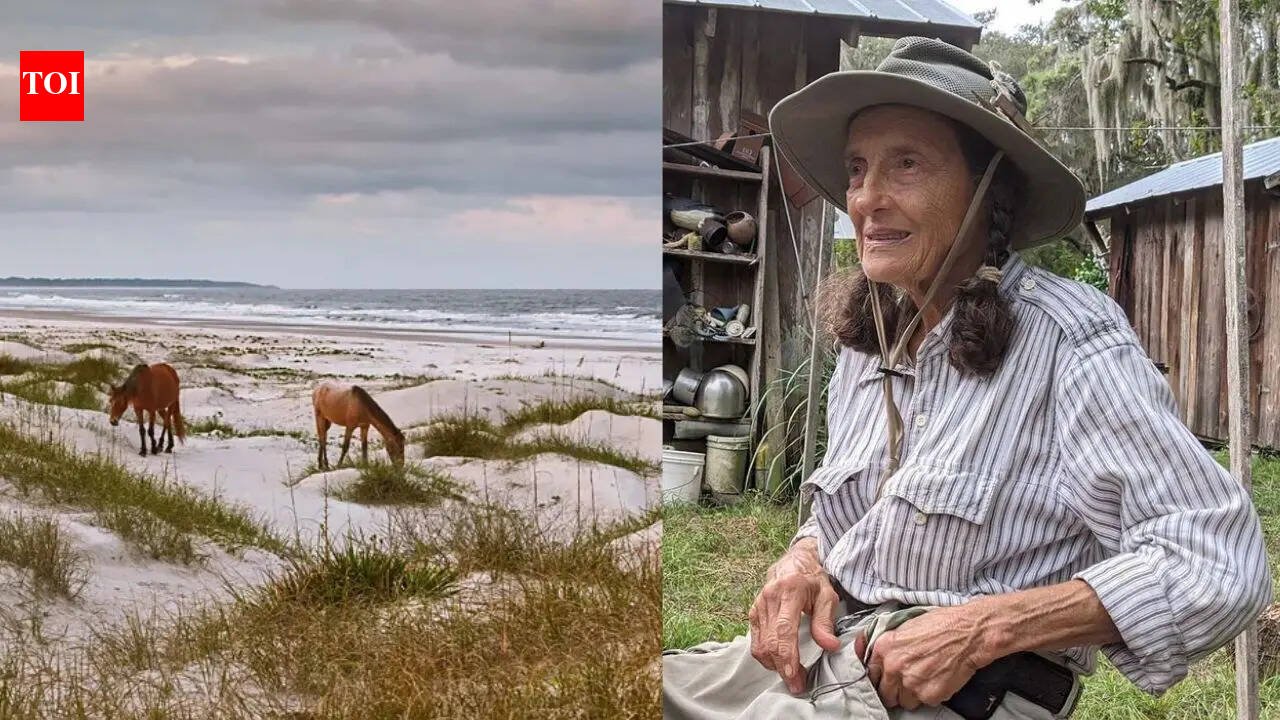
Off the coast of Georgia, the Atlantic flattens out into long stretches of pale sand that don’t look rushed. Swamps fold into forests, forests give way to sand dunes, and nothing stays on a fixed course for long. Cumberland Island, nestled in the twilight zone between land and water, can only be reached by ferry and is just as easy to leave. People come here for a few hours, sometimes even a weekend, and then drift off again, with salt on their shoes and nothing to bring back. It rarely becomes as familiar as places on the continent. Somewhere further north on the island, an older woman has spent much of her life in the midst of this ever-changing landscape, moving slowly through it and observing what has changed and what has not.At the age of 84, she continues to walk along the coastline she first encountered when she arrived on the island as a young woman, the BBC reports. The pace has changed, but the direction has not. Sand, water, forest edges, swamps.
Carol Lackdescher The decision to stay: From visiting researcher to permanent island life
Carol Ruckdeschel first came here in the 1960s when she was still studying biology, and she had yet to live permanently on the island. Like most visitors, she left. Unlike most, she returned and stayed long enough to no longer feel like the default choice, the BBC reported.By the early 1970s, she was living on the island full-time. The place she lived in was uncomfortable in any traditional sense. There is no simple infrastructure to rely on. Water must be collected or transported. Heat, food, repairs, everything takes effort, but that effort doesn’t really diminish over time. Over the years the structure she occupied was slowly changed, patched and tweaked rather than built correctly in any standard way.Her daily life was never as subdued as one imagines when they hear about isolated coastal life. Even now, in her eighties, she still walks across the island. Not in a laid-back way. More like someone continuing a pattern that never really stopped.
Cumberland Island: A remote barrier world shaped by isolation and tides
Cumberland has no bridges and no temporary drive-in access. Everything arrives via boat, which has filtered the attention it receives. Once you step off the ferry, the island no longer feels like a destination but a land that continues its own logic and does not receive tourists.Its surface is never static. After a storm, sand shifts, tree lines spread into cleared spaces, and marsh edges are redrawn without warning. The horses scatter across the clearing, their presence so normal that they almost disappear into the wider scene. People argued about them, arguing about whether they belonged here, though the island never seemed interested in such arguments.When conditions allow, the turtles return to the same beach. Shorebirds arrive in flocks and depart just as quickly. Dolphins move through the sea as if following instructions that only they understand. On land, snakes slither between grass and fallen timber and are rarely noticed unless one is looking down.
What the tide leaves behind and takes away
Much of her attention is focused on the coastline, where land and sea are constantly exchanging things. The beach doesn’t keep records in any fixed sense; it just rearranges them. What you wash off in the morning is gone by night.She spent years walking these sections, documenting what happens after the tide passes. Driftwood gathered into strange clusters. The way the shells cracked suggested pressure rather than time. The birds rest in groups and their positions are not fixed. The remains of small animals disappear with the arrival of the tide.When sea turtles are injured or killed, they receive a level of concern that falls more into field science than casual observation. Take measurements. Indicate conditions. Nothing is considered symbolic. It’s just data, even if it looks like something else to a passerby.Snakes also appear in these settings, not as dramatic encounters but as part of the same quiet system. In warm areas near forest edges or on wet ground near swamps they can move through without notice. Most of the time, they are not recorded in stories about the island, but they appear in the same spaces she walks through every day.
An island that, despite being protected, has never stopped developing
The area of northern Cumberland where she lived didn’t offer much in the way of comfort. Tourist traffic was thin even before arrival. The path becomes less clear. Trees approach. The sounds of movement change, with less human interference and more wind blowing through the living oak branches.Over time, her home came together. There is no sign that it has been completed. Collect rainwater whenever possible. Storing wood for cooking and heating. Although the island’s weather and wildlife rarely cooperate exactly with the plans, small patches of gardens exist wherever conditions permit.There was a connection to the mainland, but she never felt it was crucial to her life. Supplies arrive when needed. When equipment breaks, it is repaired. This separation is actual rather than symbolic. The idea of complete isolation doesn’t really hold true here, even though the distance may sometimes feel like it.