
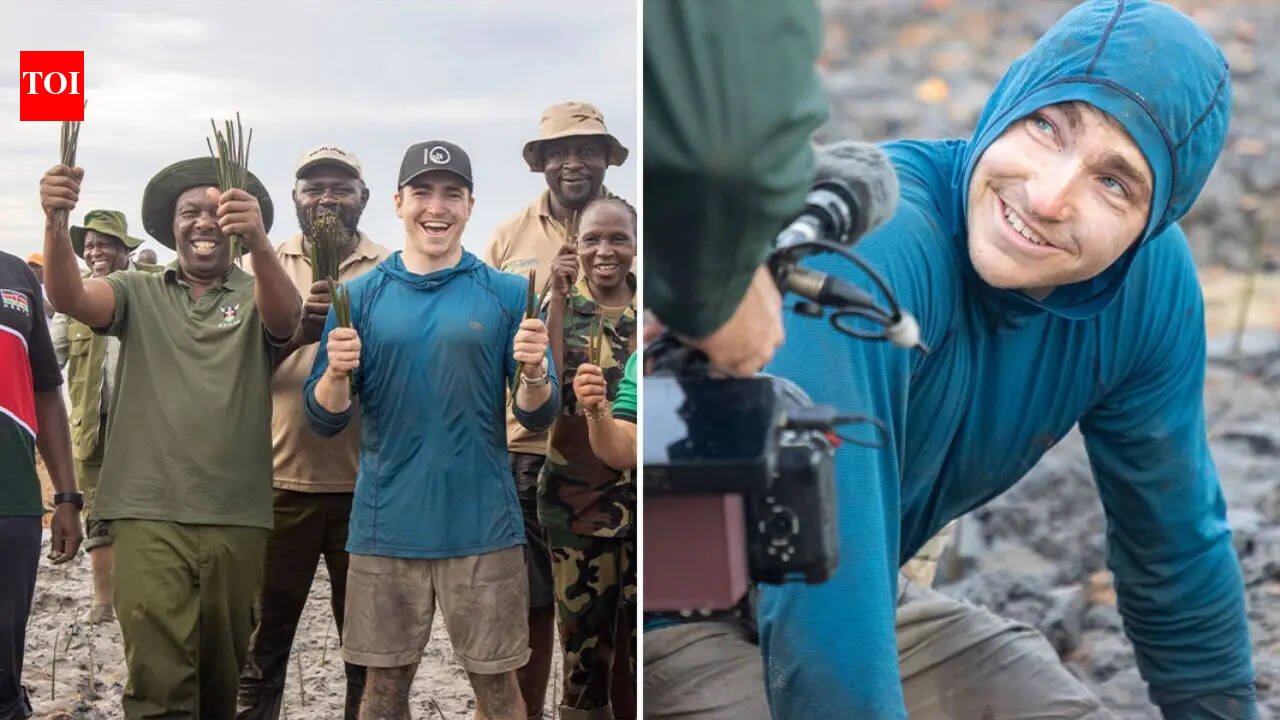
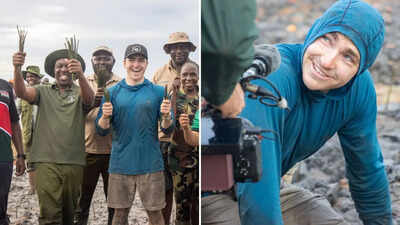
On the mudflats outside Mombasa, the tide doesn’t last long. It pulls in and retracts, leaving a surface that looks soft but isn’t very forgiving once you step inside. On a stretch of coast often shaped by salt, heat and weather systems, one man spent nearly a day moving in a tight rhythm between holes that had been dug and saplings waiting to be pressed into place. Whether it’s day or nightfall, the work doesn’t pause too much. It went on like this, with a small group of people around him and a row of young mangroves slowly taking root in the sandy soil. What happened there later became a record, although on the ground it seemed more like a repetition than a spectacle.
Antoine Moses Kenya sets new green record of 47,460 mangrove saplings planted
By the time Antoine Moses arrived on the Kenyan coast, there was already a certain pattern to his movements. The work of growing mangroves is not easy on the body. Each sapling must be placed on moist ground that moves under pressure, often knee-deep where the tide has just gone out.On April 30, this rhythm spanned several blurs of time. The goal is simple in wording, but not so simple in practice: thousands of mangrove propagules are placed one after the other without much variation in speed. By nightfall, the count had reached 47,460. The figure would later be recorded in history, but at the time it was just a row of small, ever-growing plants disappearing into the dirt.
Antoine Moses: Canadian tree planting machine Redefining large-scale reforestation
Antoine Moses is a Canadian arborist and environmental worker known for his record of hardy plantings in different parts of the world. His work occupies a niche corner of large-scale reforestation, where the focus is less on ritual and more on how many saplings can be put into the ground within strictly measured windows of time.Before coming to attention, he worked in the commercial growing business in Canada for many years, working long seasonal shifts planting thousands of trees by hand in rugged terrain. Over time, this routine became the basis for attempts to push seeding rates to record levels, first in North America and later internationally.
Before Kenya: Antoine Moses records planting 23,000 trees in northern Alberta
This isn’t the first time he’s attempted something of this magnitude. He had completed a similar endurance planting campaign in northern Alberta a few years earlier, setting a record in 2021 by planting more than 23,000 trees in a single day.These early efforts were influenced by commercial reforestation efforts in Canada, where planting cycles can become repetitive and physically demanding throughout the season. By the time he arrived in Kenya, this familiarity had turned into a method based on repetition rather than planning, and movement had become almost automatic.
Why mangroves are important to protect fragile coastlines
Mangroves cannot grow in neat conditions. Located where seawater meets land, they can withstand flooding and exposure in equal measure. In Mombasa, these edges are crucial to the stability of fishing communities and the coastline itself, although not always visible at first glance.What was planted that day was part of the system, the sprouts meant to take root in the unstable ground and ultimately hold it together. The job is physical, but results in a slower schedule. It does not immediately alter the coastline.At certain times during the day, even as it grows darker, the planting lines continue, with headlamps and small groups working within the same narrow confines. The consistency of the mud did not change over time.
The long journey behind planting a million trees across seasons
By this stage, Antoine Moses was already famous for his endurance planting endeavors. Canada’s previous record puts him among a small group of people who see tree planting less as an environmental initiative and more like sustained manual labor pushed to its limits.He said in earlier conversations that he had planted more than a million trees in total in different projects before trying the Kenyan effort. This number is difficult to visualize in practice, but it reflects years of seasonal work rather than a single activity.
From shoreline work to a global online audience of millions
After the planting activities ended, the focus shifted away from the shoreline. Short clips and photos began circulating on social media, and his work has amassed millions of followers. About 1.6 million people currently follow his updates, watching clips of Planting Day that would otherwise go unnoticed.He also runs a project called Antomos, which is a cross between storytelling and coordinating reforestation activities. It connects environmental planting efforts to digital documentation, often relying on third-party tracking systems like Veritree to record and verify what has been planted and where it has been placed.The idea is not considered radical in the traditional sense. It looks more like an attempt to align documentation with physical labor so that what happened in the muddy fields can be tracked later without having to rely solely on memory.