

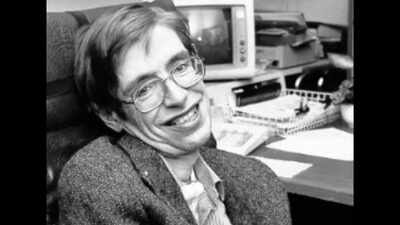
Some quotes sound clever but fade from memory after a few minutes. Others seem to sit quietly in the mind, becoming more interesting as time goes by. This sentence is widely related to Stephen Hawkingfeels like one of those lines that gets heavier the longer one thinks about it. At first glance, this seems like a simple statement about learning. But look closer and you’ll see that it starts to feel like a commentary on human behavior itself.Ignorance is often considered to be the greatest obstacle to understanding. This hypothesis sounds logical. If someone doesn’t know something, learning should do the trick. Schools exist because of this idea. Books exist precisely because of this idea. There are problems because of this idea.However, Hawking pointed out something completely different.He thinks the greater danger may not be knowing too little. The real problems can begin when people are convinced they know enough.This feels a little uncomfortable because almost everyone has probably experienced this without even realizing it.
Stephen Hawking Quote of the Day
“The greatest enemy of knowledge is not ignorance, but the illusion of knowledge.”
Learn the meaning behind Stephen Hawking’s famous quotes
This quote seems to suggest that not knowing something is not necessarily the worst case scenario. People who openly admit they don’t know something can still ask questions. The person can still listen, learn, and change their understanding.The illusion of knowledge works differently.It creates a situation where people believe they already have the right answer, even though they don’t. Once this happens, curiosity often begins to fade away. Questions become less important because certainty has arrived.This is where the difficulty begins.Imagine a person driving through a city while being confident that he or she knows the route. If they realize they are unsure, they may stop and ask for directions. If they believe they already know where they are going, they may continue to confidently move in the wrong direction for a long time.Confidence itself becomes the problem.Knowledge usually grows through curiosity. The illusion of knowledge can quietly close the door before curiosity enters the room.
Modern life makes this quote feel oddly relevant
There was a time when information felt hard to come by. People search for books, visit libraries and wait for answers. Today, the information arrived immediately. The phone will provide an explanation within seconds. Social media provides a constant stream of opinions, facts and a steady stream of advice.Oddly enough, having more information doesn’t always lead to better understanding.Many people have experienced the moment when they read a title and immediately felt they understood a topic. Sometimes short videos can give people a professional impression. Sometimes people hear an explanation and start speaking as if they fully understand a complex problem.A man watched some clips on economics and suddenly felt ready to explain global markets.Someone reads a health article and starts acting like a medical expert.Another man spent ten minutes reading about space and started debating scientists.Most people smile at examples like this because they sound familiar.Many of you have probably done something similar yourself.This is what’s interesting about Hawking’s quote. It doesn’t seem to be targeting a small group of people. It quietly points to a tendency shared by many people.
There is a difference between not knowing and believing you know
People often feel embarrassed about admitting uncertainty.When someone asks a question, there is pressure to give a quick answer. Saying “I don’t know” can sometimes feel uncomfortable. Some people worry that it will make them appear uninformed or unprepared.Interestingly, real experts often sound very different.Scientists, researchers, and experts often leave room for uncertainty. They might say the evidence shows something. They might say that current understanding points in a certain direction. They often acknowledge that future discoveries may change what is known.To those listening, this approach sounds less than confident.However, it often reflects a stronger understanding rather than a weaker understanding.The more people learn, the more they realize how many questions remain unanswered.Confidence and knowledge don’t always go together.Sometimes the loudest certainties come from the shallowest understanding.
Stephen Hawking spent his life asking questions
Stephen Hawking dedicated his life to understanding some of the biggest questions imaginable. He studies black holes, time, space and the origins of the universe itself.There are no easy answers to these topics.Hawking intrigued many people in part because of his ability to discuss complex ideas in a way that the average reader could understand. He brings scientific issues into public discussion and gets people curious about topics they might otherwise overlook.His work often reflects something important about learning.He never considered knowledge as a final destination.Science itself behaves this way. It changes. It will adjust. Old assumptions sometimes disappear when new evidence emerges. Questions continue to lead to new questions.This process requires humility.When people believe all the answers have already been found, discovery slows down.
There are examples of this idea throughout human history
History has repeatedly shown that certainty delays understanding.People have long believed that the earth is the center of all things. For many societies, this belief is unquestionable.Medical practice once relied on ideas that later turned out to be wrong.There was a time when people refused to accept new discoveries because established assumptions were too certain to be challenged.Looking back, these mistakes seem obvious.People often wonder how it is possible for an entire society to hold beliefs that later turn out to be false.The difficult truth is that someone who lived at that time would probably be just as confident as someone today.This idea can be a little unsettling.Future generations may ultimately look back on today’s assumptions in the same way.
Other quotes from Stephen Hawking
- “Intelligence is the ability to adapt to change.”
- “Remember to look up at the stars, not down at your feet.”
- “It would be a tragedy if there was no joy in life.”
- “Anyone who brags about his or her IQ is a loser.”
- “Work gives you meaning and purpose, without which life is empty.”
Stephen Hawking’s quote reveals why certainty can be our biggest obstacle
Stephen Hawking’s quote is not against knowledge per se. It almost says the opposite. Knowledge still has power. Learning is still important. The question remains important.The warning appears to be directed elsewhere.People often recognize ignorance because it is visible. Someone knows they don’t understand something.The illusion of knowledge behaves differently. It often hides behind certainty and confidence. People may continue to believe that they understand something completely, without ever realizing that there is more to learn.Perhaps that’s why this quote still resonates with so many readers.Human progress often depends on people’s willingness to admit a simple sentence that is sometimes difficult to say:There may be more to learn here.