
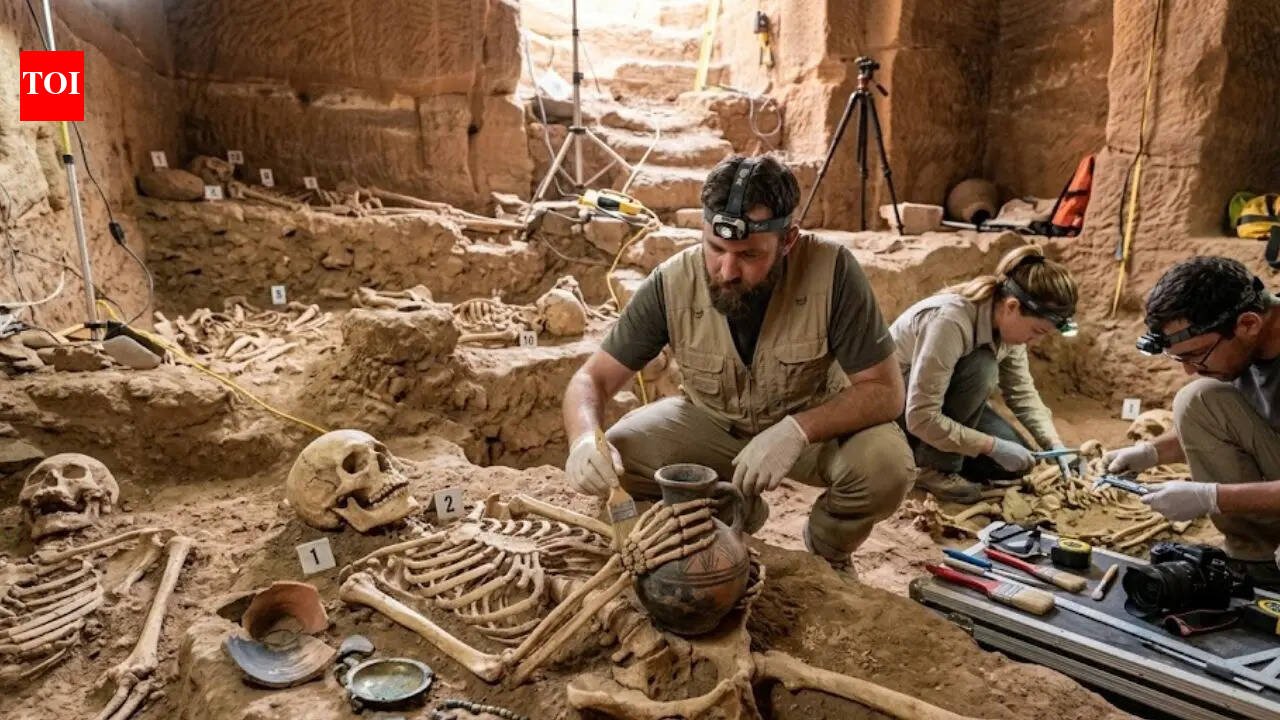
 Unlike most areas of the ancient city, which have been disturbed by looters or natural forces over the centuries, this vault was discovered in an extremely rare, unspoiled state. The discovery of these bones provides a transformative perspective on Nabatean burial practices, as the remains provide a unique, untouched biological record.
12 Skeletons found in Petra Revealing the secrets of ancient Nabataean life
Researchers made the discovery using ground-penetrating radar. As a document about national public radio According to NPR, there has been speculation for years that there may be more burial chambers beneath the Treasury, following the discovery of two graves on the left side of the monument in 2003. To investigate, the researchers used radar to check whether symmetry was also present on the right side. Radar found similar physical features to known graves. Armed with this evidence, the Jordanian government approved the excavation.
The story of Petra’s kettle
The excavation team couldn’t believe their eyes when they saw one of the skeletons holding a ceramic pot. As Warner Bros. Discovery Channel noted in a report, the vault was the climactic scene in “Raiders of the Lost Ark” and “The Last Crusade,” so finding the Holy Grail in this secret tomb is like watching “art imitating life.” Despite the vessel’s immense archaeological value, researchers noted how ironic it was to find a cup similar to the one in the movie “Holy Grail” where they filmed that famous scene.
A rare glimpse into the life of a desert architect
Dr. Chrisman called the discovery a “time capsule” because they found the skeletons and their personal belongings still intact. This gives us a special opportunity to learn about the Nabateans, who carved Petra into the sandstone but left few written records. The remains include men, women and children. Experts will test DNA and analyze organic sediments from the tombs in the hope of learning more about how these ancient people lived, what they ate and where they came from.
A dramatic shift in the archaeological record of Petra
The discovery is considered a landmark shift in Petra’s archaeological history because, unlike most tombs in the area, which contain only fragments left over from looting or reuse, this chamber contained 12 articulated bodies. Professor Richard Bates of the University of St. Andrews told NPR that by analyzing skeletal material, including teeth and bones, researchers can now reconstruct the Nabataean lifestyle, diet and health. This level of preservation is expected to open up previously unavailable views of their society to scientists.