
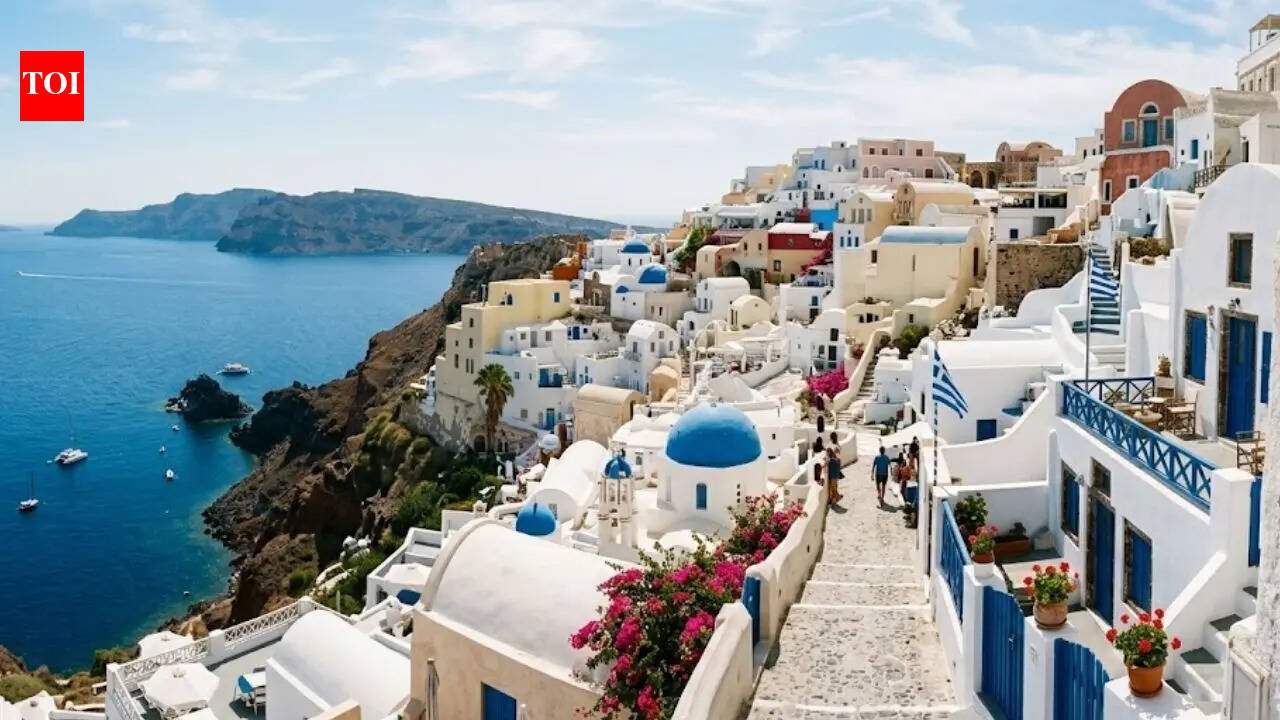
The famous blue and white houses of the Cyclades are outstanding examples of functional design. This aesthetic was born out of necessity, not artistic choice. While today’s travelers may think the colors honor the Greek flag or echo the Aegean Sea, their true origins lie in survival needs. The development of this architectural style resulted from a variety of factors: health problems, harsh Mediterranean weather, and important political decisions of the 20th century. As mentioned in ElxisThe antibacterial properties of the limestone helped combat cholera outbreaks, while the white paint kept the house cool in the hot sun. The islands demonstrate how practical solutions to difficult conditions can be transformed into iconic cultural icons recognized around the world.
Deadly cholera outbreak in 1938 turns Greek islands white and blue
The whitewashed walls of Greek islands stem from the fight against disease. As early as the late 1930s, a terrible cholera epidemic broke out in Greece. As Elxis recounts, in 1938 the government of Ioannis Metaxas issued a state order. Islanders had to use lime to paint their homes; lime contains calcium hydroxide, which works well as a disinfectant; it coats surfaces and stops the spread of bacteria. This transformation transformed the island from its original earth-toned volcanic stone appearance to the bright white landscape we see today.
How white walls act as natural air conditioners
Beyond health, white acts like a basic but very effective air conditioning system. In areas where summer temperatures rise dramatically, white walls will reflect a lot of sunlight. Scientific research confirms that these surfaces reflect sunlight and prevent thick stone walls from absorbing heat and transferring it into the room. As Elxis points out, this keeps the inside cool when it’s hottest outside.
why is Laura base powder Locals’ choice
Historically, people chose specific blue colors for their doors and windows because it was the cheapest option they could choose. Locals can use “loulaki”, a popular blue laundry detergent. They mixed it with lime and ended up with bright blue paint that everyone could afford. Then, when the military took over in 1967, they decided that the color should be seen everywhere on the island. It became a rule to make all buildings look the same to create a sense of national unity and pride through architecture.
Strict rules for modern Greek architecture
Today, choosing blue and white isn’t just for fashion or health reasons; it’s legally mandatory. As Elxis points out, the Greek government eventually realized that the iconic color scheme had become an important draw for tourists. To protect the island’s cultural heritage and maintain architectural consistency, regulations were introduced. Building codes in the Cyclades now strictly enforce these colors. This ensures that any new building or renovation works maintains the architectural harmony that is recognized around the world.