
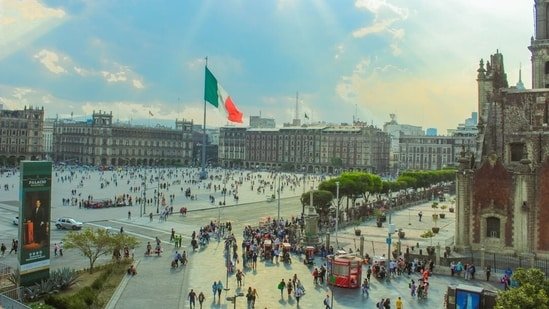
Mexico City is sinking at an alarming rate due to overexploitation of groundwater. Scientists warn that if the trend continues, parts of the city could face severe structural and environmental consequences.
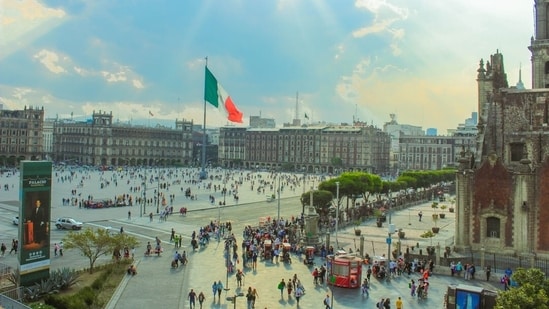
According to recent NASA findings, land subsidence in the region is accelerating as the city’s underground aquifers are depleted. The ground beneath the metropolis is compressing and collapsing due to decades of excessive water use. As parts of the city sink several inches each year, infrastructure is being compromised and the landscape is uneven.
The city is one of the fastest sinking capitals on Earth, sinking at a rate of more than 0.5 inches per month, according to images from NASA’s powerful radar system.
Read more: America could lose to China in space race
Why did Mexico City sink?
CNN quoted experts as saying that the crisis is mainly due to the over-exploitation of underground aquifers. The city’s rapid sinking caused by relentless urban expansion is made worse as new infrastructure adds more weight to the clay-rich soil.
The soil is primarily composed of soft clay, and when water is pumped to meet the needs of a growing population, the soil loses its structural support and begins to compact.
Mexico City’s unique geography further complicates this issue. The city sits on water-saturated sediments that are particularly susceptible to compaction when dry because it was built on the former lakebed of Lake Texcoco. This has resulted in the region becoming one of the fastest sinking urban areas in the world’s history.
NASA researchers note that once the ground compresses, the process is essentially irreversible, meaning that even if water levels recover, the city will not be able to regain its original height. This makes subsidence a long-term challenge with limited mitigation options.
New images from the NISAR satellite, a collaboration between NASA and the Indian Space Research Organization, brutally reveal the extent of the problem.
Read more: After Artemis 2, the moon is back in the spotlight
Impact on infrastructure and daily life
The first reports of Mexico City’s sinking date back to the 1920s, and since then locals have had to contend with its effects, including damaged rail systems, leaning buildings and damaged roads.
During Mexico City’s dry season from October 2025 to January 2026, NISAR recorded ground movements beneath the city. According to its results, parts of the city are sinking at a rate of nearly 0.8 inches per month and more than 9.5 inches per year.
The city’s main airport, Benito Juarez International Airport, is one of the worst-affected areas.
One city landmark also demonstrates the impact of subsidence. The 114-foot-tall Angel of Independence monument, built in 1910 to commemorate Mexico’s 100th anniversary of independence, required 14 additional steps to be added to the base because the land beneath was sinking.