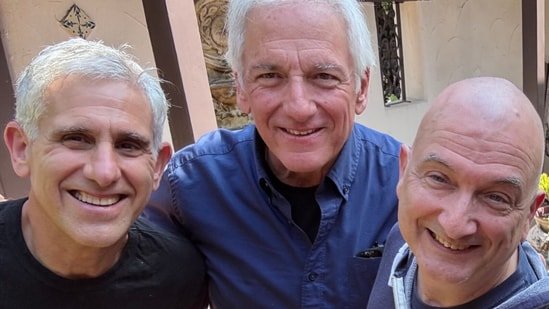


Solicitor General of India Tushar Mehta.
NEW DELHI: The extraordinary respect shown by lawyers across the world for judges in courts has given some judges a false idea of divinity, turning some “adults” into bullies, senior advocate and Solicitor General Tushar Mehta said in his upcoming book. This approach avoids contempt but may still cause sensitive irritations on the part of the judge.Mehta collects incidents from foreign courts to illustrate his “bully on the bench” theme, which can hold a mirror up to the Indian judiciary. “Judicial bullying comes in many forms,” he wrote in “Judges, Lawyers, and Strange Incidents.” Some judges continually interrupt lawyers’ arguments, while others range from tough to humiliating.
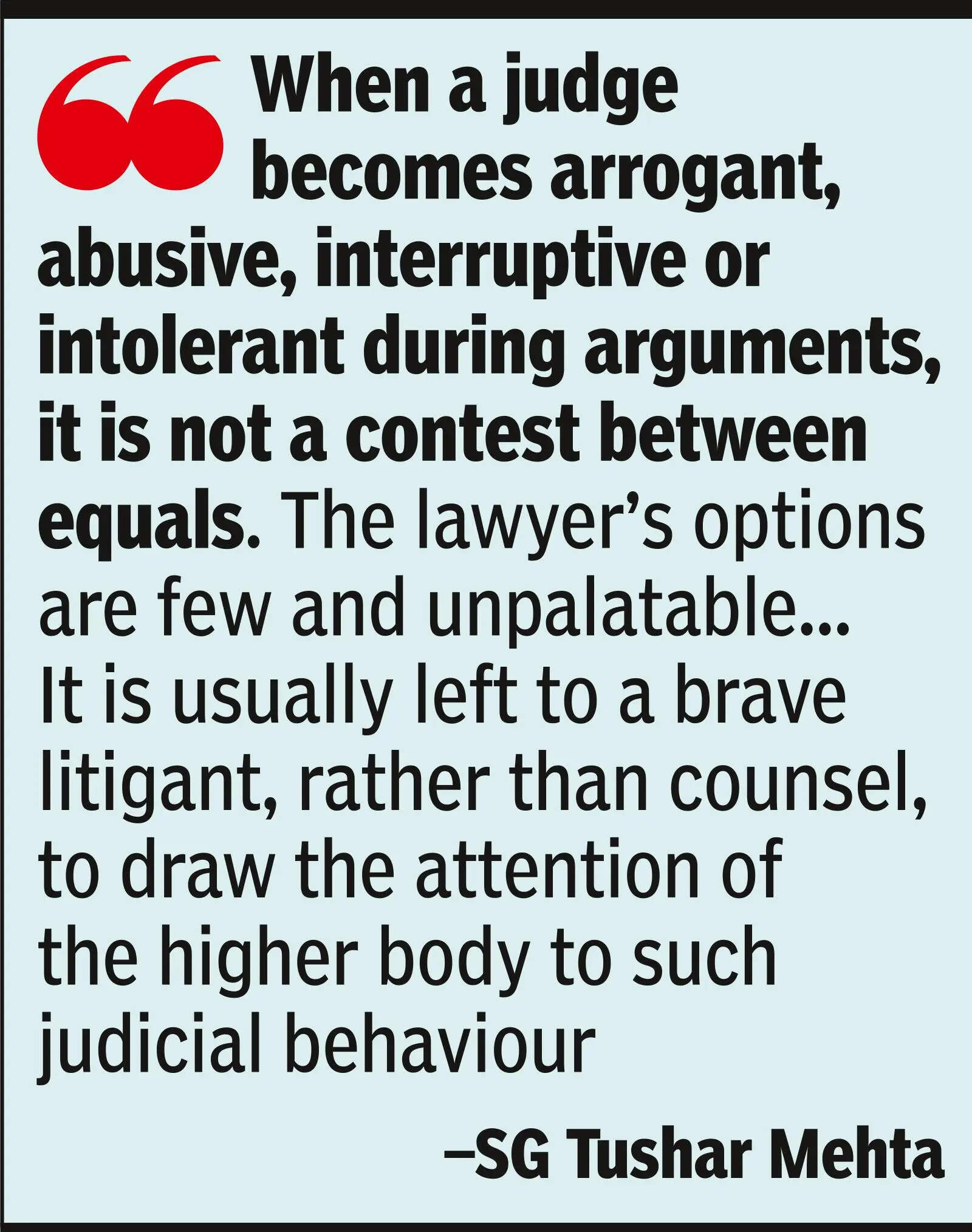
Public rightly expect judges to meet highest standards: SG
He said that while the judicial system was primarily for litigants, they could not claim protection of their constitutional and statutory rights but instead requested “His Majesty’s permission” through their lawyers. “Even if the judge raises the absurdity of the patent law, the lawyer will first respond with ‘We bow to your Excellency,’ and then the defense dares to ‘have the temerity’ to propose ‘an alternative for your good faith consideration,'” he said.The book, ironic in tone and arguably a brave act by a serving legal official, expresses the widespread lament among the bar at the condescension of judges weaponizing their lofty status and power asymmetries. Mehta, who has served as secretary-general since 2018 and has served for nearly eight years, is the second longest tenure after the legendary CK Daphtary served as the first secretary-general for 13 years. Mehta said the judiciary is the most respected department in the country.“Such respect can be earned through the blunt instrument of defiance of authority, but it can also be maintained by earning genuine confidence from stakeholders, a confidence that stems from fairness, neutrality and civility in the treatment of litigants and counsel,” he said.He also said judges in various countries have been dissatisfied and rejected any external oversight of their work or mechanisms to hear complaints against them, which is seen as a “violation of judicial independence.”The book, available exclusively from TOI, has traveled to jurisdictions around the world to carefully select many interesting and insightful examples of courtroom drama.Mehta also acknowledged the problems faced by judges. “In almost all jurisdictions, courtrooms are too overcrowded and congested to provide a pleasant working environment. Judges work under heavy caseloads with minimal infrastructure and scarce institutional support. Their resources are often completely disproportionate to the number and complexity of the matters they have to decide,” he said.Judges’ pay, especially at the trial level, is low and often does not keep pace with inflation. “Added to this are the daily provocations of unreasonable litigants and irritating attorneys that can test even the most disciplined judicial temperament,” Mehta wrote.But while expressing sympathy, Mehta said the difficulties they face cannot be an excuse for judges to be uncivil in court. Judges, he said, come from the system itself, its pressures, flaws and provocations.Mehta said the public rightly expects the highest standards of conduct from judges because they can vote out arrogant or erroneous politicians, but not arrogant or erroneous judges. In one of Arun Jaitley’s favorite dialogues, in which he describes an unreasonably arrogant judge as an “unelected tyranny,” Mehta writes, “He or she is neither directly accountable to the people nor to the people. Any deviation from the ideal of judicial dispassion risks eroding the faith that underpins the judiciary.“Referring to the huge power imbalance within the courts, the Secretary-General said, “When judges become arrogant, abusive, interruptive or intolerant during arguments, it is not a competition between equals. The options for counsel are few and unpleasant. To fight tit for tat is to risk the interests of the client and one’s own professional survival… It is often the courageous litigant, not the lawyer, who brings such judicial behavior to the attention of higher authorities.”“