
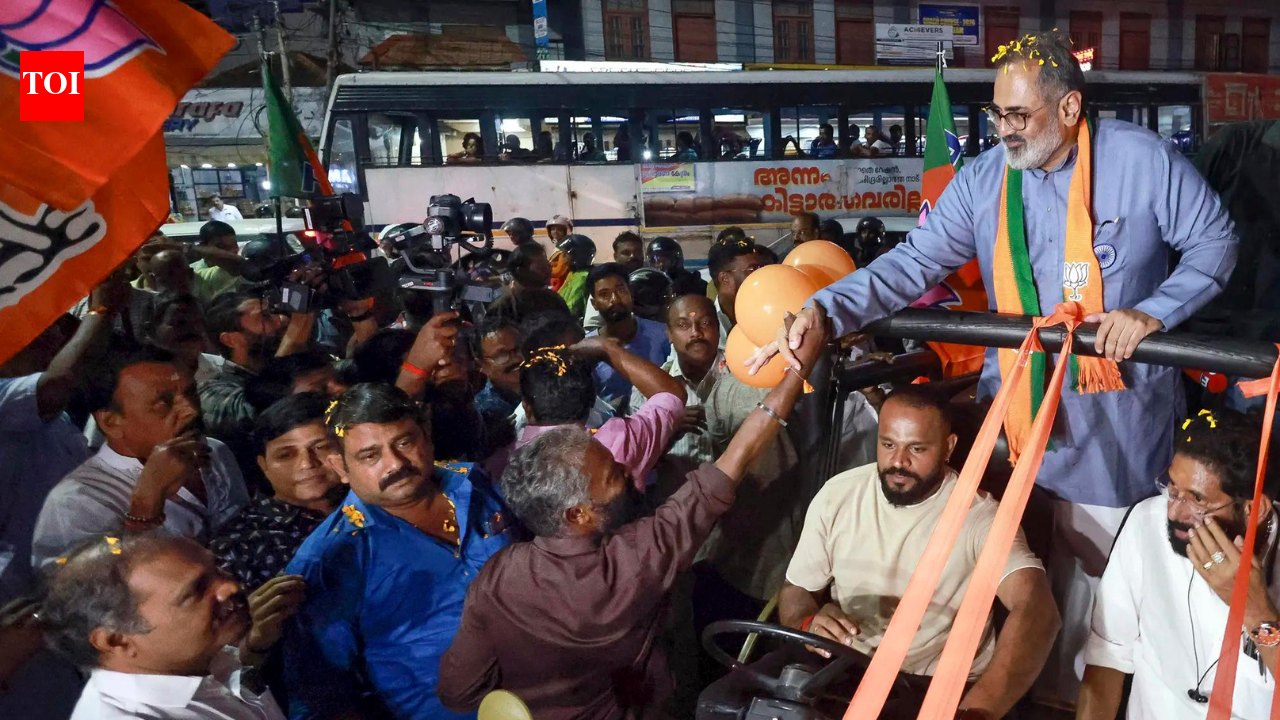
New Delhi: As Kerala awaits election results on Monday, the bigger political question may not be whether the BJP can win power in the state, but whether it has begun to disrupt Kerala’s long-standing two-front system. For decades, state politics has remained bipolar, with power alternating between the CPM-led Left Democratic Front (LDF) and the Congress-led United Democratic Front (UDF). Tightly managed vote transfers, a strong network of cadres and local caste community equations in the 140-member Assembly leave little room for the emergence of a third force.But recent elections suggest that the BJP is slowly carving out political space in some parts of the state. The maiden Lok Sabha victory in Thrissur in 2024, rising vote share, inroads in local body polls and growing influence in urban constituencies like Thiruvananthapuram and Palakkad mark a gradual shift in the electoral landscape in Kerala. While the party is far from launching a state-wide challenge, its strategy of focusing on specific constituencies has begun to turn the traditional LDF-United Democratic Front contest into a triangular fight, enough to make the BJP an increasingly important factor in Kerala politics.
Is the BJP the third wheel between LDF and UDF?
For nearly four decades, elections in Kerala have followed a script so consistent that it seems almost structural. Every five years, power swings between the CPM-led Left Democratic Front (LDF) and the Congress-led United Democratic Front (UDF), leaving the state with one of India’s most closed two-front political systems.In the 140-member parliament, competition is often decided based on local equations and strict vote shifting, leaving little room for a third force to endure.This political cycle ends in 2021. Kerala chief minister breaks deep-rooted anti-incumbency pattern Pinarayi Vijayan After returning to power, the LDF secured 99 seats while the UDF was reduced to 41. The verdict has been interpreted not only as a nod to governance in times of crisis but also as evidence that the two-front structure continues to dominate Kerala politics.However, beneath this binary structure, the BJP has been trying to establish a quieter political footing. Far from the sweeping breakthroughs achieved elsewhere, the party’s Kerala project is incremental, focusing less on immediate power and more on deepening vote share in a handful of constituencies, expanding its organizational network and positioning itself as a disruptive third pole in a contest traditionally dominated by the vigilantes and the DA.
The quiet rise of the Bharatiya Janata Party
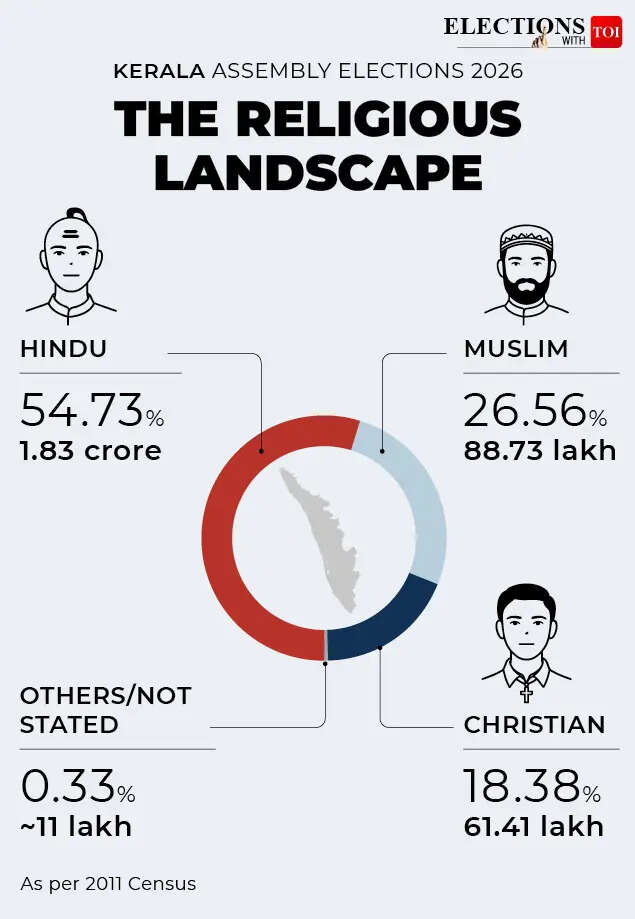
The BJP’s expansion in Kerala has begun to go beyond symbolism. A party that has struggled for decades to gain a foothold in the state’s entrenched LDF-United Democratic Front political structure has started making measurable gains in vote share and representation over the past few election cycles.The turning point came in the 2024 Lok Sabha elections when actor-turned-politician Suresh Gopi won in Thrissur and the BJP won Kerala’s first-ever assembly seat. In addition to winning seats, the NDP’s share of the state vote increased to 19.24% from 15.64% in 2019, indicating that the party’s support base has expanded beyond isolated groups.These gains contrast with the CPM’s declining influence in the parliamentary elections. The party won 12 Lok Sabha seats in Kerala in 2004, but its seats fell to four in 2009, five in 2014 and then to one in both 2019 and 2024. While the Left has maintained its dominance in parliamentary politics, the Lok Sabha outcome reflects its waning electoral influence at the national level in the state.The BJP’s rise has also become more visible in local body elections, often seen as an indicator of organizational strength ahead of the assembly polls. In Thiruvananthapuram, the BJP-led NDA ended the CPM’s 30-year control of the city’s corporations, becoming the single largest front with 50 of the 100 wards. The result marks one of the BJP’s most significant gains in urban Kerala and marks a shift in a traditionally polarized race.The party’s strategic focus is on expanding its presence on a district-by-district basis rather than trying to achieve a statewide breakthrough. Its gains have been concentrated in urban centers and Hindu-majority areas, while the BJP has also tried to expand into parts of central Kerala’s Christian communities.From the perspective of population structure, Hindus account for 54.73% of the population of Kerala, Muslims account for 26.56%, and Christians account for 18.38%. The BJP’s growth in parts of the state has increased pressure on the Left, especially in Hindu-majority constituencies, where triangular competition is beginning to affect the voting equation for the traditional LDF and United Democratic Front.
Which seats is the BJP eyeing?
The BJP’s strategy for Kerala is no longer centered on pursuing a state-wide breakthrough. Instead, the party is concentrating resources on a handful of constituencies where it believes organizational growth, demographic strength and recent electoral gains can translate into winnable contests.Central to the strategy are areas like Thiruvananthapuram, Palakkad, Thrissur, Kasargod and parts of Pathanamthitta, where the BJP has either established a clear grassroots presence or sees scope for social consolidation.In Thiruvananthapuram, the BJP’s confidence stems from its expanding urban footprint. The party-led NDA seized control of the city’s corporations in 2025, ending the CPM’s decades-long dominance in the capital. This result laid an important administrative and organizational foundation for the PPP in the region, and in successive elections, the PPP’s vote share continued to increase.Palakkad has emerged as another area of focus. The BJP first forayed into the region in 2015 when it won the municipal chairmanship for the first time in Kerala’s history and repeated the feat in 2020 and 2025. Over the years, the constituency has transformed from a traditional LDF-UDF contest into a competitive triangular battle.The Palakkad Assembly seat is now considered one of the most watched contests. Known as the “Gateway of Kerala”, the constituency’s urban-rural mix and proximity to the Tamil Nadu border make it politically distinct from much of the state. The BJP sees Palakkad as one of the few constituencies where its cadre network, municipal presence and growing vote base can translate into a parliamentary victory.
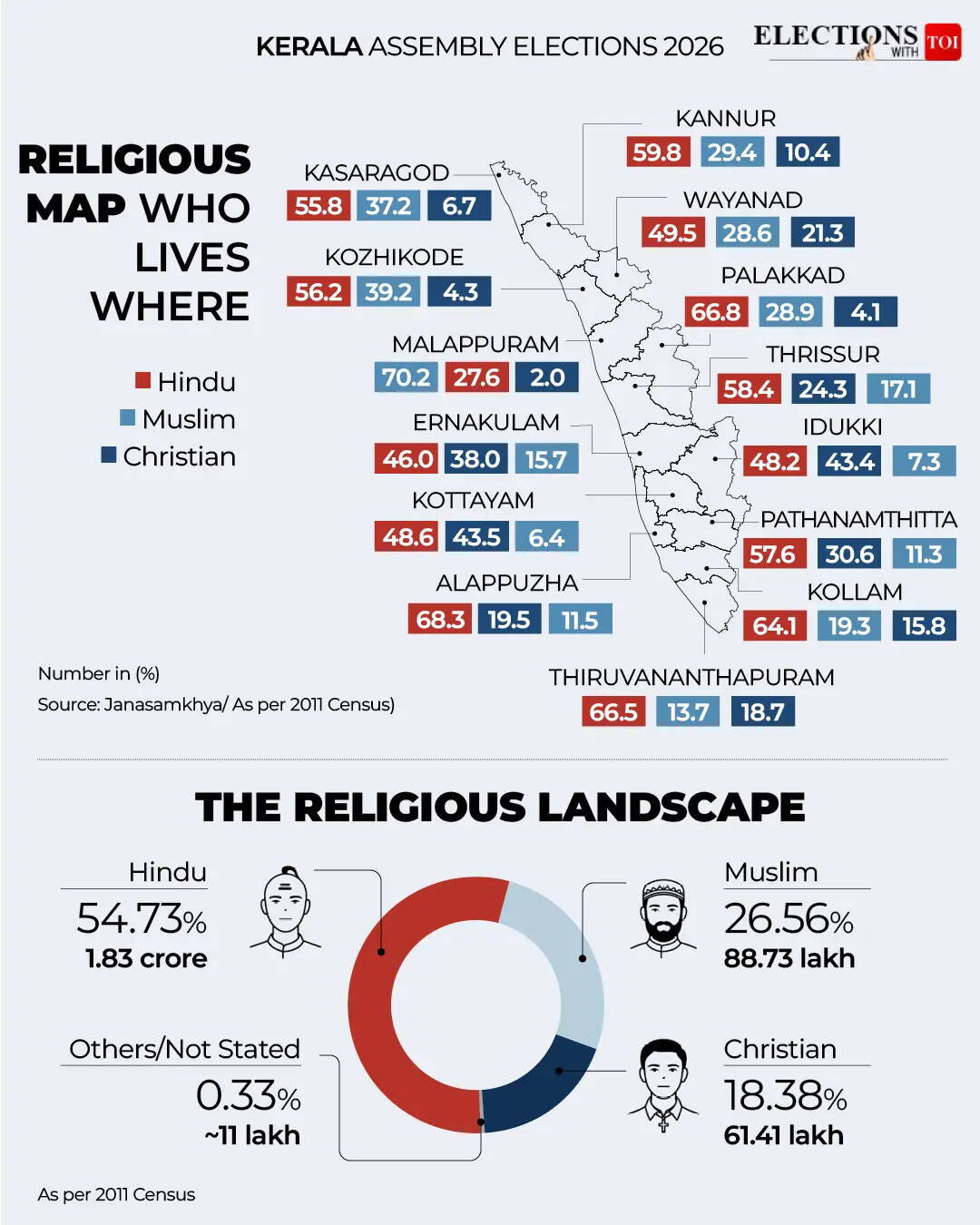
The party has fielded senior NDA leader Sobha Surendran, who had earlier emerged as a strong challenger from the constituency in the 2016 Assembly elections and the 2024 Lok Sabha elections. Her campaign focused on infrastructure and urban development, themes the BJP believes resonate with Palakkad’s increasingly urban voters.Drissur remains central to the BJP’s calculations in Kerala after Suresh Gopi won the Lok Sabha in 2024, giving the party its first assembly seat in the state. The victory reinforced the BJP’s belief that even in Kerala’s bipolar political structure, campaigning concentrated in socially mixed urban constituencies can deliver results.In Kasargod, the BJP relies on support from Kannada-speaking voters and its organizational proximity to coastal Karnataka, where the party has traditionally been stronger. Meanwhile, Pathanamthitta remains politically sensitive due to the Sabarimala issue and the BJP continues to see the region as fertile ground for Hindutva consolidation politics.Rather than spreading itself across all 140 parliamentary constituencies, the BJP’s approach reflects a more targeted calculation – to deepen its influence in a limited number of seats, create triangular contests and gradually build lasting regional strongholds.