
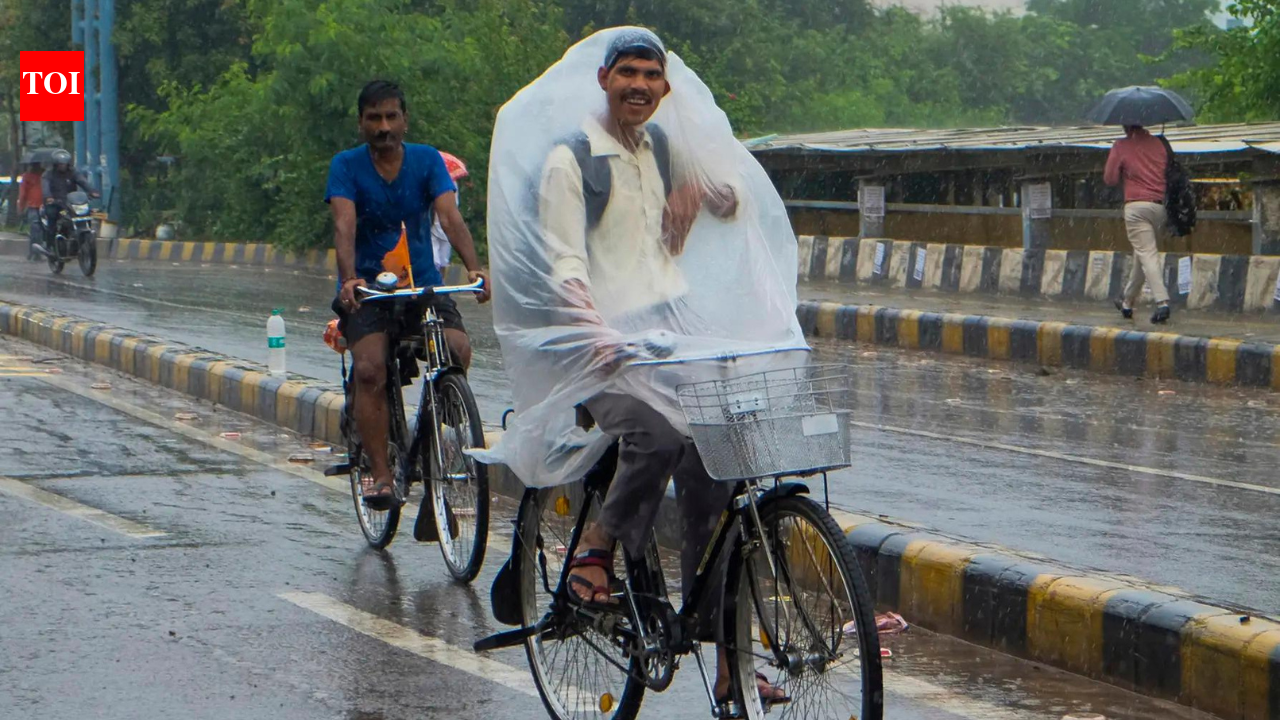
NEW DELHI: Many parts of the country may not get hotter than usual this month due to “above normal” rainfall, but certain states, especially those along the Himalayan foothills like southern Himachal Pradesh and Uttarakhand, along the east coast and parts of Maharashtra and Gujarat, may face “above normal” heat wave days (an additional three to eight days), according to the May forecast issued by IMD on Friday.The Met Office also predicts that nights will be warmer (above normal minimum temperatures) in many parts of the country, a phenomenon that IMD chief Mrutyunjay Mohapatra said is linked to climate change.“Above normal” rainfall this month is due to a favorable trough of low pressure and upper cyclonic circulation leading to increased frequency of western disturbances and thunderstorm activity. These could bring daytime temperatures to “below normal” in some areas.
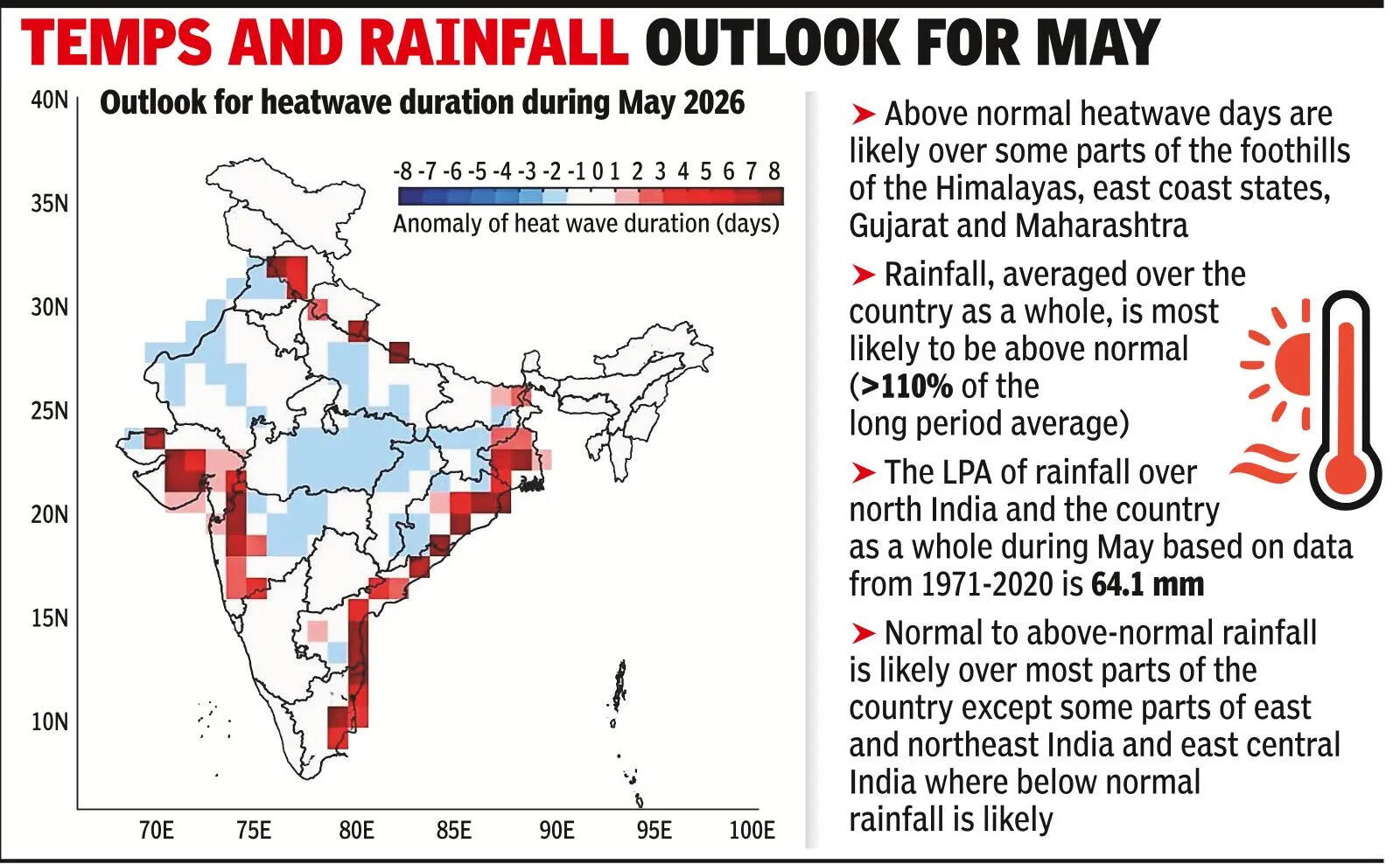
“Maximum (daytime) temperatures are expected to be normal or below normal in many parts of the country. However, temperatures are likely to be above normal in many parts of southern peninsular India and some parts of northeast and northwest India,” Mohapatra said.On the other hand, minimum (nighttime) temperatures are expected to be above normal in many parts of the country, he said. “However, normal or below-normal minimum temperatures are likely to occur over many parts of northwest India, parts of central India, adjoining parts of peninsular India and southern parts of northeast India.”The southwest monsoon is expected to reach the Andaman and Nicobar Islands around May 14-20. The monsoon is expected to break out in Kerala around May 15, marking the arrival of the monsoon in mainland India.The Met Office has forecast “below normal” monsoon rainfall this year due to the risk of El Niño, a warming sea surface temperature in the central and eastern equatorial Pacific that is typically associated with reduced rainfall over the Indian subcontinent.The increasing frequency of WDs (moist air and low-pressure systems from the Mediterranean region that enter India and influence local weather) led to seven such events in April, causing thunderstorms, rain, high winds and lightning in northwest India and the adjoining central and eastern regions.Last month, WD-related extreme weather events claimed the lives of 24 people. Lightning alone killed 10 people in Andhra Pradesh, Uttar Pradesh, Maharashtra and Odisha.