Missing for 40 years: 1,000-year-old royal seal of Edward the Confessor found in Paris World News

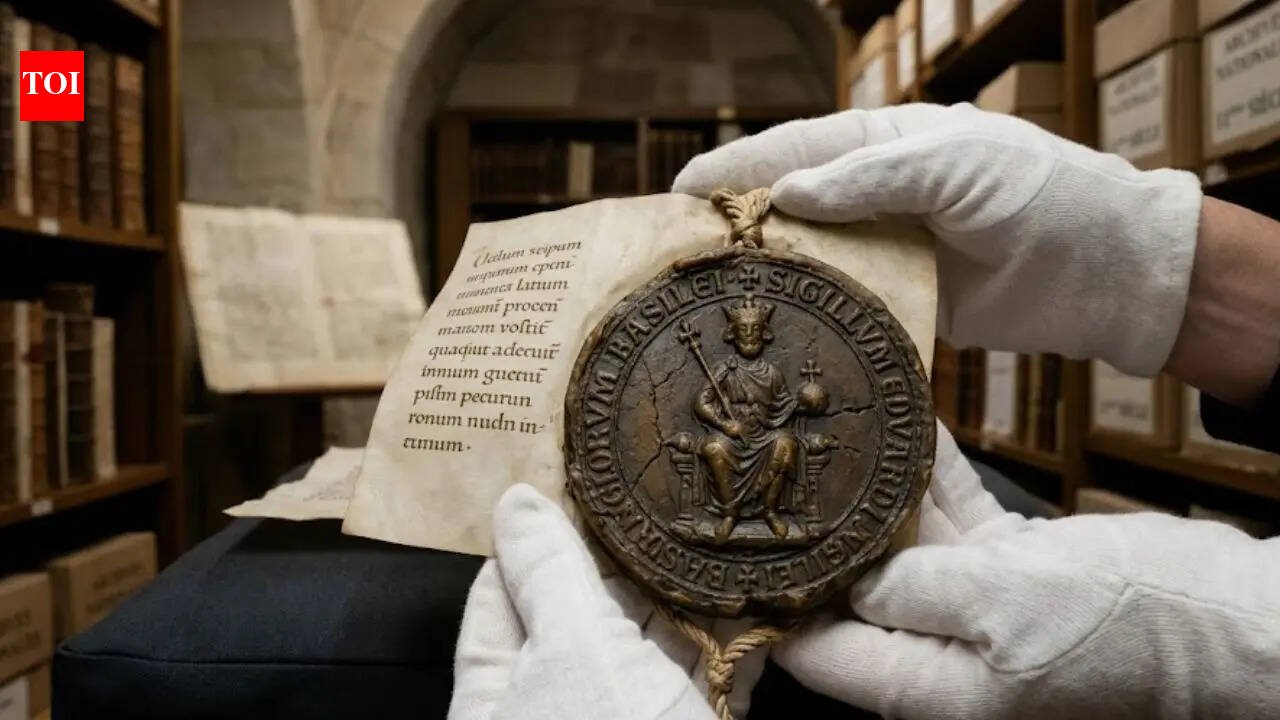
An 11th-century seal owned by Edward the Confessor has been rediscovered in the French National Archives in Paris. Historians have not seen it for more than forty years. Dr Guillan Dolande, a researcher at the University of Exeter, discovered the artifact while examining medieval documents. This seal dates back to the 1050s and was originally attached to a document at the Abbey of Saint-Denis. It has been hidden in uncataloged collections since the 1980s. The seal is approximately three inches across and is the only complete example of the design from before the Norman Conquest.
Why a 1,000-year-old royal seal has been forgotten for decades
Dr Dolandou made the startling discovery while reviewing some “cross-Channel” documents, historical records shared by Britain and France over the years. The seal had been lost for a long time because it was in a part of the archive that was not prioritized for digital cataloging. When Dr. Dolande learned of the importance of this beeswax product, he called it a “defining moment in his career.” As a University of Exeter study points out, fragments of Edward’s seal are known to exist; it is the most complete and best-preserved example of the king’s “Great Seal” ever discovered.
The secret politics of Da Yin
This seal shows an interesting change in the early English kings’ view of their authority. In the image, Edward the Confessor sits on a throne, holding a scepter and a globe, symbols inspired by the “Chrysobulls” (golden bulls) of the Byzantine Empire. Historians believe that this “oriental” influence was no accident. The Wessexes wanted to be seen as possessing imperial majesty like the Roman emperors at Constantinople, rather than just regional rulers.
How a medieval wax figure defied time in Paris
This seal was made around AD 1050-1060 and is an important link between the late Anglo-Saxon period and the Norman Conquest in 1066. It reveals that sophisticated administrative practices often thought to be Norman, such as the use of the “Great Seal” on legal documents, were well developed during the reign of King Edward. Remarkably, this wax has been preserved for nearly a thousand years. This is thanks to the stable conditions of the Paris vaults, where it has been kept since the late 1700s.