
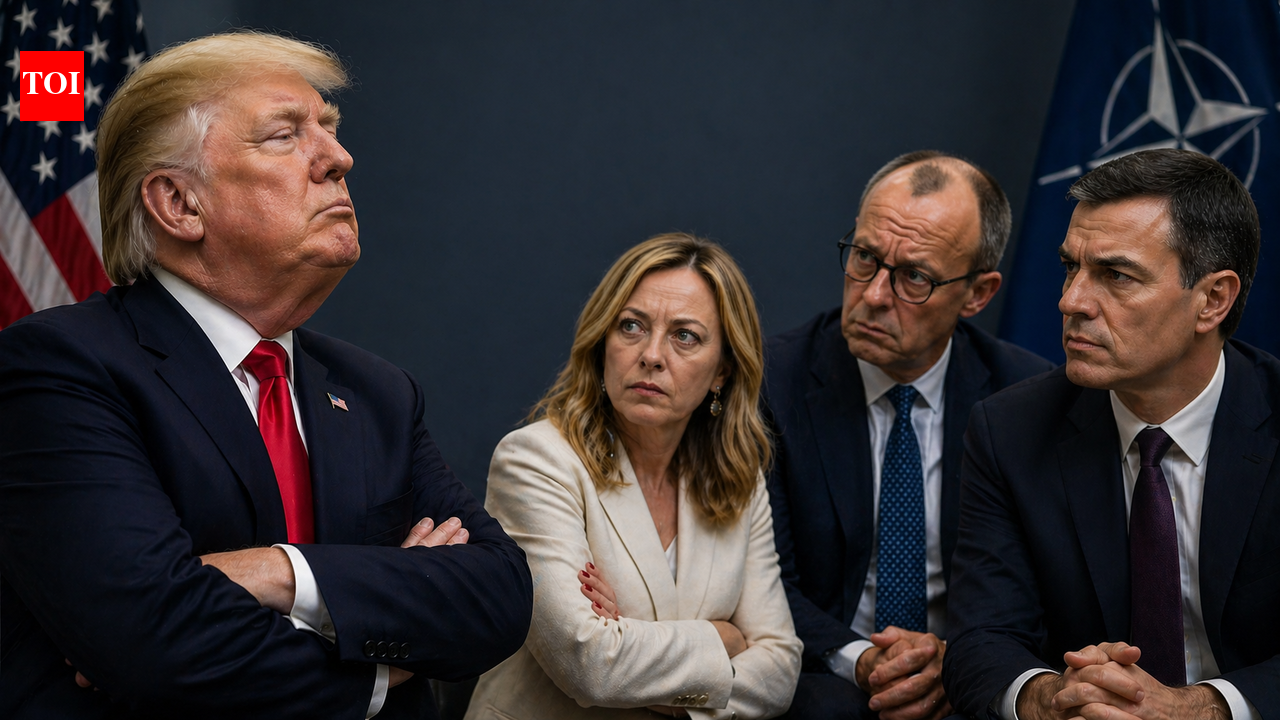
U.S. President Donald Trump has hinted that the United States may reduce its troop presence in Italy and Spain, harshly criticizing both countries’ stance on the ongoing war with Iran and widening a growing rift between Washington and its European allies.Trump told reporters in the Oval Office that he was actively considering scaling back the deployment. “Yes, probably, I probably will. Why shouldn’t I?” he said when asked about possible troop reductions by the two NATO members.He added: “Italy is not giving us any help and Spain is terrible, absolutely terrible.”Also read: Is the United States going to withdraw from NATO? Why Spain and Iran War Could Trigger Trump’s Biggest Global ShockThe comments mark the latest escalation in tensions between the United States and its NATO partners, many of whom refuse to participate directly in U.S.-backed military operations against Iran and efforts to secure the Strait of Hormuz.
Troop reductions under review across Europe
Trump’s comments on Italy and Spain came an hour after he said Washington was already “studying and reviewing” possible reductions in U.S. troops in Germany and suggested a broader reassessment of the U.S. military footprint in Europe.As of December 31, 2025, there were 12,662 active U.S. troops in Italy and 3,814 active U.S. troops in Spain. Germany has a much larger contingent with 36,436 U.S. personnel, making it the backbone of the U.S. military presence in Europe.The potential troop withdrawal reflects Trump’s longstanding dissatisfaction with NATO allies over their burden-sharing and defense commitments, now exacerbated by disagreements over the conflict with Iran.
Nato allies criticize Iran war
Trump has repeatedly criticized European allies for failing to support U.S.-Israeli actions against Iran or contribute to reopening the Strait of Hormuz, a key oil shipping artery disrupted by the conflict.Earlier this month, Trump also targeted Italian Prime Minister Giorgia Meloni, saying she lacked “courage” toward Iran in comments published in an Italian newspaper, a sign of tensions even with a leader previously seen as a close ideological ally.Spain has also come under continued criticism from Washington not only for its opposition to military action against Iran but also for failing to increase defense spending in line with NATO expectations. A recent report suggested that the United States is even considering how to suspend Spain from NATO, but no formal action has been confirmed.
War tensions intensify Germany dispute
Tensions have spread to Germany, where Trump has repeatedly attacked Chancellor Friedrich Merz, accusing him of interfering in U.S. foreign policy while failing to manage domestic and regional crises.“The German Chancellor should spend more time ending the war with Russia/Ukraine (he is completely ineffective at that!), repairing his broken country, especially on immigration and energy, and less time intervening in countries that are emerging from the Iranian nuclear threat,” Trump wrote in a social media post.He added that while the war against Iran had pushed up global energy prices, it was “making the world, including Germany, a safer place”.Trump’s comments followed criticism from Mertz, questioning Washington’s strategy in the conflict with Iran and warning of the risks of a prolonged military engagement, similar to past wars in Afghanistan and Iraq.The U.S. president responded earlier this week that the German leader “doesn’t know what he’s talking about,” further straining relations between the two countries.
Europe urges caution, stresses NATO solidarity
Despite the sharp rhetoric, Germany sought to maintain a diplomatic balance. Foreign Minister John Wadfel said Berlin was ready for the possibility that the United States could reduce troop levels while discussions continued within the framework of NATO.“We’re ready for this,” Wadfil said. “We are having close discussions in a spirit of trust in all NATO institutions and we look forward to the Americans’ decision on this.”Mertz also reiterated his commitment to the transatlantic alliance, saying: “We are following a clear compass, especially during this turbulent phase, and that compass remains focused on a strong NATO and a reliable transatlantic partnership.”
The wider implications of the Iran conflict
The growing discord underscores the broader geopolitical implications of the war with Iran, which the United States has waged alongside Israel without full consultation with its NATO partners. The conflict has roiled global energy markets and effectively blocked the Strait of Hormuz, causing oil prices to rise and affecting global supply chains.Washington has defended its actions to prevent Iran from acquiring nuclear weapons, although divisions within the alliance remain over the strategy and its long-term consequences.The United States has also supported Israeli developments, including the interception of an aid flotilla headed for Gaza, calling the mission a “meaningless political stunt” and urging allies to refuse to provide logistical support for such an operation.However, Spain condemned the interception and summoned the Israeli envoy, further highlighting divisions within Europe over Middle East policy.