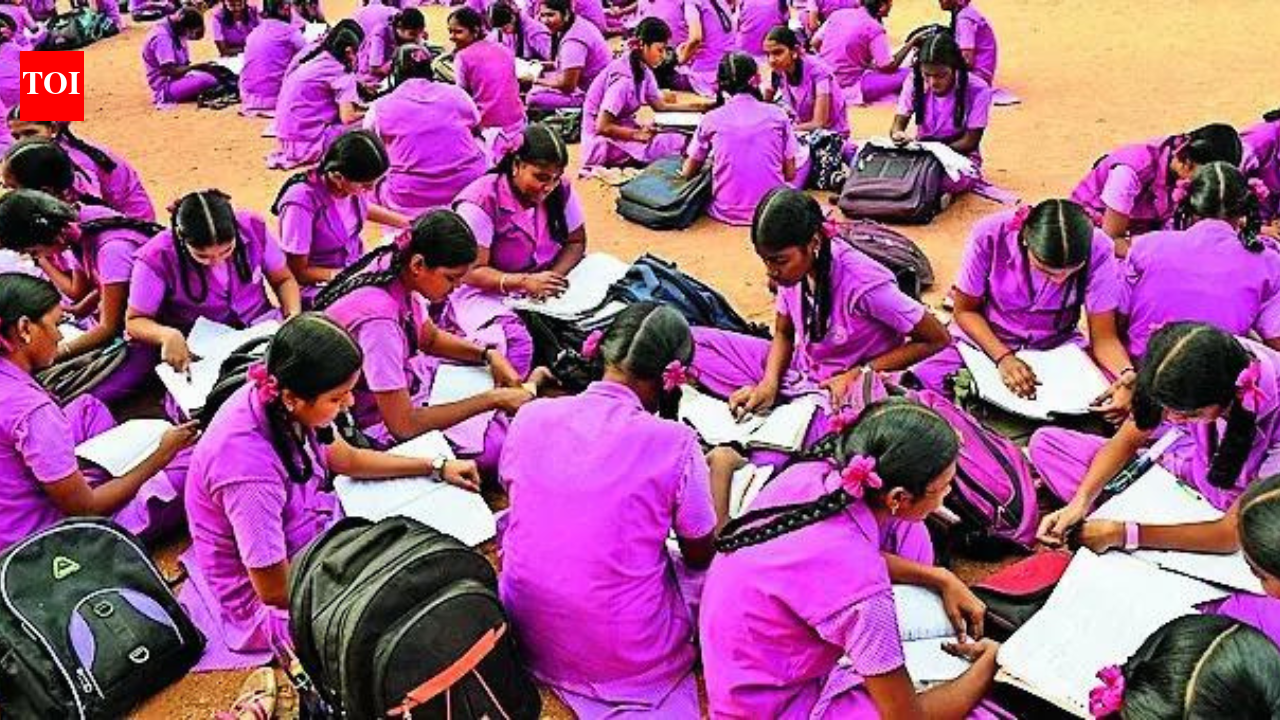

 The “Women and Men in India 2025” report shows that although the overall literacy gender gap remains at 14.4 percentage points, the female gross enrollment ratio (GER) exceeds the male GER at all school levels, and women account for 51.48% of the higher education pass rate.The data highlight a generational shift.While the overall literacy gap remains large, the literacy gap among youth aged 15 to 24 narrows sharply to 3.8 percentage points, reflecting faster literacy growth among younger age groups.
This marks steady progress compared with previous decades, with female literacy rising from 30.6% in 1981 to a recent estimate of over 70%, but still lags behind male literacy levels.At the school level, gender parity has been effectively achieved from primary school to high school, and the enrollment rate of girls not only matches but exceeds that of boys. Under the National Education Policy (NEP) framework, female enrollment rates are higher at the basic, preparatory, junior and secondary levels, while the adjusted net enrollment rate (ANER) of girls at the secondary level has also exceeded that of boys in recent years.Dropout rates fell for both boys and girls between 2022-23 and 2024-25, with greater declines at the preparatory and intermediate levels, but they remained relatively high at the secondary level.In higher education, the trend is gradually tilting towards women. Between 2021-22 and 2022-23, women’s GER increased from 28.5% to 30.2%, while men’s growth was smaller, from 28.3% to 28.9%. Women currently make up a slim majority of overall pass numbers, particularly in advanced courses such as the MPhil (76.14%), and more than half of undergraduate and postgraduate students complete their studies.However, participation across disciplines remains uneven. Women are concentrated in the arts, sciences, social sciences and medicine, while men continue to dominate engineering, technology, IT and management, reflecting the continued segmentation of career paths.Learning outcomes showed complex patterns. Girls consistently outperform boys in language and board exam pass rates, while boys perform better in math, especially in upper grades. At the same time, women’s share of higher education now accounts for more than half of total enrollments across a range of subjects, suggesting that although subject selection remains biased, women’s access to higher education remains wider.While access and participation have improved, structural gaps remain. The average years of education for women is 7.4 years, compared with 8.4 years overall, indicating an earlier decline in educational attainment. Expenditure patterns also reflect differences, with average annual expenditures for boys (Rs 13,901) higher than for girls (Rs 12,101), indicating that there are still differences in investment at the household level.