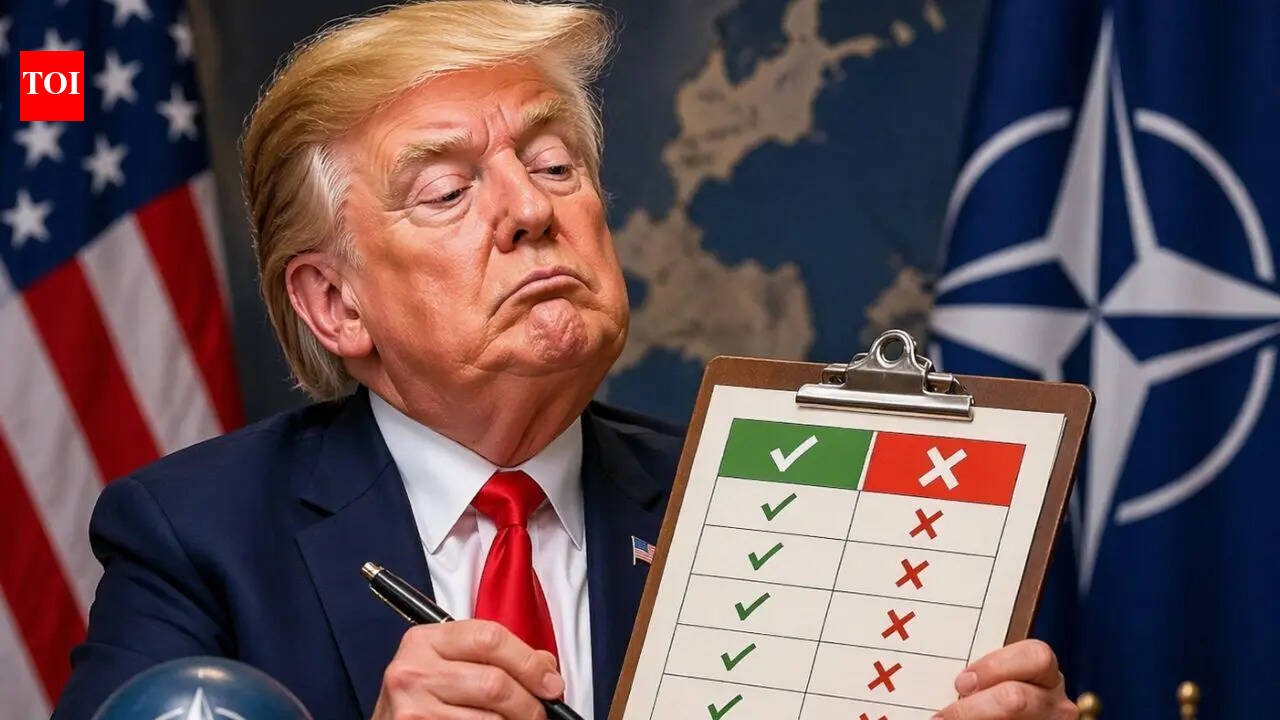

Representative image (AI generated)
The White House has created a list of “naughty and nice” NATO countries, ranking members based on their contributions to the alliance and their stance on the ongoing war with Iran, the White House said.The move is seen as part of a broader effort by the Trump administration to pressure allies who did not support Washington’s stance during the war.
NATO members are divided into different tiers based on defense spending, military cooperation and operational support, according to officials familiar with the plan.The assessment report was prepared ahead of a visit to Washington by NATO Secretary-General Mark Rutte, where officials will examine how each member country contributes to collective security, Politico reported.The idea was proposed by U.S. Defense Secretary Pete Hegseth last year. He earlier outlined the concept of rewarding countries that meet U.S. expectations for defense spending and military cooperation.He said: “Exemplary allies who have stepped up, such as Israel, South Korea, Poland, Germany, the Baltic states and others, will be particularly favored by us.” Hegseth said: “Allies who continue to fail to do their part for collective defense will face the consequences.”The Pentagon has also reinforced this approach in its national defense strategy, saying it will prioritize working with allies to “do our part” for collective defense and shared security goals.One diplomat said the list appeared to reflect that concept. “We have a naughty and pretty newspaper in the White House, so I guess they’re thinking alike,” the person said, according to Politico.This assessment is also related to recent tensions within NATO over the conflict with Iran, particularly regarding the crisis in the Strait of Hormuz and U.S. military operations. Officials said the ranking could influence decisions about which countries receive more military cooperation or strategic support in future operations.The Trump administration has expressed frustration with allies who have not supported U.S. demands during the conflict, including participation in operations or access to military bases.
Split among NATO members
According to reports, countries such as Romania and Poland have shown more cooperation, allowing the United States to use air bases and logistical support during operations in the Middle East. Poland is already one of the countries with the highest defense spending in NATO. It also hosts about 10,000 US troops and bears most of the related costs. The expanded Mikhail Kotyniceanu air base in Romania is also used for U.S. military operations.In contrast, countries including Spain and some other Western European allies have reportedly rejected or delayed U.S. requests for aid. Meanwhile, Baltic states such as Lithuania, Latvia and Estonia have been praised for meeting or exceeding defense spending targets.Officials said potential consequences for countries ranked lower could include reduced troop deployments, fewer joint exercises or changes in arms sales and cooperation. However, they also acknowledged that shifting the U.S. military presence in Europe would be costly, complex and logistically difficult.One European official stressed that even the option to redeploy forces would largely move U.S. forces among allies rather than withdrawing them entirely from Europe.
Limited clarity on implementation
Despite the discussion, officials did not specify how strictly the ranking system would be enforced, or what specific “rewards” or “punishments” would look like. Some diplomats familiar with the discussions said the government itself seemed unsure how to implement the idea.One European official said the concept is not yet fully mature, suggesting that while troop movement is an option, it could also end up putting more pressure on U.S. resources rather than punishing allies.The White House, however, defended its approach. Spokeswoman Anna Kelly said the United States has long supported its allies but now needs to do more.“While the United States has always supported our so-called allies, the countries we protect with thousands of troops have not stood by us throughout the epic Fury,” she said, referring to the Pentagon’s designation of Iran-related operations.“President Trump has made his thoughts on this unfair dynamic clear, and as he says, America will remember it,” she added.“It doesn’t help when American leaders talk about our alliances in a derisive way,” said U.S. Senator Roger Wicker, warning that the alliances would bring “political, strategic and moral benefits” to the country.“It is unhelpful for U.S. leaders to ridicule our alliances. We must be aware of the numerous political, strategic and moral benefits the nation derives from alliances,” Wick said.Former officials have also questioned the Trump administration’s ability to undertake such a broad reorganization of alliances while dealing with an ongoing global crisis.