
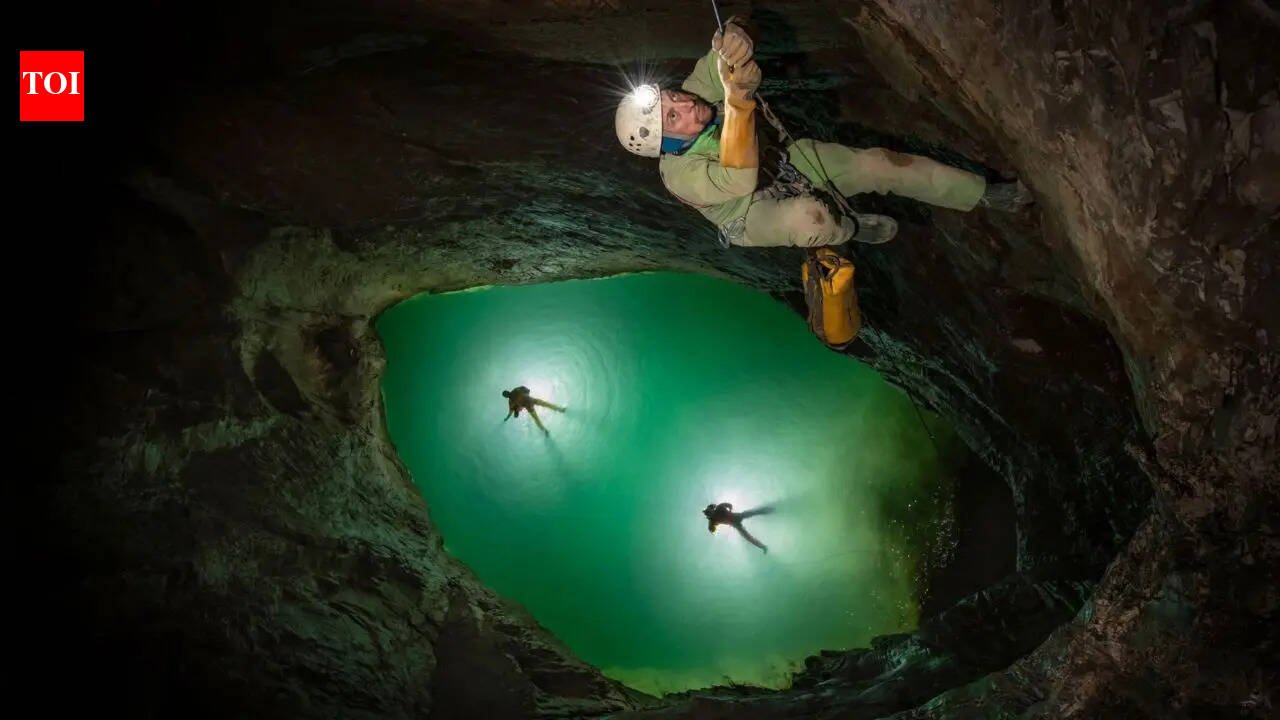
Scientists are still studying the deepest caves on Earth. They are unique environments created by geological processes over millions of years. They usually occur in areas rich in limestone, where water slowly erodes the rock, forming vertical pits and horizontal tunnels. This takes a lot of time, but the result is a network of channels that has not yet been fully drawn. Most of these caves have not been fully explored due to their depth and small spaces.As new surveys refine measurements, the list of the deepest caves changes. Some systems extend vertically for more than two kilometers, making them some of the most extreme geological formations known. The following overview describes the currently recorded depth and key geological features based on available exploration data. Here are the 10 deepest caves in the world, according to WorldAtlas data, and find out what’s beneath them.
list The deepest cave in the world
The world’s deepest cave
Vilovkina Cave
The Veryovkina Cave is located in the Arabica massif of Abkhazia at an altitude of 2212 meters and is the deepest known cave. It was formed in a limestone karst landscape where water erosion created shafts and galleries. First explored in 1968, its depth was not confirmed until much later. The system includes floods, narrow passages and deep pits, making exploration extremely difficult. Parts remain unmapped due to unstable conditions and water flow changes.
Krubera-Voronya Caves
The Krubera-Voronja cave is 2199 meters high and is located near Veryovkina, Abkhazia. It has branching channels and deep waterholes that require diving equipment. Erosion from underground rivers shaped its vertical structure. Exploration is limited by the risk of cold temperatures, flooding and seasonal access issues. Multiple branches extend to depths of more than 1,300 meters, posing complex navigation challenges for speleologists working in extreme conditions underground.
salma cave
The Sarma Cave is also located in the Arabika Massif and reaches a depth of 1830 meters. It is known for its wide rooms and narrow connecting tunnels. During heavy rainfall, water inflow will increase rapidly, affecting traffic. Geological surveys indicate that other undiscovered channels may exist below the currently mapped levels. The cave remains partially unexplored due to unstable hydrological conditions and difficult terrain.
sneznaya cave
The Snezhnaja cave is 1760 meters deep and contains large rooms, including the Throne Hall and the X Hall. It has multiple erosional layers indicating different geological periods. The cave was first explored in the late 1960s and its full depth was confirmed in the 1990s. Complex siphons and large caves make navigation difficult and require technical equipment for safe passage.
Lamp Philosopher
Lamprechtsofen in Austria reaches a depth of 1735 meters and extends into a long channel on the map. It is associated with historical legends of hidden treasures and early exploration attempts centuries ago. The cave contains waterfalls, dripstone structures and large rooms. Modern surveys have greatly expanded its known length. Only partially open to visitors in designated areas.
Meroda Canyon
Gouffre Mirolda in the French Alps reaches a depth of 1733 meters. After decades of exploration, it was fully measured in the early 2000s. The system includes siphons, fossil galleries, and branching channels formed by ancient drainage activity. Stalactites and mineral deposits are found everywhere. Access conditions vary with seasonal water level changes, affecting safe entry points. Some areas remain unexplored due to underground instability.
Couver Jean-Bernard
Gouffre Jean-Bernard is located in the French Alps at a depth of 1617 meters. It consists of interconnected shafts and galleries formed from Jurassic limestone. It was first explored in the 1960s and has since become one of the deepest known systems. The cave is named after two explorers associated with its history. The water flow continues to shape the internal channels.
kueon mountain system
Spain’s Sistema del Cerro del Cuevón is located in the Picos de Europa region with a depth of 1,589 meters. It includes multiple entrances and long vertical drops. Exploration requires extensive expedition work, requiring large teams to assist with descent and ascent operations. The system was fully completed in 1998. The study also examined gas emissions within the cave system.
shirratschle
The Hirlatzhöhle in Austria has a depth of 1560 meters and a length of over 70 miles. It contains multiple entrances, some of which require diving to enter. The cave includes large vertical shafts and unstable rock formations. Exploration is still ongoing due to complex passages and obstacles such as the Dark Star vents. A fatal incident was recorded during expedition work.
Vatra system
The Sistema Huautla cave system in Mexico is the deepest cave system in the Western Hemisphere, with a depth of 1560 meters. It is formed through long-term water erosion in limestone. The system consists of interconnected tunnels, chambers and sumps. First explored in 1965, later expeditions used advanced diving equipment to reach deeper areas. The cave has cultural significance to the local Mazatec community.