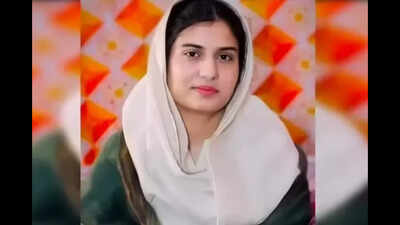
Kairana MP Iqra Hassan Chowdhury. (File image)
New Delhi: Kairana MP Iqra Hasan Choudhary, one of the only two Muslim women in the 543-seat Lok Sabha, voted against the fast-track seat reservation amendment bill for women on April 17. She said she didn’t reject the idea of a women’s quota, but questioned who this particular version would actually serve.“Muslim women, especially poor women, rural women, OBC women and minority women, will be the last to benefit,” she told us toy Wednesday. “By tying reservations to delineation and censuses, you are subjecting women’s representation to political calculations that rarely benefit our communities.Choudhary, one of two Muslim women in the House who represents Kairana in western Uttar Pradesh state along with Trinamool MP Sajda Ahmed, said her doubts about who the bill would actually benefit were not theoretical. “The situation for OBC or minority women is not yet clear. If the most marginalized groups are still missing, then what have we really achieved?”Nearly two years into her first term, sajwadi party The MP, a postgraduate student at the School of Oriental and African Studies at the University of London, said the core of the entire debate remained an “urban conversation taking place in studios” that “barely touches” the constituency she represents.Ambition itself, she said, is a function of acquisition. “Only women who have advantages — political family, connections — can think like this.”Even where quotas already exist, at the “Pradani level” the channels are narrow and pre-protected. “Women can at least imagine local leadership due to Panchayat reservations. But you still won’t see new faces – it won’t happen without the support of a husband or a family already in politics.” Some women started out as someone’s daughter or sister and created their own space, she added. “But we are still a deeply patriarchal society. A dedicated space must be deliberately created. ” It was that reality — not parliamentary process — that determined her vote, she said.“I come from a political family. Even then, it took time for people to accept the fact that women can lead,” said MP Kairana. She said the ceiling for Muslim women in Indian politics has barely been touched. In the entire history of the Lok Sabha, only 18 Muslim women have been elected. There are two today.Her structural alarm is the “delimiting link.” Pointing to Assam, she said, “The 2023 redraw reduced the number of Muslim-majority seats, raising concerns about dilution of Muslim representation. Delimitation is not neutral”.She said she saw “the same politics” in Triple Talaq. “It criminalized civil cases – also in the name of helping Muslim women.” In her interpretation, both initiatives “were wrapped in the language of women’s liberation but served entirely different purposes. “It was about playing with ideas rather than giving women a voice.”She added that the opposition was not even “properly” consulted on the issue of women’s reservation in Parliament. “Reform of this scale requires broader consensus. They didn’t have the data, so they didn’t try.”