
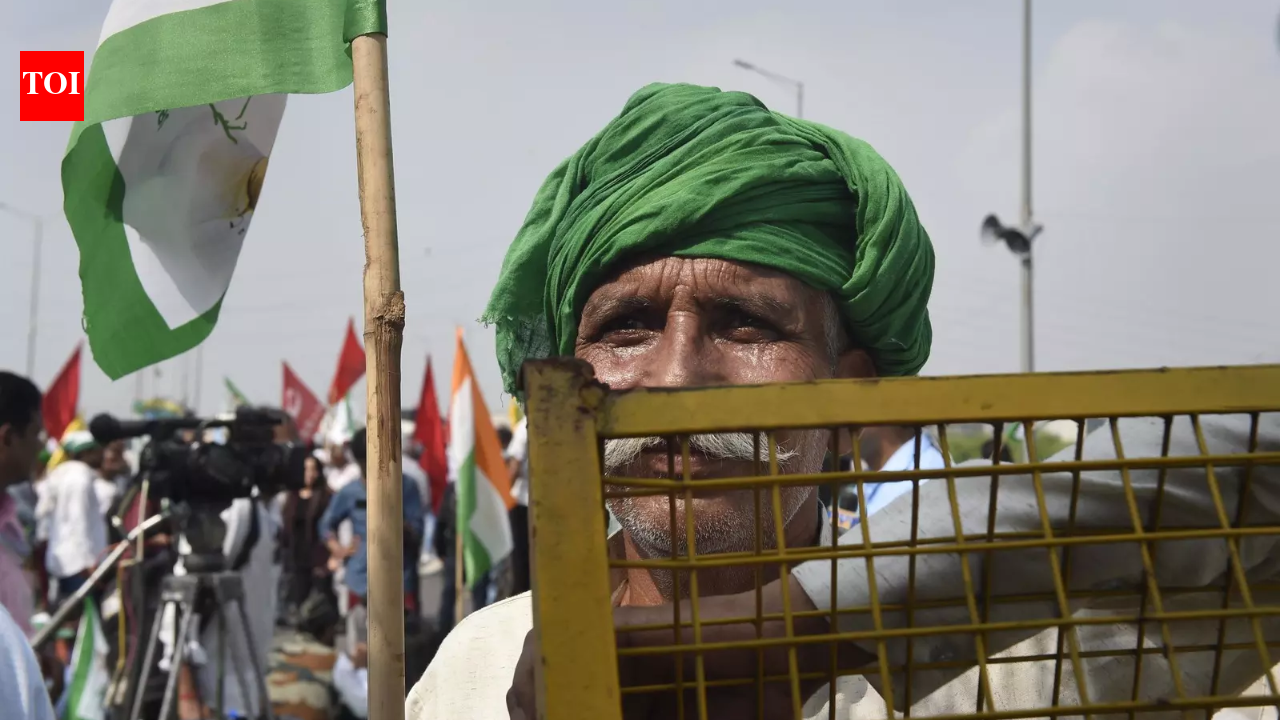
New Delhi: More than a dozen central trade unions have called for a nationwide barat bandh Thursday against the government’s “anti-worker” policies. The band has the support of farmers’ organizations and other cross-sector groups.The strike call was announced as a sign of “resistance to the anti-worker, anti-farmer and anti-state pro-corporate policies of the central government”.Unions say nearly 300 million workers from all walks of life may take part in the unrest.The protests are expected to partially affect service industries such as banking, insurance and transportation, with unions issuing strike notices to various sectors and industrial establishments.ALSO READ | Bharat bandh today: Are banks closed during nationwide strike on February 12?
why strike
The Samyukt Kisan Morcha (SKM) has appealed to farmers to join union workers to make the all-India general strike a success. The strike seeks the repeal of four labor laws: Electricity Bill 2025, Seeds Bill 2025, VB-G RAM G Bill 2025, restoration of old pension schemes and implementation of minimum wages for workers, including scheme workers, SKM said in a statement.The Agricultural Workers Union and the NREGA Sangharsh Morcha (NSM) platform have supported and participated in protest demonstrations across the country.“SKM appeals to the people to resist all new attacks launched by the BJP government against farmers, workers and common people,” the statement said.SKM said the electricity bill would increase electricity prices for farmers and household users and introduce peak hour charges and smart meters. “SKM demands ‘no to smart meters’ and provide 300 units of free power to all, as promised in the BJP campaign,” the statement said.It also opposed the Viksit Bharat-Rozgar and Ajeevika Mission (Gramin) Guarantee (VB-G RAM G) Bill, claiming it would repeal the Mahatma Gandhi National Rural Employment Guarantee Act (MGNREGA), and the new Seeds Bill, saying it would lead to a black market in seeds. Follow Bharat Bandh for real-time updates todaySKM opposes the free trade agreement, calling it a blueprint for “economic colonization” that deprives workers of minimum wages, farmers minimum support price (MSP) and job rights of unemployed youth.“The Modi government has surrendered India’s sovereignty and self-reliance to the United States,” SKM claimed.“SKM calls on all farmers to collectively join protest demonstrations and burn effigies of Narendra Modi and Donald Trump along with copies of free trade agreements in solidarity with industrial workers and against all anti-people, pro-corporate government policies,” it said.Insurance workers are also protesting against the government’s decision to allow 100 per cent foreign direct investment (FDI) in the sector and the implementation of new labor laws.“Due to the nationwide strike call on February 12, services such as power, banking, insurance, transport, health, education, gas and water supply will be affected,” All India Trade Union Congress general secretary Amarjeet Kaur told PTI.Public sector banks and insurance institutions, state transport services in some states, government offices and public sector units, industrial and manufacturing hubs, coal, steel and other core sectors, mining and gas pipeline operations and rural employment under MGNREGA in protest areas are expected to be affected by the unrest.However, all bank unions will not join the strike as their united front has already held a strike on January 27. Bank unions such as AIBEA, AIBOA and BEFI participated in the protest.
what might remain open
Hospitals, ambulances and emergency medical services are expected to continue operating. The operation of metro services is subject to local government decisions.Private offices, IT companies, schools and colleges may remain open, depending on the decisions taken by states. Essential supply services such as milk and pharmacies are also expected to operate normally.