
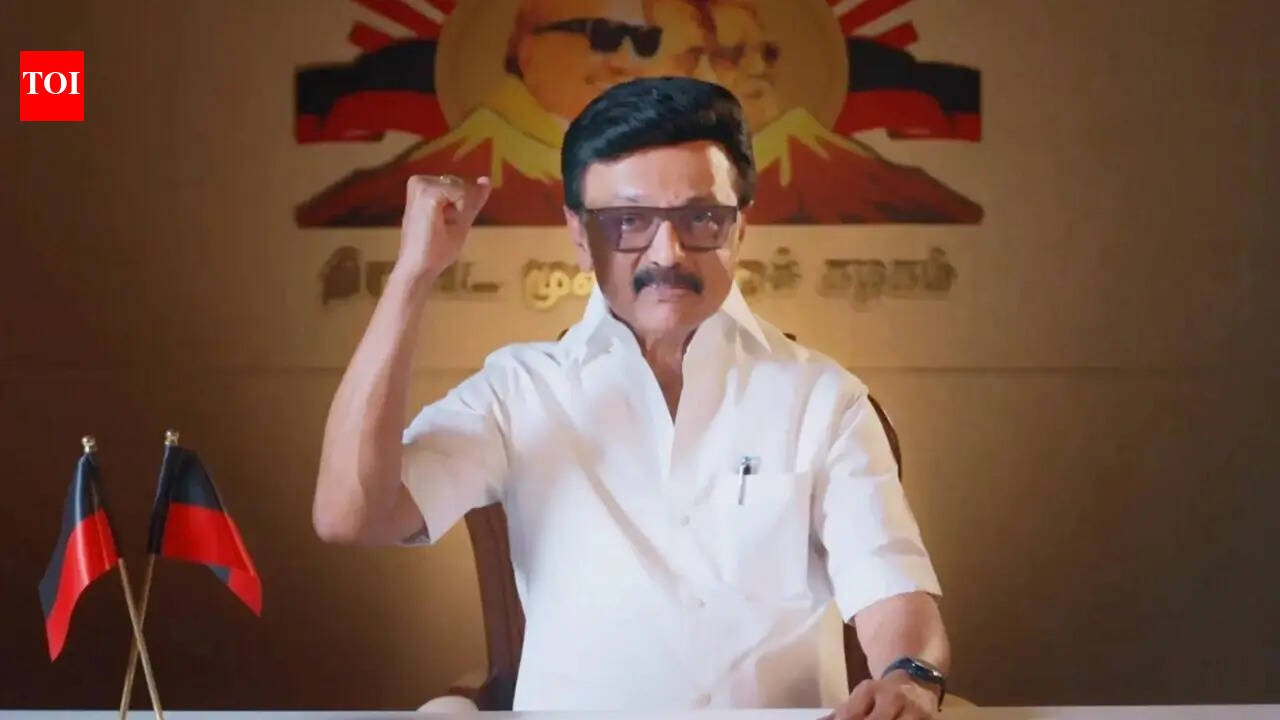

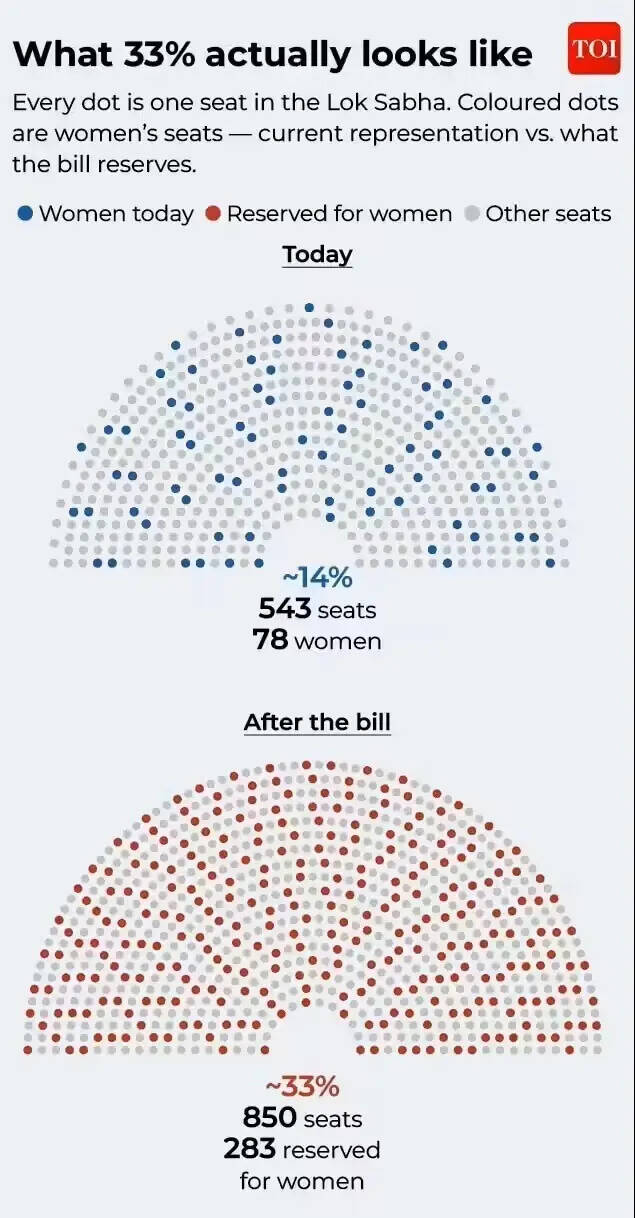
NEW DELHI: Just days ahead of high-stakes assembly elections in Tamil Nadu, the campaign took an abrupt turn after the Center decided to propose expanding the Lok Sabha from 543 to 850 seats through re-drawing of constituencies and reserving 33 per cent seats for women.Although the proposal was defeated in Parliament, the issue has not subsided and has taken center stage in Tamil Nadu, where the fight has revolved around the ‘North-South’ debate between Chief Minister Stalin-led DMK and AIADMK-led AIADMK. confidentiality agreement.Following the proposal in Parliament, the DMK-Congress combine turned its guns on Prime Minister Narendra Modi in an attempt to sow doubt and anger in the state and drum up support. The BJP has issued an urgent clarification and assured that “no injustice will be done to any state, especially the southern states”.“Let the flames of resistance spread to Tamil Nadu”When the Center tabled the bill in Parliament, Tamil Nadu Chief Minister MK Stalin spearheaded black flag protests across the state. Stalin claimed it was a “historic injustice”, torched copies of the bill and raised slogans demanding that the Union government should not curtail the rights of states.“Let the flames of resistance spread to Tamil Nadu. Let the arrogance of the BJP be brought down,” Stalin said in the X post.Stalin compared Tamil Nadu’s “fire against Hindi imposition that scorched Delhi” to the anti-Hindi agitation of the 1950s and 1960s that forced Delhi to surrender. “I have reignited this fire by burning this black law that was designed to turn Tamils into refugees in our own land,” he said, adding that the agitation would spread across the state.He asked for a 25-year delay in demarcation and gave assurances to this effect in parliament.Why resistance occursThe Constitution’s provisions on delimitation ensure proportional representation so that every citizen has a voice, regardless of geographical location. Now, this process has been pending since 1977 and is based on the 1971 census.Since then, the country’s population has grown exponentially, albeit unevenly. In the past five years, northern states such as Uttar Pradesh, Bihar, and Madhya Pradesh have seen faster population growth. Population growth in southern states such as Tamil Nadu, Karnataka, Kerala and Andhra Pradesh has stabilized due to improvements in public health infrastructure, literacy and family planning policies.
In 1976, the 42nd Constitutional Amendment suspended inter-state seat changes until after the 2001 census, effectively freezing the number of Lok Sabha seats at 543. In 2001, the 84th Constitutional Amendment further extended this freeze to the first census after 2026. The 2002 guidelines of the Delimitation Commission under Secretary of State Shangara Ram clearly stated that the total number of seats allotted to states as per the 1971 census would remain unchanged till the first census is conducted after 2026.Now, as the deadline approaches, the DMK accuses the Center of bringing the bill to lift the seat freeze, thereby pushing the southern states into irrelevance in national politics.“The bill promises reservation of one-third seats in Parliament and state assemblies for women. However, Union Home Minister Thiru Amit Shah has made it clear that the law will come into effect only after the next census and subsequent delimitation process. This is a clear indication that the Union government plans to conduct the delimitation exercise after the 2024 elections, exposing their hidden agenda,” DMK said in a statement.“Another key indicator of the federal government’s intentions lies in the new Parliament building to be inaugurated on May 28, 2023. The building is designed to accommodate 848 Lok Sabha members, exceeding the current capacity of 543 Lok Sabha members. Why invest in such an expansion unless there is an intention to increase the number of representatives?” it added.“This expansion is aimed at electorally benefiting the BJP by adding more constituencies in high-growth states like Uttar Pradesh, Bihar, Madhya Pradesh and Rajasthan, where the BJP already dominates. In contrast, Tamil Nadu has implemented responsible governance and curbed population growth, but its representativeness is likely to decline. The party’s current allocation of 39 seats may be reduced to 31. “Artificial Intelligence ADMK guard centerOn the other hand, another Dravidian major, AIADMK, supported the delimitation drive and accused DMK and congress Delaying the Women’s Reservation Bill is a betrayal of the women of Tamil Nadu.AIADMK general secretary Edappadi K Palaniswami said while campaigning: “Even though the Center has made it clear in Parliament that delimitation will not affect Tamil Nadu and that Tamil Nadu’s representation will actually increase, Chief Minister MK Stalin is still promoting false claims ahead of the elections.”
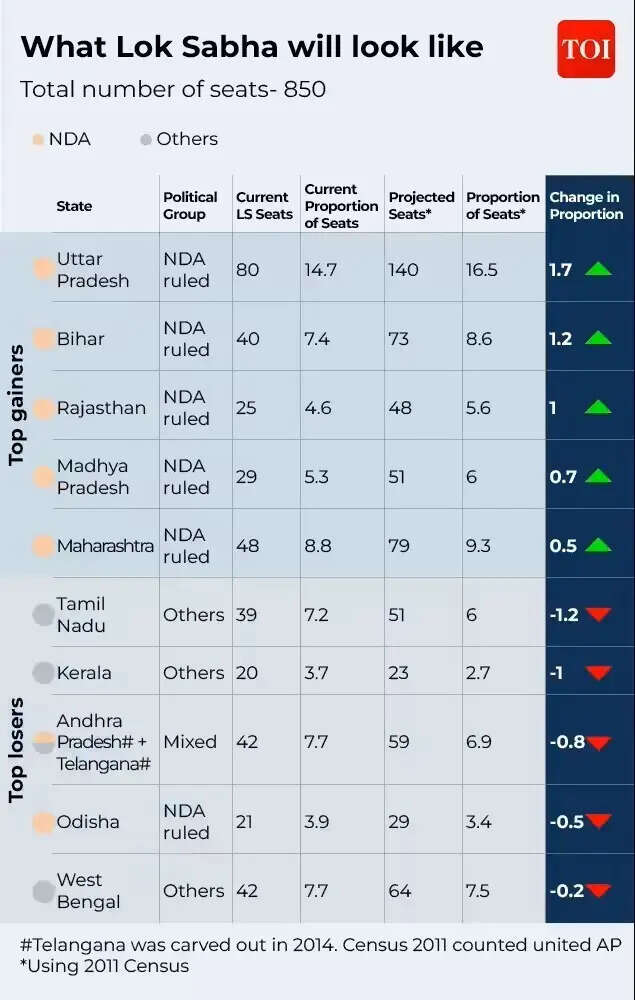
He said that based on the Center’s clarification in Parliament, Tamil Nadu’s assembly constituencies are expected to increase from 39 to 59, while their share will increase marginally from 7.18 per cent to 7.23 per cent.He accused the DMK of continuing to spread misinformation and creating unnecessary fear among the public over electoral gains despite the clarification. He also questioned calls for black flags to be raised, saying such calls did not have public support.Reacting to the chief minister’s statement that a southerner could not become the prime minister after delimitation, he said the statement was misleading, adding that due to decisions taken during Karunanidhi’s tenure, leaders like GK Moopanar did not get a chance to become the prime minister and APJ Abdul Kalam also did not get support for re-election.why this is importantTamil Nadu has long been a stronghold of regional politics, and the region has often been wary of the Union government’s attempts to centralize power. Whether it is language policy or cultural identity, at the heart of Tamil Nadu politics is a strong emphasis on identity, especially Tamil pride.This sentiment is deeply rooted in its political history, with the country having been alternately in power for nearly six decades between the two main Dravidian parties, DMK and AIADMK. As a result, national parties have struggled to make meaningful gains in the state.Shyam Somasundaram, a political analyst who has been observing Tamil Nadu politics for a long time, believes that the BJP will have a negative impact from this move in the upcoming polls. Speaking to TOI, Somasundaram said, “The DMK started constructing this narrative a year ago and even held a meeting of chief ministers on the issue.“In Tamil Nadu, where the anti-BJP vote turnout is estimated to be around 90 per cent, there is little public interest in increasing the number of MPs as they are not seen as having direct contact with the people on a daily basis. Instead, local body representatives and MLAs are seen as more accessible and closer to the public,” he added.At the same time, the DMK is aware of the possible shift among Dalits and young voters, some of whom may be attracted to emerging alternatives such as Vijay Talapathy’s TVK.The DMK aims to consolidate voters who may be leaning towards the AIADMK or are uneasy about its state alliance. The DMK is trying to cement its position as the leading anti-centrist voice in Tamil Nadu, especially at a time when the AIADMK’s proximity to the BJP creates political opportunities.“DMK will get most of the anti-BJP votes. They are likely to get more than 40 per cent of the popular vote and about 150 to 180 seats,” Somasundaram told TOI.As the campaign enters its home stretch, the delimitation debate looks set to have a significant impact on voters, who often make decisions based on the current political narrative.The 234-seat Assembly will go to polls in Tamil Nadu on April 23. Results are expected to be announced on May 4.