

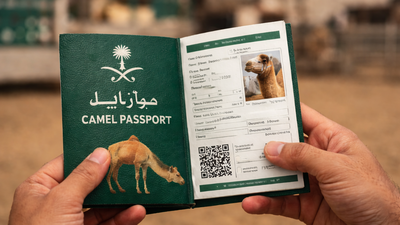
Saudi Arabia has launched a new digital and regulatory system aimed at bringing order, traceability and credibility to the camel industry, marking a major step forward in how the animals are identified, traded and managed across the kingdom.The camel passport scheme launched on Tuesday creates an official identity for every registered camel, linking ownership, health records and breed information into a single, recognized framework to support regulation, veterinary services and market credibility.
Initiative launched under the National Livestock Development Plan
The project was launched by Mansour Al-Mushaiti, Deputy Minister of Environment, Water and Agriculture, as part of the ministry’s work under the National Livestock and Fisheries Sector Development Plan.According to the ministry, the initiative aims to unify regulatory and digital systems across the camel industry. By formally recording camel data, ownership details, breed and health records, it establishes an authorized reference that can be used for veterinary response, regulatory oversight and transparent market operations.
What does a camel passport include?
The Camel Passport serves as a comprehensive identification document, ensuring that each animal is accurately verified and tracked.It includes the following details:
- Chip number
- Passport number
- camel name
- date of birth
- variety
- gender
- color
- place of birth
- Passport issue date and place
- Photos of both sides of the camel to ensure accurate identification
In addition, the passport contains a dedicated vaccination record. This section documents your veterinarian’s immunizations and is duly authenticated by the name, signature, and seal of the attending veterinarian.
Regulate sales and title
The ministry said the initiative will play a central role in regulating sales and trading activities within the camel market. It will organize shipping procedures, ownership transfers and official documents, helping to protect the rights of owners while enhancing trust among buyers, sellers and other market participants.By creating a verified record for each camel, the system is expected to reduce disputes, improve traceability, and provide greater clarity to commercial transactions.
Increase market value and support long-term planning
The camel passport will also allow for pricing based on accurate and verifiable data, including health, breed and pedigree, thereby increasing the market value of camels. This is expected to increase transparency in local and international auctions.In addition to trade, the project will support strategic planning by generating reliable data on camel populations broken down by age, sex, breed and color. The ministry said the information will help guide livestock distribution across the country, improve breeding efficiency through genetic performance analysis and support programs aimed at improving local camel breeds.Together, these measures make the camel passport an essential tool for the modernization of the industry while maintaining its economic and cultural importance in Saudi Arabia.