
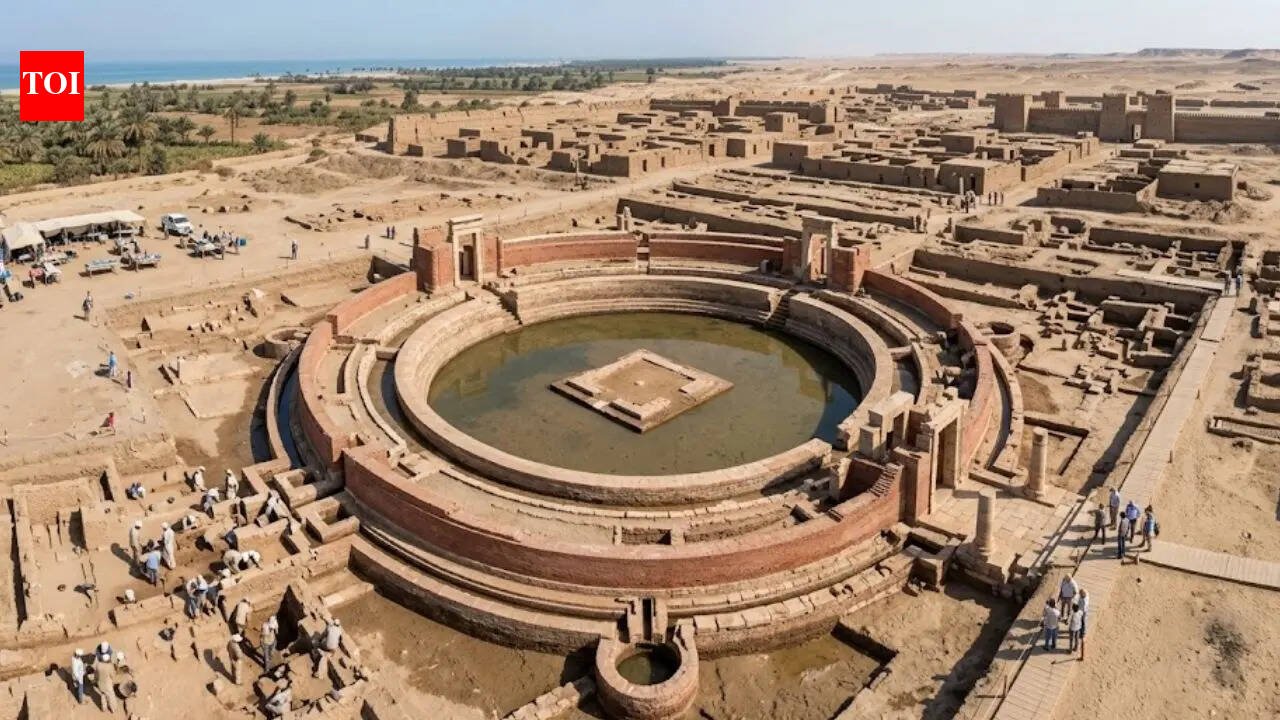
An Egyptian archaeological team has concluded its excavations at the ruins of Tel Falama in northern Sinai, uncovering a rare circular temple in the ruins of the ancient city of Pelusim that also has a new identity than previously thought. Although the temple was thought to have been a town hall when it was discovered in 2019, it is now determined to have had a different purpose after archaeologists discovered evidence of hydraulic technology related to the temple’s purpose, according to the Society for Biblical Archeology.This circular temple was built in the second century AD and was in use until the sixth century AD. Its main feature is a circular basin about sixty-five feet in diameter, in which water from the Nile was stored and used as a source of water for irrigating the lands adjacent to the temple. Through the study of the temple and its features, experts now believe that the temple was dedicated to the local god Pelusius and that the architecture of the temple and its adjacent buildings was a fusion of ancient Egyptian, Greek and Roman architectural styles.
A rare round temple for the worship of water discovered in Pelusium
As stated by the National Information Service, the building is 35 meters in diameter and has a square base, which may have been the basis for the large statue of the god it represented. Fired red bricks were primarily used in Roman hydraulic projects, and the site served as a fully functioning hydraulic complex for thousands of years. The builders utilized the Nile’s Perusic branch to provide the basin with living water, which played a key role in ancient Egyptian purification rituals and was a symbol of fertility and cosmic balance.
Why isn’t this an administrative building?
In 2019, archaeologists discovered the site’s circular walls, which were previously thought to have had a political function, but as more excavations were carried out, the interpretation of the site changed dramatically. A complex drainage system, pools and multiple entrances indicate that the site was a dedicated religious site rather than a political and administrative building as initially suspected. The association of the god Pelusium with the Greek word for “silt” or “clay” means that the site is closely associated with the fertile silt of the Nile and the life-giving power of nature.
The historical significance of the Pelusium site
For over a thousand years, Pelusium has been a culturally rich place and a safe spot for travelers. As such, it has played an important role in the collective history of humanity. For those traveling through the desert region of Sinai, the port city marked the beginning of their journey into Egypt and provided access to goods to be sold in Egypt. In addition, the unique and beautiful architecture of the Temple of Pelusium blends indigenous Egyptian traditions with architectural designs introduced to Egypt during the Hellenistic and later Roman periods and is “an outstanding expression of humane interaction.” Furthermore, this long tradition demonstrates that the waters of the Nile remained a source of spiritual and cultural nourishment throughout the Eastern Mediterranean long after its formation.