The Myth of Albert Pike: Did a 19th-Century Freemason Really Predict World War III between Islam and Zionism? |

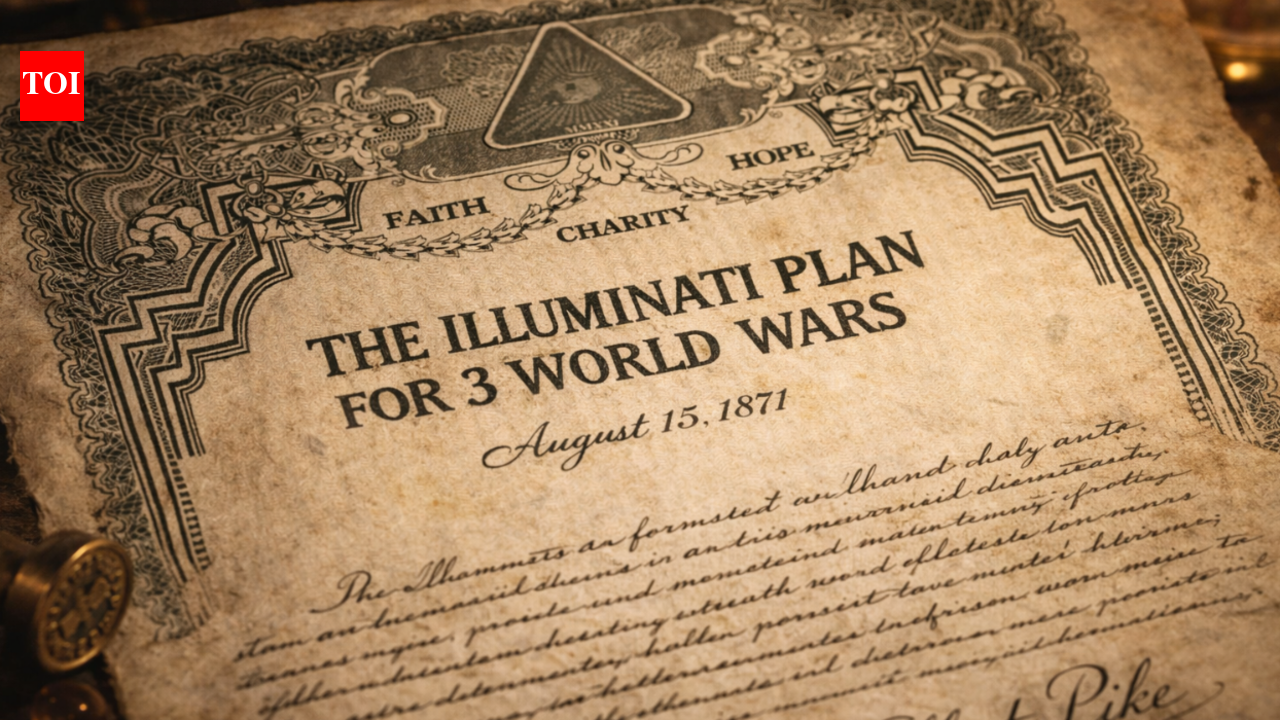
In August 1871, according to a story that never fades, a senior American Freemason sat down and mapped out the next century of human conflict. Albert Pike, a Confederate general who later became a Masonic philosopher, is said to have written to Italian revolutionary Giuseppe Mazzini predicting three world wars, with World War I culminating in what we now know as World War I, and World War II in Second World Warboth dismantling empires and reshaping global political ideologies, a third war is yet to come, a final global conflict that will transform religion and reorder the world as we know it.Believers say the letter was once on display in the British Museum. Then it disappears.No manuscript was ever produced. There is no directory entry to confirm this. British Museum and British Library Both said they had no record of the document. Yet the text, or rather versions of it, continue to circulate and are quoted in books, sermons, and online forums as evidence that the catastrophes of the 20th century were not an accident of history but a step in a longer, deliberate design.
Revolutionaries, Freemasons, and the 19th-Century World
Giuseppe Mazzini (1805-1872) was not a marginal figure. He was one of the intellectual architects of the Italian Unification and Risorgimento movements. A journalist, exile and political conspirator, he founded Giovine Italia, a secret society dedicated to creating a united, republican Italy. He believed in popular sovereignty, nationalism and democratic revolution at a time when much of Europe was still under monarchy. He moved within a network of activists and secret societies, including the Carbonari, and like many 19th-century political reformers, he was associated with Freemasonry.
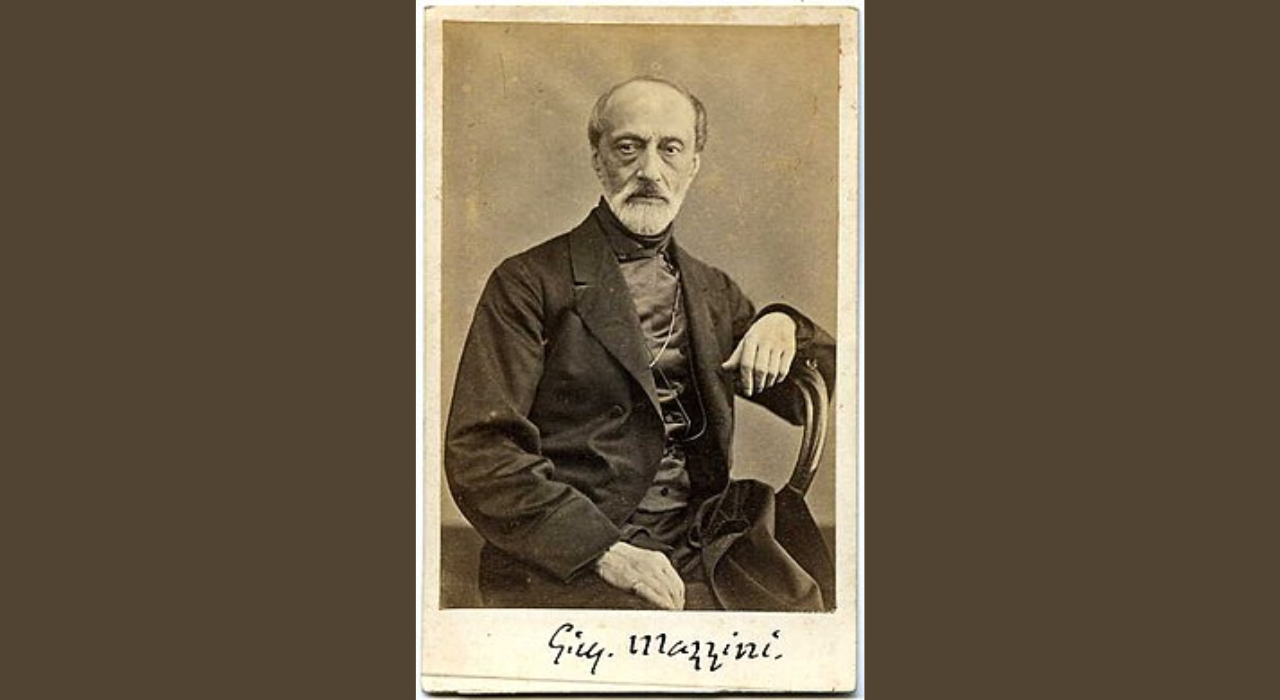
Mazzini photo by Domenico Lama/Wikipedia, the free encyclopedia
Meanwhile, Albert Pike (1809-1891) was establishing his reputation in a very different theater. Born in Massachusetts, he traveled west to become a newspaper editor and lawyer in Arkansas, fought in the Mexican-American War, and later served as a Confederate brigadier general during the American Civil War. After the war, he devoted himself to Freemasonry and rose to the rank of Grand Master of the Southern Jurisdiction of the Scottish Rite. In 1871, the same year as the alleged letter, he published Ancient and Accepted Morals and Dogma of Scottish Freemasonrya dense work on comparative religion and Masonic philosophy.
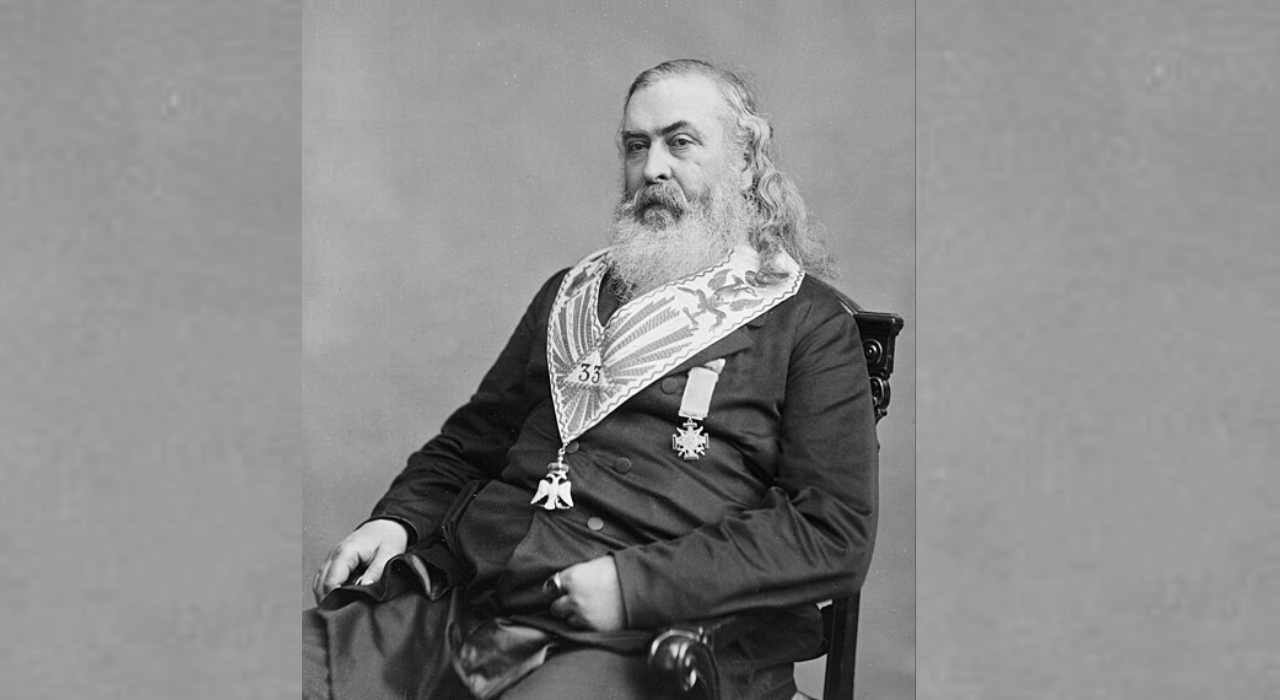
Albert Pike in Masonic garb, by Mathew Brady/Wikipedia
Both men were products of a century in which secret societies, fraternities, and revolutionary organizations were common tools of political organization. This shared circumstance, rather than documented cooperation, was the basis of the later conspiracy. Some fringe reports go further, claiming that Mazzini led the Illuminati’s plans for a global revolution and worked with Pike to advance the Luciferian agenda. However, historians note that the Bavarian Illuminati, founded by Adam Weishaupt in 1776, had effectively ceased operations by the end of the 18th century. There is no reliable archival evidence that Mazzini was at the helm in the 1830s, nor that the organization continued into Pike’s time. this version of this letter The article circulating today makes a bold argument. It claims that Pike outlined three global wars, each with a carefully planned purpose. The text stated that World War I “had to be initiated” to overthrow the power of the Russian tsar and establish the bastion state of atheistic communism. Tensions between the British and German Empires would be manipulated to spark conflict. Thereafter, communism would be used to weaken government and religion. According to the same text, World War II “had to be instigated by exploiting the differences between fascists and political Zionists.” The destruction of Nazism would strengthen Zionism enough to establish the sovereign state of Israel in Palestine. It added that international communism would rise simultaneously to balance Christendom until the final upheaval came.World War III remains a future in prophetic logic, described as erupting as a result of escalating tensions between Western powers aligned with political Zionism and leaders throughout the Islamic world. The text claims that this conflict will engage the major states and exhaust them physically, morally, and spiritually. From this chaos, it said, would come a radical upheaval: the collapse of Christianity and atheism, followed by the universal revelation of the so-called “pure doctrine of Lucifer.”“
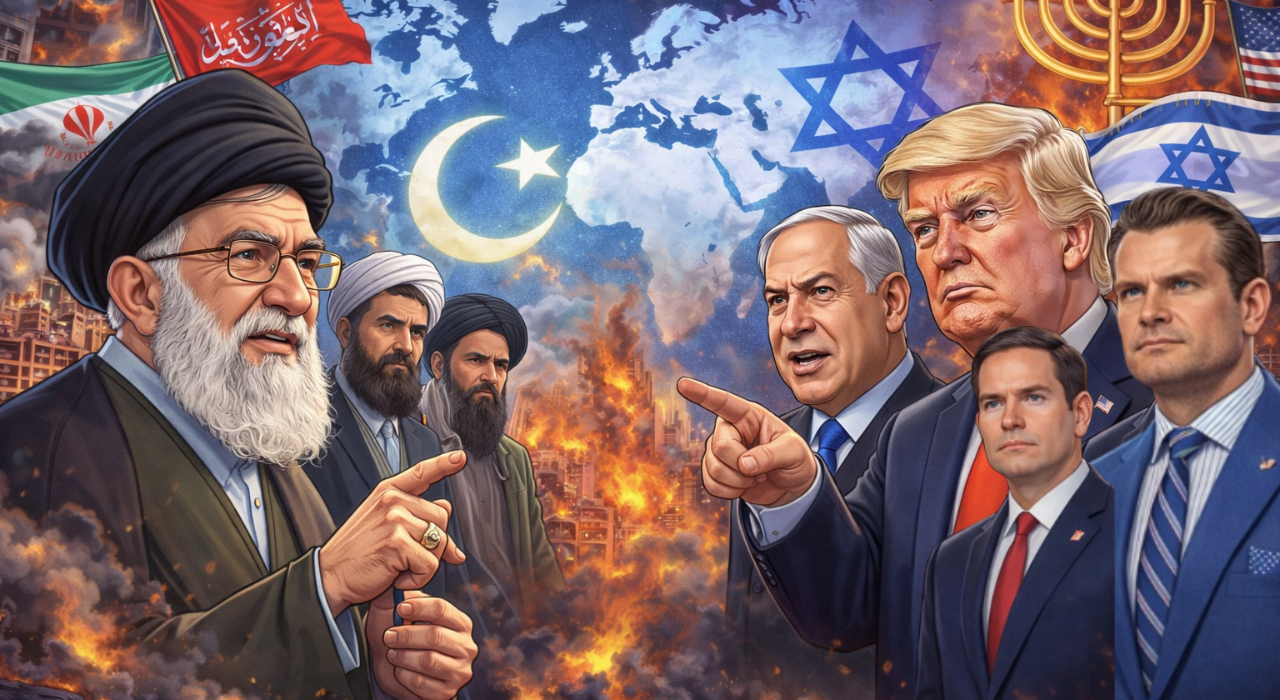
Some see rising tensions between Western-backed Israel and Iranian-led regional powers as echoing Packer’s predictions.
This is a dramatic script. On the surface at least, it seems consistent with the collapse of European monarchies after 1918, the rise and failure of fascist regimes, and the establishment of Israel in 1948. This symmetry gives the claim staying power. From a contemporary perspective, believers often point to ongoing tensions between Israel and Iran, the broader Israeli-Palestinian conflict, Western military alliances in the Middle East, and periodic clashes between armed groups in the region as early signs of the kind of confrontation described in the prophecy: an expanding struggle between Western-backed Israeli interests and parts of the Islamic world.
where does the story come from
This letter did not appear in 1871, during Parker’s lifetime, or even during World War I. Decades later, it came into public view. Canadian naval officer William Guy Carr popularized the “World War Three” version in his 1958 book Chess pieces in the gamefirst published in 1955, and the 1958 edition widely circulated. Carr writes in the preface (pp. XV-XVI) that the letter was cataloged and displayed in the British Museum Library, where he claims it remained until 1977. He provided no archival references, photographs or direct quotations from original documents.
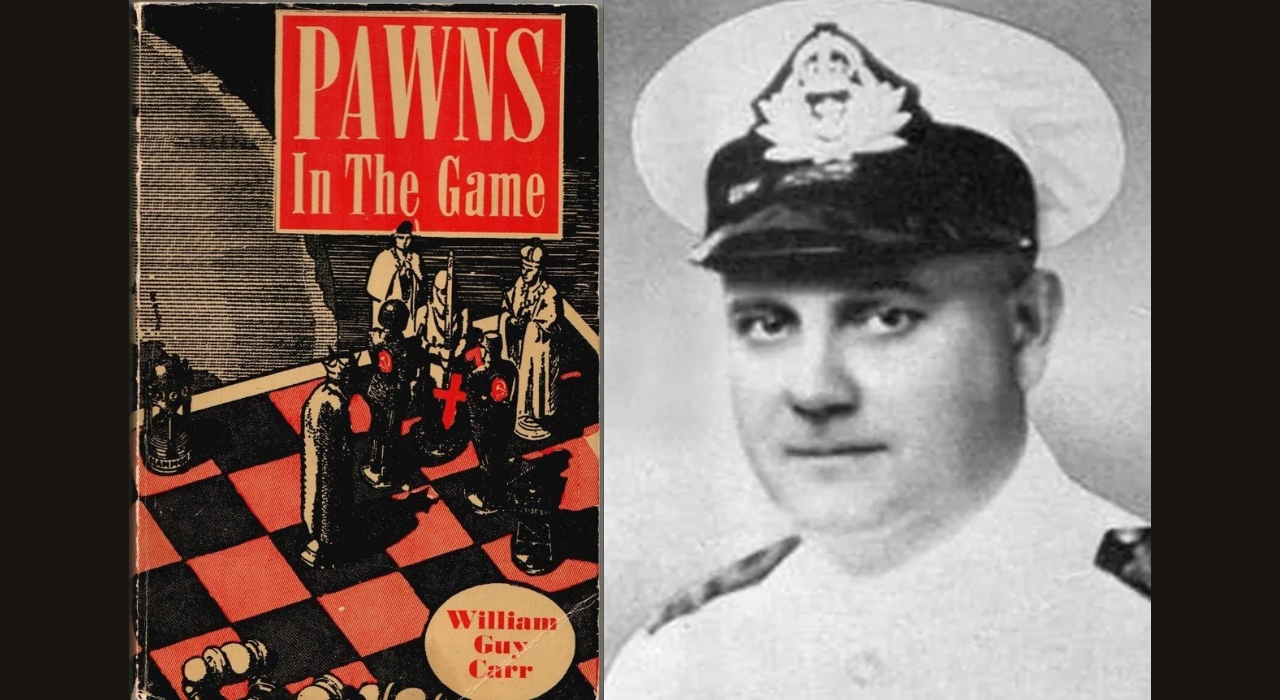
William Guy Carr’s 1958 book Pawns in the Game made the so-called Parker letter widely known as evidence of a planned world war.
Early clues to this myth can be traced to anti-Masonic literature of the late 19th century, particularly Léo Taxil (real name Gabriel Jogand-Pagès). Writing under the pseudonym “Dr. Bataille,” Tuckerhill published sensational works in the 1890s accusing Freemasonry of concealing Luciferian rituals and global conspiracies. In 1897, he publicly Admitted His revelations were fabricated, designed to ridicule Freemasonry and gullible clergy.
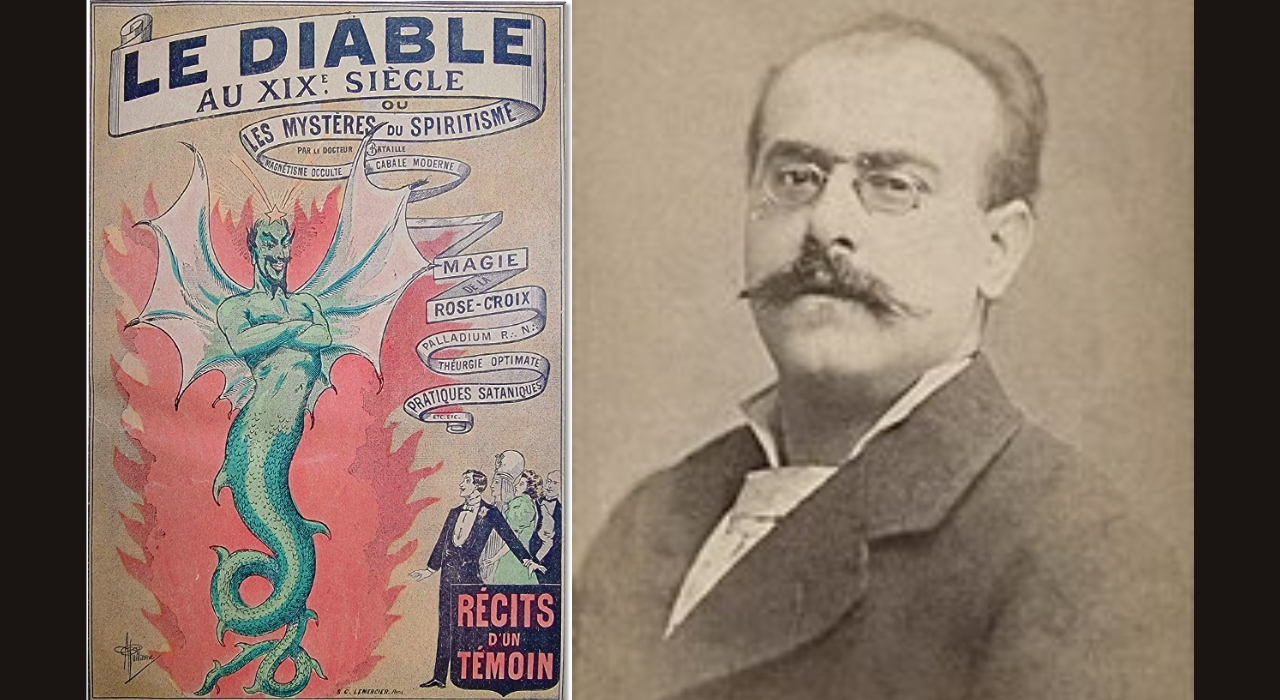
On April 19, 1897, Taxir admitted in Paris that his revelations about Freemasonry were fabricated, sparking public outrage a few days later.
William Guy Carr’s later account draws heavily on this material, explaining elements of the mischievous narrative in Taxir’s The Devil of the Nineteenth Century (1894), without citing any identifiable original document.Historians have also pointed out anachronisms in circulating texts. The terms “fascism” and “Zionism” appeared in post-1871 forms. The term “Zionism” was coined by Nathan Birnbaum in 1890 and gained attention after Theodor Herzl convened the First Zionist Congress in 1897. The term “fascism” was coined by Benito Mussolini in 1919, derived from the Italian fascio (“bundle” or “group”), referring to ancient Roman fascism and later adopted as the name of his political movement “Fasci di Combattimento”. “Nazism” emerged as an explicit ideology in the 20th century. These words make it difficult to establish that the document was written in the early 1870s. British Museum and British Library Both said they had no record of ever possessing the alleged letter.
between myth and memory
For believers, the fact that the letter does not exist is part of the story. If it can’t be found, they argue, that only proves it was suppressed. Historians don’t see it that way. There are no manuscripts, no archival traces, and no mention of it in 19th-century records. There is nothing contemporaneous at all.What does exist are texts that began to circulate decades later. It appeared in the mid-20th century, long after the events it predicted had occurred. Some of the language it uses, political terminology that only came into common use after 1871, is incompatible with the idea that it was written in that period.Pike was a former Confederate general who became a leading spokesman for the Scottish Rite of Freemasonry. Mazzini was a revolutionary nationalist who worked mainly in exile. Both men were political operators in turbulent times. But there are no verified letters between them outlining plans for three wars that would reshape the world.